
For Taylor Swift, the deliberate curation of every sartorial choice, accessory, and aesthetic detail serves as a meticulously constructed language designed to communicate with her global fanbase. This pattern of behavior has become a cornerstone of her brand, transforming public appearances into interactive puzzles that often foreshadow upcoming musical projects, soundtrack contributions, or major career milestones. As the twenty-year anniversary of her self-titled debut album, originally released on October 24, 2006, approaches, Swift’s recent public appearances have reignited fervent speculation regarding a potential re-release or commemorative project. The singer’s strategic use of color palettes and symbolic accessories suggests a calculated nod to the era that launched her trajectory into global superstardom.
The Semiotics of Style: Decoding the Green Aesthetic
The recent emergence of "green" as a recurring theme in Swift’s wardrobe is not viewed by industry analysts or her core fanbase, the "Swifties," as a coincidence. In August, during an intimate event at the Grammy Museum in Los Angeles, Swift donned a seafoam green Dôen gown, a color palette synonymous with the aesthetic of her 2006 debut. This choice occurred against a backdrop of ongoing rumors surrounding her future projects, including the speculative development of a twelfth studio album, tentatively titled The Life of a Showgirl, and her involvement in the Toy Story 5 soundtrack.
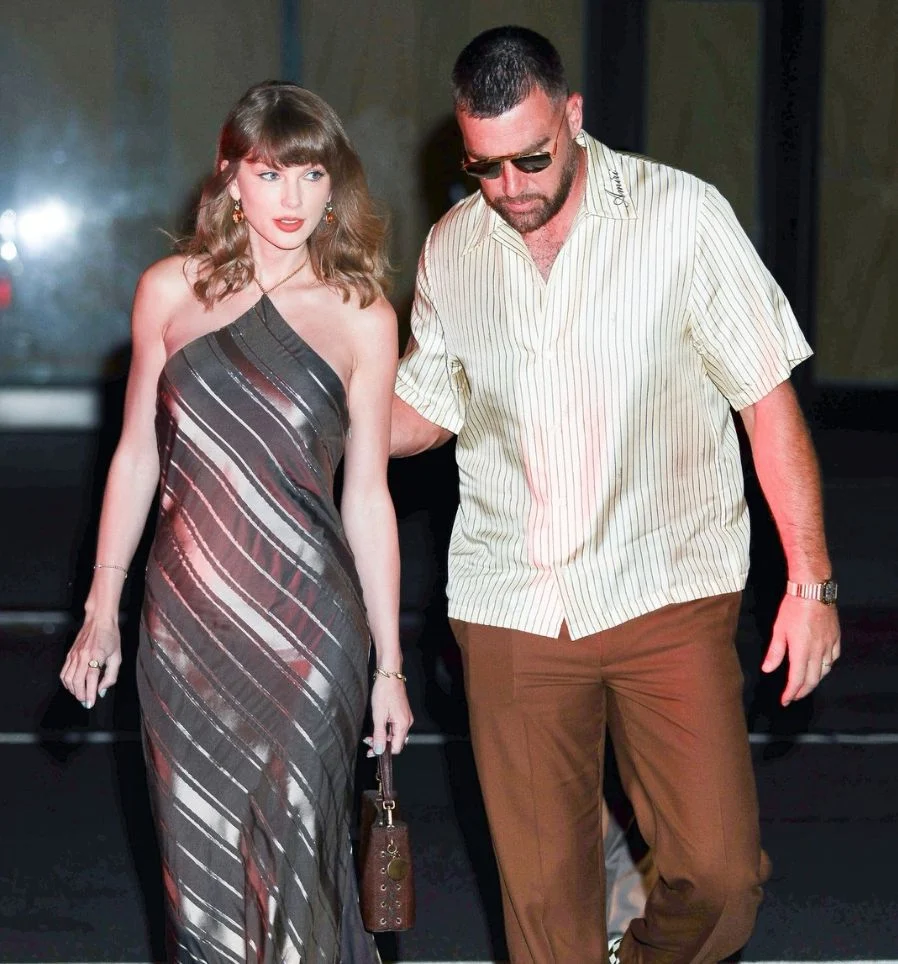
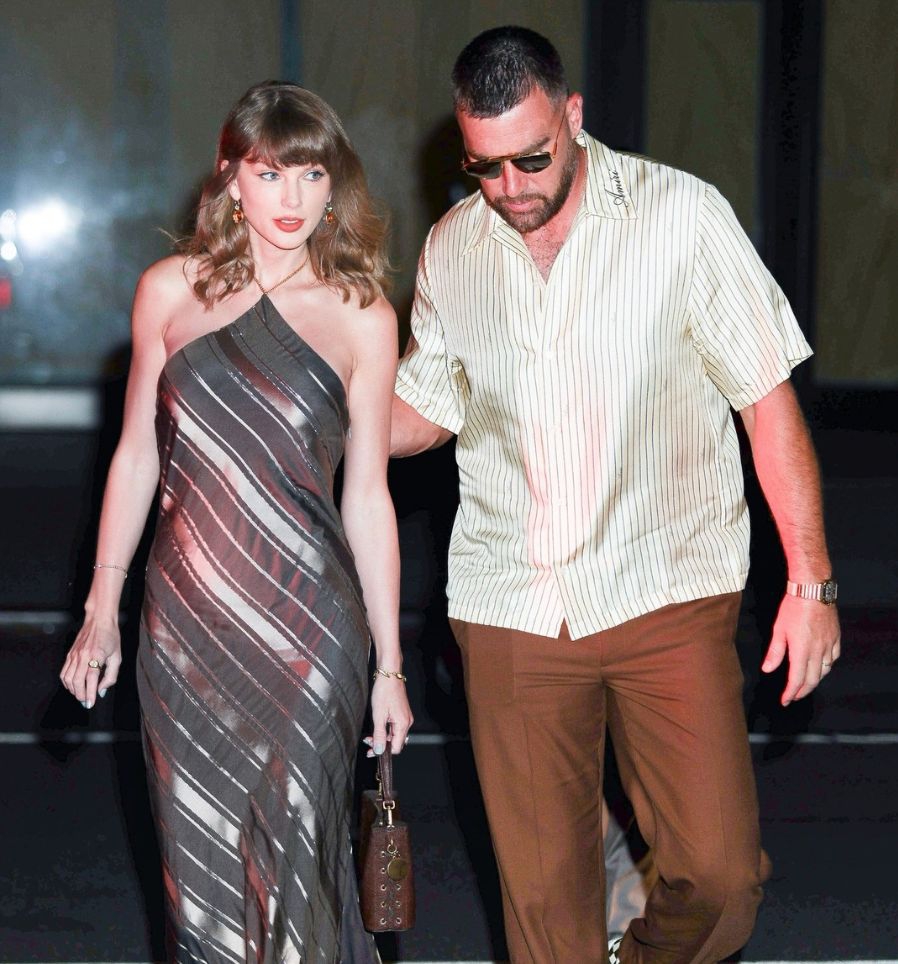
This visual messaging reached a crescendo during a recent outing in New York City, where Swift and her husband, Travis Kelce, were seen visiting the Ambassadors Clubhouse, an upscale North Indian restaurant located in the NoMad district. For this engagement, Swift wore a bespoke Stella McCartney silk-blend halter-neck maxi dress, featuring a sophisticated palette of gold and chocolate brown. The dress, characterized by its open-back design and side-slit skirt, was accessorized with a matching Stella McCartney Frayme bucket bag and silver Aquazzura Knotty sandals. However, it was the minutiae of her manicure—a vivid, bright green polish—that served as the focal point for observers. When combined with a set of opal rings and bracelets formerly belonging to the late Elizabeth Taylor—a gift from Kelce—the ensemble appeared to weave together themes of personal history, romantic milestones, and professional legacy.
Chronology of the Debut Era and Legacy Building
To understand the significance of these signals, one must look at the timeline of Swift’s career. Released on October 24, 2006, Taylor Swift established the foundation of a narrative-driven songwriting style that has defined the last two decades of popular music. The album, which reached number five on the Billboard 200 and spent 157 weeks on the chart, remains the longest-charting album of the 2000s.
As Swift approaches the two-decade mark of this record, the industry is closely watching for potential anniversary announcements. Historically, Swift has utilized anniversaries to revisit her catalog, most notably through her "Taylor’s Version" re-recording project, which seeks to reclaim the masters of her early works. The anticipation for a potential commemorative edition or a "Taylor’s Version" of the debut album is currently at an all-time high, with the green accents serving as the primary indicator that this era is being revisited in the singer’s consciousness.
Supporting Data and Market Impact
The commercial impact of Swift’s "Easter eggs" is a well-documented phenomenon in modern music marketing. Her ability to drive engagement through cryptic signaling creates a feedback loop of social media discourse, which consistently trends on platforms like X (formerly Twitter) and TikTok. According to music industry data analysts, every time Swift signals a new "era" through her fashion, there is a measurable spike in streaming numbers for her back catalog.
Data from the past 18 months indicates that Swift’s influence on retail and fashion trends remains unparalleled. Her partnership with designers such as Stella McCartney has seen a consistent increase in brand visibility following her public appearances. Furthermore, the "Swift Effect" on the hospitality industry—as seen during her record-breaking Eras Tour—has translated into localized economic booms. Her choice of venue, such as the Ambassadors Clubhouse in New York, often correlates with increased public interest and reservations at these establishments, proving that her reach extends far beyond the music industry into luxury lifestyle and culinary sectors.
The Intersection of Personal and Professional Narrative
The inclusion of jewelry once owned by Elizabeth Taylor is a particularly poignant detail. Swift has often cited Taylor as a personal influence, and the gift from Travis Kelce—a public figure who has integrated into Swift’s narrative—creates a bridge between her personal life and the "mastermind" persona she has cultivated. By pairing these heirlooms with a manicure that evokes the start of her career, Swift is effectively layering her past, present, and future into a single image.
This strategy serves a dual purpose: it maintains engagement from long-term fans who delight in decoding these signals, and it keeps her brand fresh for newer audiences who may be unfamiliar with the 2006 debut. The transition from the "The Fate of Ophelia" era—a term coined by fans to describe her current aesthetic—back to the "debut" era suggests a circularity in her creative process, where old motifs are reimagined for a contemporary audience.
Broader Implications: The "Mastermind" Marketing Model
The precision of Swift’s public appearances suggests that there is rarely an accidental wardrobe choice. In a digital age where artist authenticity is scrutinized, Swift has managed to maintain a level of mystery that keeps her audience hyper-attentive. By utilizing high-fashion platforms to hint at upcoming musical developments, she has bypassed traditional promotional cycles, opting instead for a grassroots, fan-led discovery model.
Industry experts suggest that this approach is the blueprint for the next generation of pop stars. By rewarding fans for their attention to detail, Swift creates a sense of community and ownership over the narrative of her career. The speculation surrounding the Toy Story 5 song, "I Knew It, I Knew You," and the potential The Life of a Showgirl album, are direct results of this high-engagement strategy.
As the October 24 anniversary date nears, the professional consensus is that Swift will likely leverage the momentum generated by these recent appearances to announce a new project. Whether that manifests as a re-recording of her debut, a new film project, or a fresh musical direction, the foundation of this announcement has already been laid through the careful selection of color, accessories, and the deliberate curation of her public image.
The integration of her personal life with her professional symbols—such as the opal jewelry and the green polish—reinforces the idea that for Taylor Swift, the personal is political and the professional is personal. As she moves through the final months of the year, the public will continue to monitor these subtle shifts, waiting to see how the "mastermind" will eventually pull back the curtain on her next major chapter. The combination of historical musical significance and the present-day influence of the Swift-Kelce dynamic ensures that whatever comes next will be met with a level of cultural saturation that few other artists can achieve.
Ultimately, the green nails and the Stella McCartney dresses are not merely fashion statements; they are the markers of a carefully calculated campaign, reinforcing her status as a titan of the music industry who manages to remain relevant by constantly nodding to the roots of her success while pushing the boundaries of what a pop star’s career can entail. As the industry watches, the expectation remains that this cycle of signaling will culminate in a significant, high-profile release that honors the legacy of her 2006 debut while positioning her for the next two decades of her career.
