
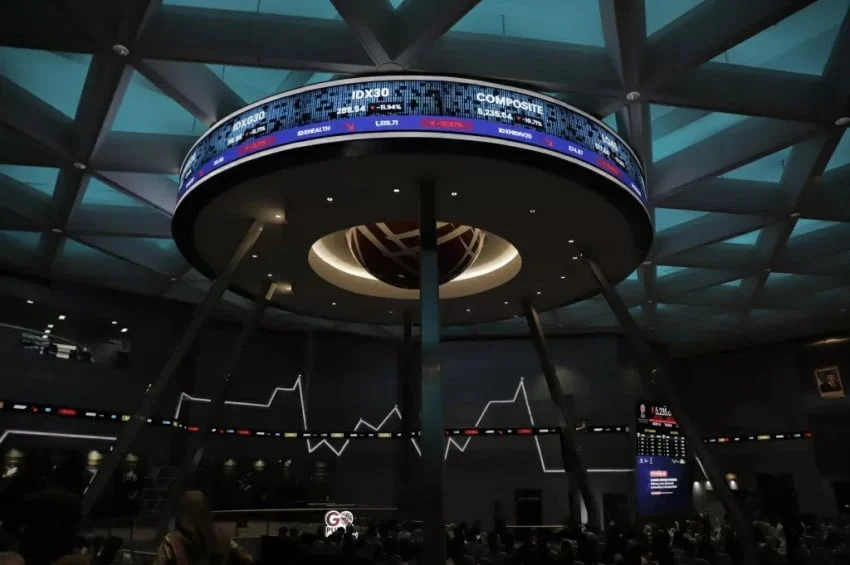
The Indonesia Stock Exchange (IDX), or Bursa Efek Indonesia (BEI), has officially announced a significant overhaul of its screening methodology for Hidden Shareholder Concentration (HSC). This strategic shift marks a pivotal moment in the regulatory landscape of the Indonesian capital market, as the exchange aims to enhance transparency and provide investors with a more comprehensive view of ownership structures across all listed entities. By removing previous constraints and refining the criteria for concentration, the IDX is positioning itself to mitigate risks associated with illiquid and tightly held stocks that have historically been prone to market manipulation or volatility.
The announcement, delivered by IDX President Director Jeffrey Hendrik on Tuesday, November 10, 2026, confirmed that the new methodology has resulted in a substantial expansion of the HSC list. A total of 383 stocks have now been identified under the new criteria, representing an addition of 300 companies to the previous list. These 383 stocks collectively account for approximately 6.16% of the total market capitalization of the Indonesia Composite Index (IHSG), reflecting a broader and more granular scope of oversight than previously practiced by the exchange.
Evolution of the HSC Framework
The Hidden Shareholder Concentration (HSC) classification is designed to identify companies where the majority of shares are concentrated in the hands of a very small group of investors. In many cases, such concentration can lead to "free float" issues, where the scarcity of available shares allows for artificial price inflation or extreme volatility driven by a handful of market participants.
Historically, the IDX applied more restrictive criteria for identifying these stocks. The previous framework was hampered by an arbitrary threshold—companies with a market capitalization exceeding IDR 5 trillion were often excluded from the screening process, regardless of their ownership structure. Furthermore, the reliance on "price impact ratios" meant that the exchange often reacted to market anomalies rather than proactively identifying the underlying structural risks.
Under the new methodology, the IDX has opted for a "zero-threshold" approach regarding market capitalization. Every single company listed on the exchange is now subject to the same rigorous scrutiny. By removing the price impact ratio from the screening process, the IDX is shifting from a reactive model to a proactive, structural-based identification model. This means that a stock can be flagged as an HSC even if its price remains stable, provided the ownership concentration meets the specified thresholds.
Key Technical Criteria for Identification
The core of the new regulation centers on a definitive quantitative threshold. According to the revised guidelines, an issuer will be categorized as an HSC if it meets the following condition: the company has 10 or fewer shareholders who collectively control 92.5% or more of the total outstanding shares.
This 92.5% threshold is intentionally high, targeting companies that possess a dangerously low public float. When more than nine-tenths of a company is held by a tiny circle of insiders or major shareholders, the remaining shares available to the public are insufficient to facilitate a fair, discovery-based pricing mechanism. This, in turn, makes the stock susceptible to "cornering," where a dominant player can easily manipulate the price due to the lack of counter-liquidity in the market.
The HSC Committee, tasked with overseeing these designations, will conduct periodic reviews to ensure that the list remains current. This continuous monitoring is essential in a dynamic market where shareholding patterns change frequently due to corporate actions, divestments, or strategic acquisitions.
Implications for Market Integrity
The expansion of the HSC list carries significant implications for various market participants, from retail investors to institutional fund managers. For retail investors, the designation serves as a cautionary signal. Stocks identified as having hidden shareholder concentration often exhibit lower liquidity, which can make it difficult for investors to exit their positions during market downturns without incurring significant price slippage.
For institutional investors, the list acts as a risk management tool. Many institutional mandates explicitly restrict or prohibit investment in stocks with high concentration levels due to liquidity risk and corporate governance concerns. By providing a more transparent and inclusive list, the IDX is effectively raising the bar for corporate governance standards in Indonesia.

Furthermore, the decision to remove the price impact ratio from the identification process suggests that the IDX is prioritizing structural health over short-term market behavior. This is a critical development for the long-term sustainability of the IHSG. By addressing the root cause of potential manipulation—the concentration of control—the exchange is taking a proactive step to prevent the formation of "bubbles" in small-cap and mid-cap stocks that often plague emerging markets.
Chronology and Strategic Implementation
The implementation of these new rules follows months of internal deliberation by the IDX and its regulatory partners. While the official announcement was made in November 2026, the groundwork for this shift began with a broader push by regulators to clean up the exchange of "zombie" companies and firms with questionable ownership structures.
- Q1 2026: Initial review of HSC methodologies by the internal committee, identifying weaknesses in the price impact ratio and the IDR 5 trillion market cap exclusion.
- Q2-Q3 2026: Data modeling and testing of the new 92.5% ownership threshold across the entire listed universe.
- October 2026: Finalization of the regulatory framework and communication with key stakeholders, including listed issuers and brokerage houses.
- November 10, 2026: Formal public announcement of the 383-stock list and the official adoption of the new screening methodology.
The immediate reaction from the market was measured, as investors and analysts began reviewing the newly published list. Analysts noted that while the inclusion of 300 additional stocks might initially cause some downward pressure on the prices of those specific shares, it ultimately fosters a healthier market environment in the long run.
Official Stance and Future Outlook
Jeffrey Hendrik’s statement at the IDX headquarters underscored the exchange’s commitment to protecting the interests of the investing public. By expanding the scope of the HSC, the IDX is effectively forcing companies with concentrated ownership to consider increasing their public float to avoid being classified as an HSC.
"Our goal is not to penalize these companies, but to ensure that the market functions efficiently," said a source close to the exchange. "When ownership is concentrated, price discovery is compromised. By shining a light on these structures, we encourage better corporate governance and, ideally, a move toward more dispersed ownership."
The IDX has indicated that the HSC Committee will remain vigilant. There is a possibility that the criteria could be further refined in the future, depending on the market’s response to these changes. The exchange also hinted at closer cooperation with the Financial Services Authority (OJK) to ensure that the findings from the HSC screenings are utilized in broader regulatory oversight, including investigations into potential market abuse.
Analysis of the Impact on IHSG
The impact on the Indonesia Composite Index (IHSG) will likely be twofold. First, in the short term, there may be increased volatility as investors rebalance their portfolios away from companies that have been newly flagged as HSCs. Second, in the long term, the move is expected to improve the quality of the IHSG as a benchmark.
Market analysts suggest that by identifying 383 stocks, the IDX is effectively "cleaning house." The 6.16% of total market capitalization represented by these stocks is a manageable segment, but one that has historically caused outsized frustration for retail investors. By providing this information, the IDX is empowering investors to make more informed decisions, potentially reducing the reliance on speculative trading and encouraging a shift toward fundamental analysis.
Furthermore, the move is likely to put pressure on companies to improve their free float. Companies that wish to attract international institutional capital—which is often deterred by high concentration levels—may now be incentivized to conduct secondary offerings or sell-downs by major shareholders to dilute their holdings and move off the HSC list. This could lead to a secondary wave of liquidity in the Indonesian market, as more shares become available for public trading.
Conclusion
The transformation of the HSC screening methodology is a testament to the maturation of the Indonesian capital market. By moving away from arbitrary exclusions and focusing on the underlying reality of ownership concentration, the Bursa Efek Indonesia is reinforcing its role as a steward of market integrity.
As the market absorbs the news of the 383-stock list, the focus will now shift to how individual companies respond to their new designation. Whether through increased transparency, corporate restructuring, or efforts to broaden their shareholder base, the influence of this regulatory change is expected to be felt for years to come. For investors, the takeaway is clear: the era of "hidden" risks is coming to an end, replaced by a more transparent and regulated landscape that prioritizes the stability and fairness of the Indonesian stock market.
