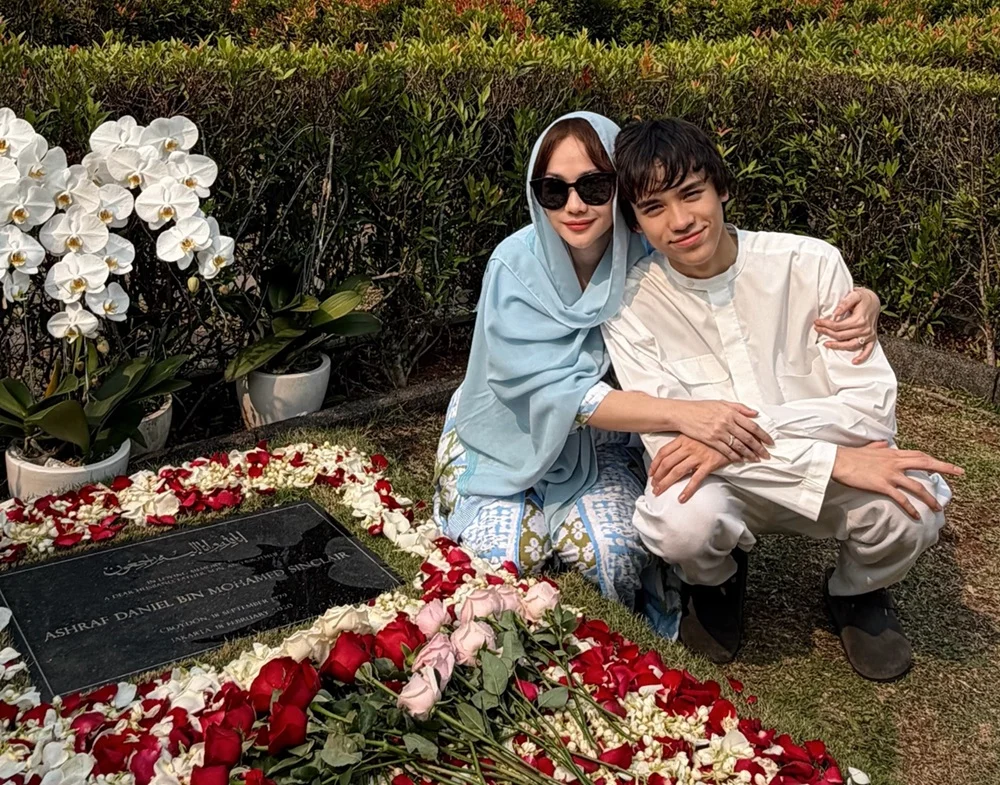
The enduring legacy of Ashraf Sinclair continues to resonate deeply within his family, as evidenced by the recent poignant tribute paid by his widow, renowned Indonesian singer Bunga Citra Lestari (BCL), and their son, Noah Sinclair. On what would have been the late actor’s birthday, the mother-son duo visited the San Diego Hills Memorial Park in Karawang, West Java, to honor his memory. This act of remembrance serves as a testament to the profound bond that persists despite the physical absence of a beloved husband and father, whose passing in early 2020 left a lasting impact on the entertainment industry and his legion of fans.
A Legacy of Remembrance: The Significance of the Visit
The act of ziarah—a traditional Islamic practice of visiting gravesites—holds significant cultural and spiritual weight in Indonesia. For BCL and Noah, these visits are not merely routine, but deeply personal rituals that bridge the gap between grief and acceptance. The recent visit, documented by BCL on her social media platforms, highlighted the quiet dignity with which the family navigates their loss.
Dressed in soft blue tones with a matching headscarf, BCL appeared composed as she knelt beside the grave. Beside her, Noah, now growing into his teenage years, wore a crisp white Muslim attire, reflecting a mature understanding of the solemnity of the occasion. The grave itself was meticulously maintained, adorned with a vibrant tapestry of red and pink roses, delicate jasmine, and elegant white orchids, signaling a continuous expression of love and reverence.
Chronology of a Life Remembered
Ashraf Sinclair, a Malaysian-born actor who found immense success in the Indonesian film and television industry, passed away suddenly on February 18, 2020, due to a heart attack. His death came as a shock to the public, as he was widely regarded as a picture of health and vitality.
The timeline of his life and the aftermath of his passing serves as a historical backdrop to the current tribute:

- November 18, 1979: Ashraf Daniel bin Mohamed Sinclair is born in Croydon, United Kingdom.
- 2008: Ashraf Sinclair marries Bunga Citra Lestari in a high-profile ceremony that bridged Indonesian and Malaysian cultures.
- September 22, 2010: The couple welcomes their son, Noah Aidan Sinclair, into the world.
- February 18, 2020: Ashraf Sinclair passes away at the age of 40 in Jakarta, Indonesia.
- 2020–Present: BCL and Noah engage in periodic, public acts of remembrance, often sharing messages of resilience and gratitude on birthdays and anniversaries of his passing.
This chronological progression reflects the evolution of BCL’s grief journey—from the initial public outpouring of sorrow to a sustained, private commitment to honoring her late husband’s memory through her career and her dedication to raising their son.
The Cultural Impact of Public Mourning
In the context of celebrity culture in Indonesia, BCL’s approach to mourning has been widely lauded for its authenticity. Unlike the often-staged nature of celebrity life, the genuine emotion displayed during these visits resonates with a broad audience. Social media engagement on these posts often reaches into the millions, reflecting a collective empathy from the public who have watched Noah grow up through the lens of his parents’ legacy.
From a sociological perspective, the public nature of BCL’s tributes provides a space for followers to engage in their own reflections on loss and resilience. By normalizing the expression of grief, BCL has transformed her personal tragedy into a dialogue about the importance of family bonds and the persistence of love. This visibility also highlights the cultural expectations of widowhood and parenting in the public eye, where BCL has successfully maintained a balance between her professional artistic output and her private life.
Supporting Data: The Evolution of BCL’s Career Post-Loss
It is impossible to discuss the life of Bunga Citra Lestari without acknowledging the artistic output that followed her loss. Often, artists channel their grief into their work, and BCL is no exception. In the months and years following 2020, her performances took on a more contemplative tone.
Data from the Indonesian music streaming landscape indicates that her songs released in the post-2020 period saw a significant spike in listeners, particularly those tracks that explore themes of heartbreak, memory, and moving forward. Her ability to translate personal pain into universal themes has solidified her status as one of Indonesia’s most respected vocalists. This professional evolution is inextricably linked to the personal milestones she marks at the gravesite, creating a symbiotic relationship between her public persona and her private reality.
Reflections on Fatherhood and Legacy
Noah Sinclair’s role in these visits has also drawn significant public attention. As he matures, his presence at the grave serves as a reminder of the "living legacy" left by his father. Reports from those close to the family suggest that BCL has been instrumental in keeping Ashraf’s memory alive through stories, shared hobbies, and a focus on the values that defined his life: kindness, professionalism, and family devotion.

The influence of a parent’s absence on a child is a complex subject, but observers note that Noah’s demeanor—composed and respectful—suggests a supportive upbringing that acknowledges the reality of his father’s passing without allowing it to overshadow his development. This is a critical aspect of the family’s narrative: moving forward while never looking back on their past with anything but affection.
Future Implications for the Sinclair-BCL Family
As the years progress, the nature of these tributes may evolve. However, the foundational elements—the flowers, the prayers, and the presence of extended family—remain consistent. For the Indonesian entertainment industry, the Sinclair-BCL family represents a standard for handling personal loss with grace.
The broader implication of such events is the reinforcement of traditional values within a modern, digital-first world. Despite the pressures of modern stardom, the family prioritizes the ritual of honoring the dead, an act that grounding them in their heritage and shared history. As BCL continues to navigate her career, including her recent transitions into new chapters of her personal life, the consistent return to the memory of Ashraf Sinclair remains a steadying force.
In conclusion, the visit to the gravesite by Bunga Citra Lestari and Noah Sinclair is more than just a photo opportunity; it is a manifestation of an ongoing love story that transcends mortality. It provides a window into the life of a family that, despite experiencing profound loss, continues to demonstrate the strength of the human spirit. Their ability to integrate their grief into their daily lives serves as a profound lesson for many, proving that while a loved one may be gone, the impact they leave behind remains a guiding light for those who follow. As the fans and the media continue to observe these moments, the message remains clear: Ashraf Sinclair’s memory is not only preserved in photographs and videos, but in the character and the resilience of the family he left behind.