JAKARTA – A recent survey conducted by Parameter Politik Indonesia (PPI) has identified Taj Yasin Maimoen, the former Deputy Governor of Central Java for the 2018-2023 term, as the most popular figure in the nascent race for the Central Java gubernatorial election (Pilkada Jateng). The data collection for this significant poll was conducted between May 15 and May 21, 2024, providing an early snapshot of public sentiment as the electoral season approaches. The findings, released online and observed from Jakarta on Wednesday, May 29, 2024, offer crucial insights for political parties and potential candidates alike.
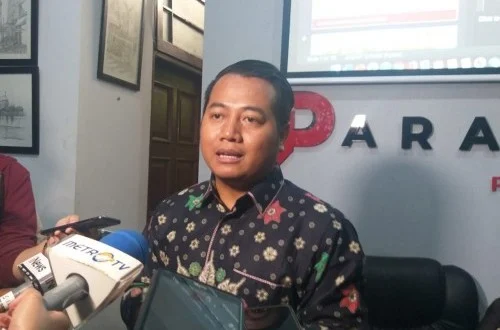
Adi Prayitno, the Executive Director of Parameter Politik Indonesia, elaborated on the survey’s methodology and results during the release event. "We asked respondents one by one, ‘Sir, Madam, are you familiar with the following figures?’ So, we questioned respondents individually, and approximately 52.1 percent reported being familiar with the name Taj Yasin," Prayitno explained. This high level of recognition positions Maimoen favorably at this preliminary stage, indicating a strong baseline of public awareness that could be leveraged as campaigning intensifies.
Understanding the Central Java Political Landscape
Central Java is one of Indonesia’s most populous provinces and holds immense political significance. Often considered a crucial barometer for national political trends and a traditional stronghold for certain political parties, particularly the Indonesian Democratic Party of Struggle (PDI-P), its gubernatorial election is always keenly watched. The province’s diverse demographics, encompassing large rural populations, urban centers, and a strong presence of Nahdlatul Ulama (NU), Indonesia’s largest Islamic organization, contribute to a complex electoral dynamic. The outcome of the Central Java Pilkada can have ripple effects, influencing national political narratives and even future presidential elections.
The upcoming simultaneous regional elections, slated for November 2024, are part of a nationwide democratic exercise to elect governors, mayors, and regents across Indonesia. These elections are critical for regional governance and play a vital role in the decentralization framework of the country. With the presidential and legislative elections having concluded in February 2024, the focus now shifts to these regional contests, where local issues, candidate personalities, and party alliances will take center stage.
Detailed Survey Findings and Candidate Profiles
Beyond Taj Yasin Maimoen, the survey by Parameter Politik Indonesia also identified other prominent figures vying for public attention in Central Java. Hendrar Prihadi, the current Head of the Government Procurement Policy Agency (LKPP) and former Mayor of Semarang, secured the second position with a popularity rating of 40 percent. Following him closely was Dico Ganinduto, the Regent of Kendal, who garnered 38.1 percent popularity, placing him in third.
Adi Prayitno emphasized the rationale behind selecting these particular figures for the survey. "These individuals are, in our opinion, those who possess potential or are frequently discussed, or are consistently linked to the possibility of advancing in the Central Java Pilkada. So, if we tally them one by one, this is generally the portrait of their popularity," he stated. This indicates that the survey aimed to capture the public’s awareness of figures already circulating in political discourse, rather than introducing entirely new names.
-
Taj Yasin Maimoen: As the son of the late K.H. Maimoen Zubair (Mbah Moen), a highly revered spiritual leader and former chairman of the Shura Council of the United Development Party (PPP), Taj Yasin inherits a significant political and religious legacy. His tenure as Deputy Governor alongside Ganjar Pranowo provided him with direct administrative experience and exposure across the province. His strong ties to traditional Islamic communities, particularly those affiliated with Nahdlatul Ulama, are a major asset. This demographic forms a substantial voting bloc in Central Java, making his appeal within these circles a crucial factor in his high popularity. His political background with PPP also signifies a potential pathway for party endorsement, although coalition dynamics will ultimately determine the final slate of candidates.
-
Hendrar Prihadi: A seasoned politician from the PDI-P, Hendrar Prihadi served two terms as the Mayor of Semarang, the provincial capital. His leadership in Semarang saw significant infrastructure development and improvements in public services, earning him a reputation as an effective administrator. His current role at LKPP, a national agency, also maintains his public profile at a broader level. As a prominent figure within the PDI-P, which holds a dominant position in Central Java, his candidacy would align with the party’s historical strength in the region. His appeal typically lies with urban voters and those seeking experienced governance.
-
Dico Ganinduto: Representing a younger generation of political leaders, Dico Ganinduto is the current Regent of Kendal. A member of the Golkar Party, Dico has been actively building his political brand and engaging with various communities. His relative youth could appeal to younger voters, a demographic increasingly influential in Indonesian elections. His position as a sitting regent provides him with executive experience at the local level and a platform to showcase his leadership. For Golkar, a major national party, Dico represents a potential future leader who could help expand its influence in Central Java.
Methodology and Nuances of Popularity
Parameter Politik Indonesia, like many reputable survey institutions in Indonesia, typically employs a multi-stage random sampling method to ensure representativeness. While specific details such as sample size and margin of error were not explicitly stated in the brief report, standard practices usually involve a sample size of around 1,000 to 1,200 respondents, yielding a margin of error of approximately 2.8 to 3.1 percent at a 95 percent confidence level. Data collection often involves face-to-face interviews, particularly in regions with varying internet penetration, to ensure a broader reach and minimize bias.
It is crucial to differentiate between "popularity" and "electability." Popularity, as measured in this survey, reflects the public’s recognition or familiarity with a figure. While high popularity is a fundamental prerequisite for any successful political campaign, it does not automatically translate into votes. Electability involves a deeper assessment of a candidate’s perceived competence, integrity, policy stances, and most importantly, the willingness of voters to choose them over others. Factors such as party endorsement, campaign funding, strategic messaging, and the ability to form effective coalitions are all vital components of electability.
Adi Prayitno himself acknowledged this nuance, stating, "Although these figures are considered popular enough to advance in the Central Java Pilkada, none of them can yet be described as exceptionally prominent or ‘mentereng’ (dazzling)." This indicates that while the leading candidates have a good start in terms of recognition, the race is still wide open, and no single candidate has yet established an overwhelming lead that would make them an undeniable frontrunner in terms of electability. This suggests that voters are still evaluating their options, and the upcoming campaign period will be critical for candidates to convert familiarity into genuine support.
Timeline and Chronology of the Pilkada Process
The survey’s data collection window (May 15-21, 2024) and release date (May 29, 2024) place it strategically in the lead-up to the official registration period for candidates. The General Elections Commission (KPU) typically sets strict timelines for regional elections. The stages generally include:
- June-August 2024: Political parties begin internal deliberations, candidate selection processes, and informal coalition talks. The results of surveys like PPI’s become critical inputs during this phase.
- August-September 2024: Official registration of candidate pairs (Governor and Deputy Governor) at the Provincial KPU. Candidates must secure sufficient support from political parties (typically 20% of seats in the provincial legislature or 25% of valid votes in the last legislative election). This is where coalition formation becomes paramount.
- September-November 2024: Campaign period, including public debates, rallies, and media advertisements.
- November 27, 2024: Voting day.
- December 2024: Recapitulation of votes and official announcement of results.
- Early 2025: Inauguration of elected officials.
The timing of this survey allows political parties to gauge public opinion before making final decisions on endorsements and coalition partners. For potential candidates, it provides valuable feedback on their public standing and areas where they might need to improve their outreach.
Statements, Reactions, and Broader Implications
While no direct official statements from the candidates or political parties were included in the original brief, it is possible to infer typical reactions and the strategic implications of such survey results.
- For Taj Yasin Maimoen: His team would likely view these results as an encouraging sign, validating their efforts to maintain his public profile. They would probably emphasize his experience, his strong connection to religious communities, and his family’s legacy. This popularity could make him an attractive running mate or a leading candidate for parties looking to tap into the NU vote.
- For Hendrar Prihadi: As a PDI-P cadre, his consistent popularity reinforces his position as a strong contender within his party. PDI-P, being the dominant party in Central Java, often prioritizes its own cadres. His camp would highlight his proven track record in Semarang and his administrative capabilities. The party leadership would undoubtedly consider these numbers seriously when deciding on their official endorsement.
- For Dico Ganinduto: His strong showing, especially as a relatively younger figure, would be a boost for the Golkar Party in Central Java. It demonstrates his potential to attract voters and build a strong campaign. His team might focus on his youth, dynamism, and fresh approach to governance, appealing to a demographic hungry for change.
Implications for Political Parties and Coalitions:
The survey results will significantly influence the intricate dance of coalition building. No single party typically has enough seats to nominate a gubernatorial pair on its own, necessitating alliances.
- PDI-P: As the largest party in Central Java, PDI-P holds considerable sway. They will analyze these results to decide whether to nominate an internal cadre like Hendrar Prihadi, or consider an external figure for a coalition, potentially pairing an internal candidate with someone from another party to broaden their appeal.
- PKB and PPP: Parties with strong ties to Islamic organizations, particularly Nahdlatul Ulama, like the National Awakening Party (PKB) and the United Development Party (PPP), would naturally look to Taj Yasin Maimoen. His popularity among this crucial demographic makes him a highly desirable candidate for these parties, potentially forming a strong alliance to challenge PDI-P’s dominance.
- Golkar and Gerindra: Parties like Golkar (with Dico Ganinduto) and Gerindra will also be strategizing. They might seek to form a "third axis" coalition or join forces with PDI-P or the Islamic parties, depending on the political calculations and the potential for victory. The popularity of figures like Dico provides these parties with strong bargaining chips in coalition negotiations.
The "not yet exceptionally prominent" assessment by Adi Prayitno also suggests that the candidates still have much work to do in terms of defining their platforms, communicating their vision, and connecting with voters on a deeper level. The campaign period will be critical for solidifying support and converting name recognition into committed votes. Issues such as economic development, infrastructure, education, healthcare, and environmental sustainability are likely to dominate the discourse, and candidates who can articulate clear and compelling solutions will gain an advantage.
In conclusion, the Parameter Politik Indonesia survey offers an early, yet crucial, glimpse into the public’s perception of potential gubernatorial candidates in Central Java. Taj Yasin Maimoen’s leading popularity underscores the enduring influence of religious and family legacies in Indonesian politics, while the strong showings of Hendrar Prihadi and Dico Ganinduto highlight the importance of administrative experience and emerging leadership. As Central Java gears up for its pivotal regional election, these preliminary findings will undoubtedly shape the strategic decisions of political parties and candidates, setting the stage for what promises to be a dynamic and closely watched contest.