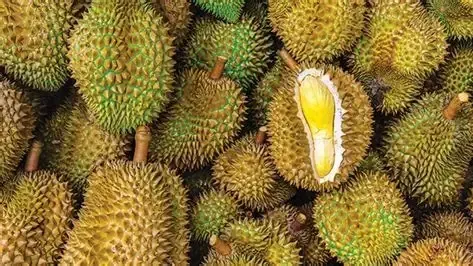
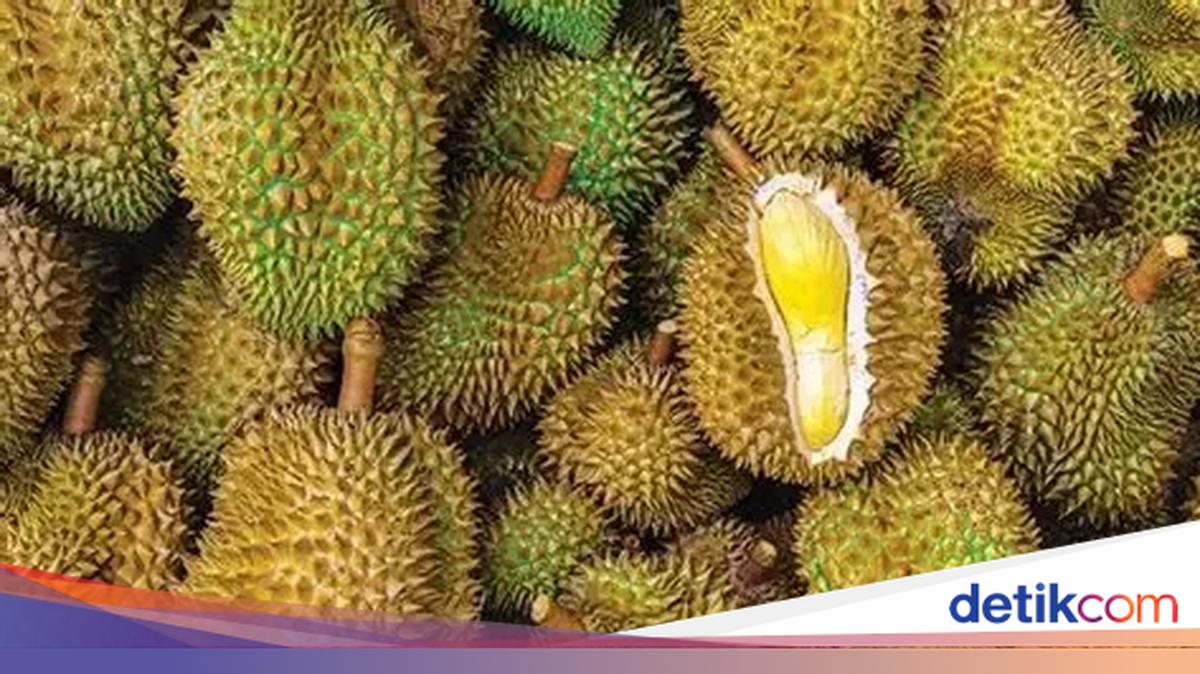
The global agricultural market has witnessed a significant shift in the perception of tropical fruits, with the durian—often referred to as the "King of Fruits"—ascending to the status of a luxury commodity. While the fruit is known for its polarizing pungent aroma, its complex flavor profile and the difficulty associated with its cultivation have driven prices to unprecedented heights. In recent years, specific varieties have emerged not just as food items, but as status symbols, fetching prices that rival luxury automobiles and high-end jewelry. From the historic orchards of Thailand to the emerging plantations of China and the volcanic soil of Indonesia, the market for premium durian is expanding, driven by a combination of rarity, artisanal farming techniques, and an insatiable demand from the burgeoning middle and upper classes in East Asia.
The valuation of these fruits is determined by a rigorous set of criteria, including the age of the tree, the specific microclimate of the orchard, the texture of the flesh, and the balance between sweetness and bitterness. As supply remains limited by the biological constraints of the trees—some of which take decades to reach peak production—the auction prices for the world’s most sought-after varieties have reached astronomical levels, with a single fruit recently selling for as much as Rp862 million (approximately $48,000).
The Pinnacle of Luxury: The Kanyao Durian of Nonthaburi
The Kanyao variety, originating from the Nonthaburi province in Thailand, currently holds the record for the most expensive durian ever sold. Translated as "Long Stalk," the Kanyao is distinguished by its unusually long stem, which is said to be a primary indicator of the fruit’s health and nutrient intake while on the tree. The prestige of the Nonthaburi Kanyao is rooted in the unique geography of the region. The area’s low-lying plains and nutrient-rich soil, historically deposited by the Chao Phraya River, provide an environment that enthusiasts claim is impossible to replicate elsewhere.
The record-breaking sale occurred at the King of Durian auction in 2019, where a single Kanyao fruit was purchased for 1.5 million baht, or roughly Rp862 million. This specific fruit was hand-picked from a nearby orchard just days before the event, selected for its perfect shape, weight, and ripeness. The Kanyao is prized for its thick, creamy, and custard-like flesh that lacks the aggressive pungency of lower-grade varieties. Instead, it offers a subtle, sweet aroma and a flavor profile that is described as exceptionally smooth and sophisticated.
The scarcity of authentic Nonthaburi Kanyao is exacerbated by environmental factors. In 2011, massive flooding in Thailand devastated many of the ancient orchards in the province, nearly wiping out the Kanyao lineage. The few trees that survived are now treated with extreme care, often protected by fences and monitored by security cameras, further driving up the cost of the limited annual harvest.
China’s Entry into the Premium Market: The Sanya Durian
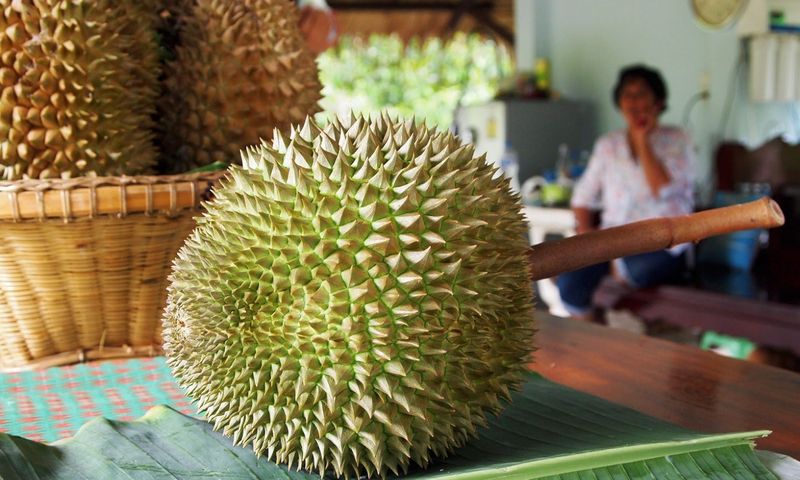
While Southeast Asia has traditionally dominated the durian trade, China has recently made headlines with its domestic cultivation efforts in Hainan Province. The Sanya durian, named after the tropical city on the southern tip of Hainan, represents China’s ambitious attempt to reduce its reliance on imports from Thailand and Malaysia. Despite being a newcomer to the scene, the Sanya variety has quickly climbed the ranks of the world’s most expensive fruits.
A single Sanya durian has been known to sell for approximately $5,000 (around Rp89.9 million). The high price point is attributed to the novelty of "grown-in-China" tropical produce and the massive investment required to simulate the ideal growing conditions in Hainan. Agricultural scientists in China have utilized advanced monitoring systems to control humidity, soil pH, and nutrient delivery to ensure the fruit meets the rigorous standards of Chinese consumers.
The Sanya durian is frequently marketed as a high-end gift, fitting into the Chinese cultural tradition of "mianzi" or social face. Giving a domestically grown, premium durian is seen as a sign of extreme respect and wealth. While the flavor profile is still being refined to match the depth of Southeast Asian varieties, its market positioning as a luxury collector’s item has ensured that demand remains high among the elite in Beijing and Shanghai.
The Global Standard: Musang King and the Malaysian Export Boom
No discussion of premium durian is complete without the Musang King, or "Mao Shan Wang." Originating from the Tanah Merah district in Kelantan, Malaysia, and popularized by the orchards of Pahang, the Musang King has become the gold standard for durian lovers worldwide. Unlike the Thai varieties, which are often harvested before they are fully ripe to allow for transport, Malaysian Musang King is typically allowed to ripen fully on the tree and fall naturally, ensuring a more intense and complex flavor.
Musang King is characterized by its bright turmeric-yellow flesh and a flavor that perfectly balances intense sweetness with a distinct, lingering bitterness. This "bittersweet" profile is highly coveted by connoisseurs. On the market, Musang King typically retails for between Rp400,000 and Rp700,000 per kilogram, depending on the season and the grade.
The economic impact of the Musang King cannot be overstated. It has transformed the Malaysian agricultural landscape, leading to the "Durian Gold Rush" where palm oil and rubber plantations are being converted into durian orchards. The development of cryogenic freezing technology has further revolutionized the industry, allowing whole Musang King fruits to be exported to Europe, North America, and Australia while maintaining their texture and flavor, thus cementing its position as a global luxury export.
The Rising Contender: Black Thorn (Duri Hitam)
In recent years, the Black Thorn variety (also known as Ochee or Duri Hitam) has begun to challenge the Musang King’s dominance. Originating from Penang, Malaysia, the Black Thorn is easily identifiable by the small, dried-up stamen (resembling a thorn) at the bottom of the fruit. Its flesh is typically a deep orange or salmon color, with a texture that is even creamier and lighter than the Musang King.
The pricing for Black Thorn often mirrors or exceeds that of Musang King, ranging from Rp400,000 to Rp600,000 per kilogram, with prices spiking during off-seasons. The supply of Black Thorn is significantly lower than that of Musang King, as the trees are more temperamental and require specific care to produce high-quality fruit. This relative rarity has allowed it to command a premium price, often being the variety of choice for those looking for something more "exclusive" than the now-ubiquitous Musang King.
Indonesia’s Luxury Entry: The J-Queen Controversy
Indonesia, home to a vast array of native durian species, entered the ultra-luxury market in 2019 with the introduction of the J-Queen variety. Developed by a young Indonesian farmer in Banyumas, Central Java, the J-Queen gained international notoriety when it was sold at a shopping mall in Tasikmalaya for Rp14 million per fruit (approximately $1,000 at the time).
The J-Queen is claimed to be a unique hybrid that only produces fruit once every three years. It is described as having a round, gold-colored exterior and a taste that is predominantly sweet with a complex, bitter finish. The sale of the J-Queen sparked significant debate within the agricultural community. While some praised it as a triumph of Indonesian branding and breeding, others questioned the sustainability of such high price points for a variety that lacked the historical pedigree of the Kanyao or Musang King. Regardless of the controversy, the J-Queen successfully put Indonesian durian on the map of the global luxury fruit market, proving that there is a significant local appetite for premium, high-status produce.
Economic Implications and Market Trends
The rise of the "luxury durian" reflects broader economic trends in Asia. The Regional Comprehensive Economic Partnership (RCEP) and other trade agreements have facilitated easier movement of perishable goods across borders, allowing premium durian to reach new markets faster than ever before. For countries like Malaysia and Thailand, durian exports have become a vital source of foreign exchange.
Data from the United Nations Comtrade database shows that China’s durian imports have grown exponentially over the last decade, reaching billions of dollars annually. This demand has created a "trickle-down" effect in the agricultural sector, where farmers are increasingly investing in organic fertilizers, specialized irrigation, and even drone technology to monitor tree health.
However, the high prices also bring challenges. The "durian economy" has led to land-use disputes and environmental concerns as forests are cleared to make way for monoculture plantations. Furthermore, the high value of the fruit has led to an increase in orchard thefts, prompting farmers to employ armed guards or install elaborate security systems.
Conclusion: The Future of the King of Fruits
The evolution of the durian from a local seasonal treat to a global luxury item shows no signs of slowing down. As breeding techniques improve and more "designer" varieties are introduced, the ceiling for durian prices may continue to rise. For the connoisseur, the cost is a secondary consideration to the experience of consuming a fruit that represents the pinnacle of tropical horticulture. Whether it is the historic Kanyao of Thailand or the modern J-Queen of Indonesia, these fruits represent a unique intersection of culture, biology, and high-stakes economics, ensuring that the durian remains the undisputed—and most expensive—king of the fruit world.