The landscape of small-scale entrepreneurship and operational logistics in emerging markets is heavily reliant on cost-effective mobility. For independent business owners, delivery couriers, and field workers, the acquisition of a reliable motorcycle is not merely a convenience but a fundamental capital expenditure. In recent years, the market for used underbone motorcycles—commonly referred to as "bebek" in Indonesia—has seen a surge in demand as businesses seek to optimize cash flow by avoiding high-interest monthly credit installments associated with new vehicle purchases. With a budget of under 5 million Indonesian Rupiah (IDR), savvy buyers can acquire robust, time-tested machines capable of sustaining heavy daily usage while maintaining excellent fuel efficiency.
The Economic Case for Pre-Owned Underbone Motorcycles
The decision to opt for a used motorcycle for business operations is rooted in financial pragmatism. When a small business expands, capital is better allocated toward inventory, human resources, or infrastructure rather than depreciating assets. New motorcycles lose a significant percentage of their value the moment they leave the showroom floor. Conversely, a well-maintained used underbone motorcycle has already undergone its steepest depreciation, allowing the owner to retain more liquid capital.
Furthermore, the "underbone" design—characterized by a lightweight frame and an exposed engine—offers structural advantages for utility purposes. These bikes are engineered for longevity and ease of maintenance. Because these models were produced in high volumes by major manufacturers like Honda, Yamaha, and Suzuki, the supply chain for spare parts is exceptionally mature. Components are widely available at affordable price points, and local mechanics possess a deep, institutional knowledge of how to repair and tune these specific engines.
Evolution of the Underbone Market
The market for these vehicles is defined by a "golden era" of engineering that occurred between 2004 and 2011. During this period, manufacturers shifted toward more sophisticated four-stroke engine technology, moving away from two-stroke predecessors to comply with emerging emissions standards while maximizing power output.
The following models have become industry standards for small business operators due to their mechanical resilience and low total cost of ownership.
1. Honda Supra X 125 (2005–2010 Generation)
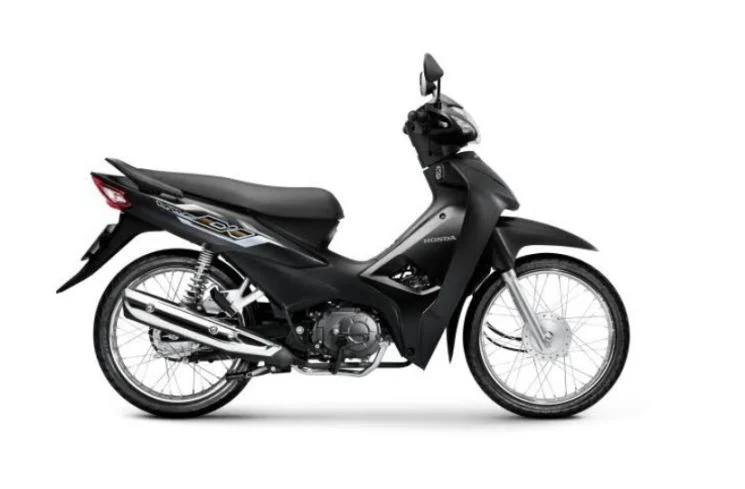
The Honda Supra X 125 is frequently cited by logistics experts as the quintessential workhorse. Equipped with a 124.8 cc SOHC engine, it produces approximately 10.1 PS of power. This output is critical for operators who navigate hilly terrain or carry moderate payloads. Data indicates that this model achieves a fuel consumption rate between 45 and 50 kilometers per liter, a metric that significantly reduces the overhead costs for delivery-based businesses. In the current secondary market, units in operational condition are valued between IDR 3.5 million and IDR 5 million.
2. Honda Supra Fit (2004–2007 Generation)
For the most budget-constrained entrepreneurs, the Supra Fit represents the baseline of economic transportation. Utilizing a simpler 100 cc engine, it prioritizes fuel economy over raw acceleration. It is common for this model to exceed 50 kilometers per liter, making it a favorite for urban courier services where fuel costs can erode profit margins. With a price point ranging from IDR 2 million to IDR 4.5 million, it remains one of the most accessible entry points for small-scale commerce.
3. Yamaha Vega R (2005–2010 Generation)
Yamaha has historically positioned its Vega line as a "performance-utility" hybrid. The Vega R is noted for its responsive engine at low RPMs, which provides excellent torque for starting from a standstill while carrying heavy goods. Its engine architecture is modular, meaning many parts are interchangeable with other Yamaha models of the same era, simplifying the maintenance process for fleet managers. Market prices generally hover between IDR 3 million and IDR 5 million.
4. Suzuki Smash (2007–2011 Generation)
The Suzuki Smash is frequently lauded for its chassis integrity. In industrial applications where motorcycles are pushed to their limits on uneven road surfaces, the Smash’s frame has proven to be highly resistant to fatigue. Its 110 cc engine is engineered for durability, designed to survive the rigors of long-distance operation. Typically retailing for approximately IDR 4.7 million to IDR 4.8 million, the Smash is an investment in long-term reliability.
5. Yamaha Jupiter Z (2004–2010 Generation)
The Jupiter Z occupies a premium position among classic underbone bikes. It features a sophisticated carburetor-fed engine (110–115 cc) known for its "legendary" durability. While it offers slightly higher performance than its peers, it retains a respectable fuel efficiency of 40 to 45 kilometers per liter. Its smooth transmission and stable engine performance make it an ideal choice for businesses requiring a balance of speed and efficiency. Prices for well-kept units generally fall between IDR 2.5 million and IDR 4.2 million.
Rigorous Inspection Protocols: A Necessary Safeguard
The primary risk associated with purchasing used commercial vehicles is the presence of latent mechanical or legal issues. Industry analysts and consumer advocates emphasize a standardized inspection protocol to mitigate these risks.
Legal Verification:
The most critical step in any transaction is the verification of the vehicle’s identity. Prospective buyers must ensure the physical frame number and engine number match the official records found in the BPKB (Vehicle Ownership Document) and STNK (Vehicle Registration Certificate). Any discrepancy here indicates potential legal complications or, in some cases, evidence of theft.
Mechanical Audit:
Before finalizing a purchase, a test ride is mandatory. During this process, the buyer should evaluate:
- Suspension Integrity: Observe for oil leaks in the fork seals and listen for bottoming out on speed bumps.
- Braking Systems: Ensure both front and rear brakes engage without "sponginess" or grinding noises.
- Transmission and Clutch: In semi-automatic underbone bikes, gear shifts should be crisp and deliberate. If the bike slips out of gear or struggles to engage, it may indicate a worn centrifugal clutch, a common repair for high-mileage units.
- Engine Sound: A healthy engine should have a consistent idle and no metallic knocking sounds, which could indicate internal bearing wear.
Broader Economic Implications and Future Outlook
The sustained demand for these used motorcycles is an indicator of broader trends in the informal economy. As digital marketplaces and localized delivery services continue to proliferate, the need for low-cost, high-reliability transport becomes increasingly acute.
From an environmental standpoint, the continued use of older, carbureted engines does present a challenge regarding urban air quality. However, from the perspective of socioeconomic development, these machines are essential. They allow individuals with limited starting capital to participate in the economy, providing a "ladder of opportunity" that leads to more stable employment or the scaling of small businesses.
Industry experts suggest that as long as the cost of new electric vehicles remains high and the infrastructure for charging continues to develop, the secondary market for reliable combustion-engine underbones will remain robust. For the independent operator, the choice of a well-maintained, pre-owned motorcycle is not just a purchase—it is a strategic decision to prioritize operational longevity and financial stability. By selecting one of these proven models and adhering to a disciplined maintenance schedule, business owners can ensure their operations remain mobile, efficient, and profitable for years to come.