In a historic and highly consequential shift in military doctrine, the United States has officially confirmed the presence of operational space-based weapons systems within its military arsenal. The disclosure, which marks the first time Washington has openly acknowledged possessing offensive or defensive capabilities positioned in orbit, signals a profound transition in the nature of modern warfare. This admission comes at a time of heightened geopolitical friction, specifically involving competition with near-peer adversaries Russia and China, both of whom have been rapidly expanding their own orbital capabilities.
The revelation was made by Secretary of the Air Force Troy Meink on Monday, September 14, 2026, during his keynote address at the Air, Space & Cyber Conference in National Harbor, Maryland. The event, hosted by the Air & Space Forces Association, serves as a primary venue for military leadership to discuss the strategic trajectory of the United States Space Force. Meink’s confirmation effectively ends years of speculation regarding the nature of the “Golden Dome” defense initiative and other classified programs that have remained under intense scrutiny by global intelligence agencies.
The Strategic Shift: From Deterrence to Orbital Dominance
During his address, Secretary Meink framed the deployment as a necessary evolution in national security. "Today, we continue to ensure our readiness in the face of evolving threats, regardless of where those threats reside," Meink stated. He explicitly confirmed that the United States Space Force has successfully deployed space-control weapons that are currently operational in orbit. According to Meink, these systems are designed to protect joint forces from hostile actions initiated by adversaries.
While the Secretary declined to provide granular technical details, citing the need to maintain operational security and a "highly deliberate" communication strategy, the implications of his statement are far-reaching. The primary function of these systems, as alluded to by military experts and leaked intelligence, is to maintain space superiority—a concept that has moved from theoretical doctrine to an active, physical requirement of the United States military. By positioning assets in orbit, the U.S. is signaling that it no longer views space as a sanctuary, but as a contested theater of operations where the laws of conventional conflict now apply.
Chronology of Militarization in Space
The path to this moment has been paved by decades of technological development and shifting international norms. The following timeline outlines the key milestones that led to the 2026 acknowledgment:
- 1967: The Outer Space Treaty is signed, prohibiting the placement of weapons of mass destruction in orbit. While it restricts nuclear weapons, it remains ambiguous regarding conventional space-based weaponry.
- 2019: The United States officially establishes the Space Force as the sixth branch of the U.S. Armed Forces, signaling a major organizational pivot toward orbital dominance.
- 2023–2024: Multiple intelligence reports surface suggesting that both Russia and China are testing co-orbital interceptors and satellite-jamming technologies, prompting a shift in U.S. procurement strategies.
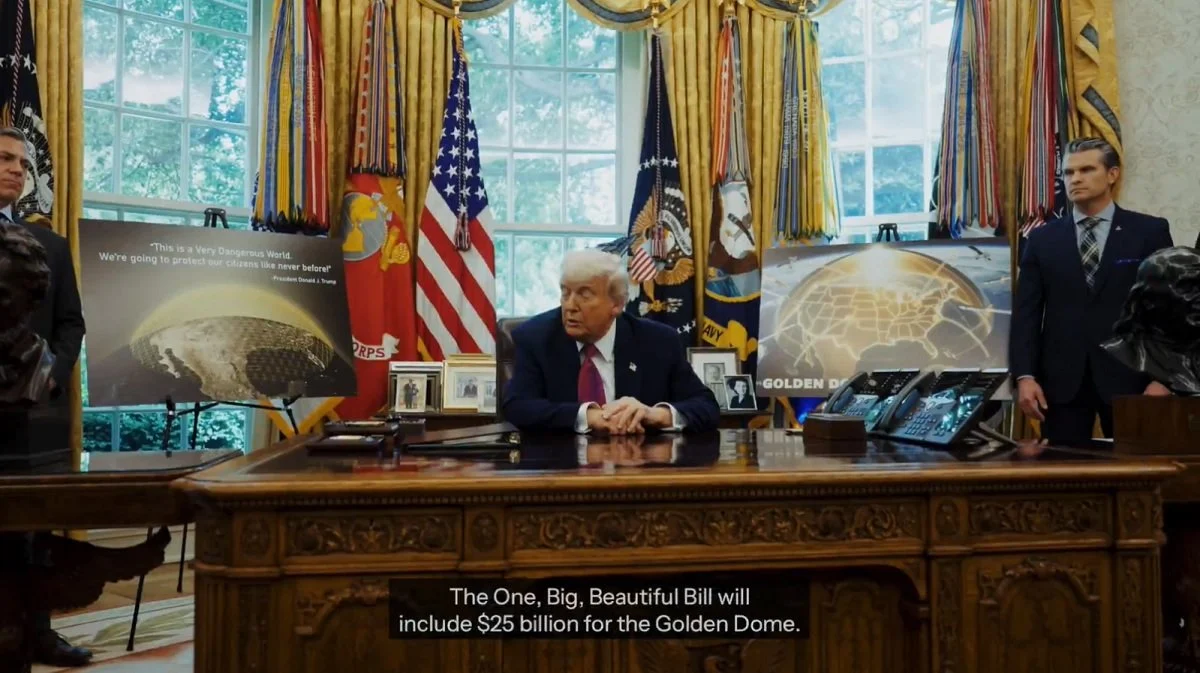
- 2025: The "Golden Dome" initiative is introduced at the White House by President Donald Trump, initially described as a comprehensive shield for U.S. assets.
- September 2026: Secretary Troy Meink officially confirms the operational status of space-based weapons, ending the era of plausible deniability.
Technical Capabilities and Tactical Implications
Although the Pentagon has been reticent to disclose the exact nature of these weapons, defense analysts and sources within the Washington establishment have provided some clarity. According to reports from The Washington Post, the capabilities mentioned by Meink are believed to be "non-kinetic" and "kinetic" space-control systems.
These technologies are capable of "neutralizing" or disabling the functionality of an adversary’s satellite. This could include electronic warfare suites that jam communication frequencies, laser-based systems that blind optical sensors, or even proximity-based maneuverable platforms capable of physically disabling a target satellite. The necessity for such systems stems from the fact that modern military operations—including precision-guided munitions, troop communications, and global logistics—rely heavily on the Global Positioning System (GPS) and orbital reconnaissance.
If an adversary were to target the U.S. satellite constellation, the ability to respond in kind or preemptively neutralize that threat is now considered a vital pillar of the U.S. national defense strategy.
The Geopolitical Landscape and Global Reactions
The acknowledgment has sent shockwaves through international diplomatic circles. The move is expected to accelerate the "space race" between the world’s superpowers. China’s Foreign Ministry has frequently criticized the United States for "weaponizing space," and this official admission will likely provide further fodder for Beijing to justify its own military space programs.
Russia, similarly, has long maintained that the deployment of any defensive or offensive systems in space constitutes a direct violation of the spirit of international treaties. However, the U.S. position, as articulated by the Department of Defense, is that the current international framework is outdated and does not account for the rapid advancement of anti-satellite (ASAT) capabilities.
"It is critical for us to maintain dominance, not only in the air but also in space," Meink remarked during a follow-up Q&A session. This sentiment reflects the prevailing view in Washington that the United States cannot afford to be the only power adhering to a doctrine of restraint while competitors actively build offensive capabilities.
Economic and Strategic Impact
The financial commitment required to maintain a persistent presence of offensive weapons in orbit is substantial. The development of the "Golden Dome" system alone has accounted for a significant portion of the defense budget increase over the last two fiscal years. This investment represents not just the cost of hardware, but also the massive infrastructure of ground stations, cyber-security layers, and specialized personnel training required to manage these assets.
Beyond the cost, the strategic implications include:
- Increased Risk of Accidental Escalation: With weapons actively orbiting the planet, the margin for error is near zero. A malfunctioning satellite or an misinterpreted maneuver could potentially trigger an unwanted kinetic confrontation.
- Pressure on Space Norms: International organizations, including the United Nations Office for Outer Space Affairs (UNOOSA), face renewed pressure to establish binding rules of the road for space operations. The current lack of a "Space Traffic Control" or a formal treaty governing space weapons creates a dangerous vacuum.
- The Shift in Intelligence Gathering: The ability to blind or disable surveillance satellites fundamentally alters how nations conduct military intelligence. If satellites are no longer immune from attack, nations may return to older, ground-based or aerial reconnaissance methods, or accelerate the development of "swarm" satellite constellations that are harder to target.
Conclusion: A New Frontier of Conflict
As the world processes this historic admission, it is clear that the final frontier has become the next front line. The United States’ acknowledgment that it possesses and operates weapons in orbit marks the end of an era of relative peace in space. Whether this deployment serves as a deterrent that keeps the peace or an accelerant that leads to the first major conflict in space remains to be seen.
What is certain is that the global balance of power has shifted. As space-based assets become increasingly integrated into the daily functioning of global economies and military operations, the protection—and the ability to contest—those assets will define the geopolitical stability of the 21st century. The Pentagon’s move is a clear signal that the United States intends to remain the preeminent power in this new, high-altitude theater, regardless of the diplomatic or strategic costs.
As the international community awaits further details, the focus will likely turn to the upcoming summit on space security, where the major powers will be forced to address the reality of a militarized orbit. The era of space being solely a domain for exploration and communication is over; it is now a domain of hard power, where the security of nations rests on their ability to command the heights of the cosmos.