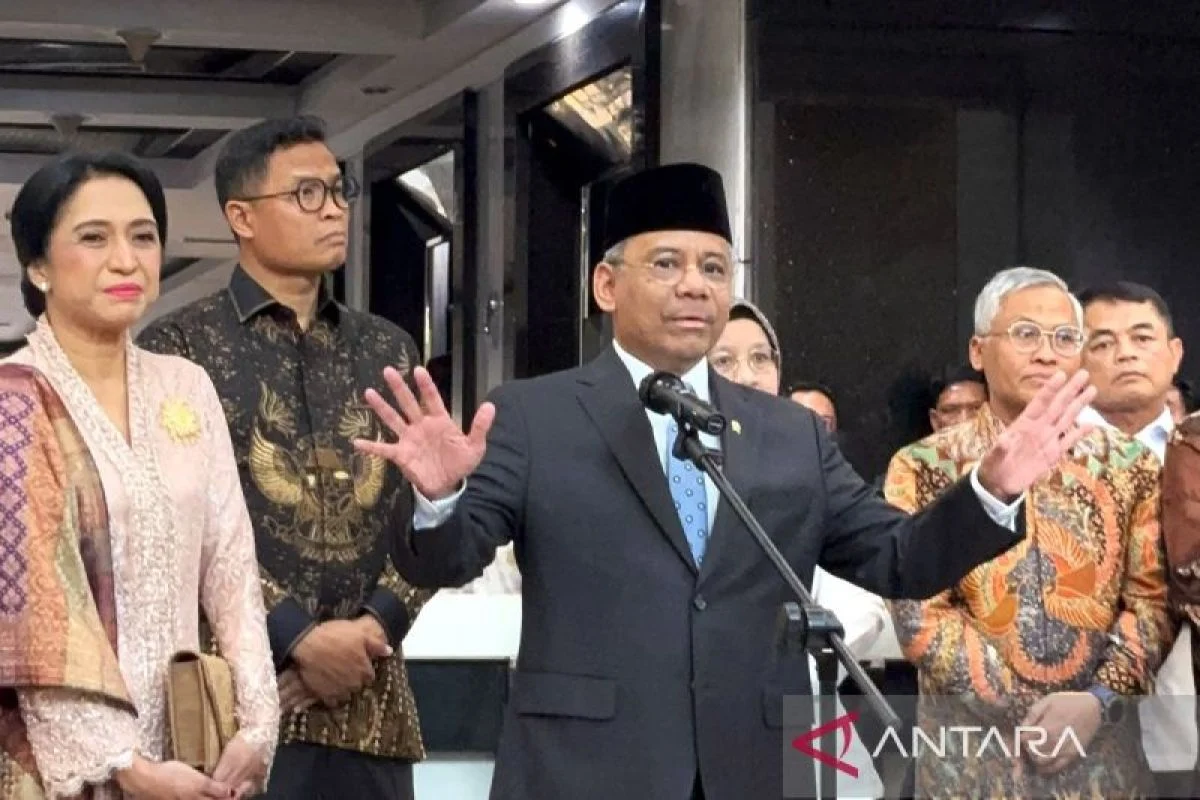
Jakarta faces another high-profile transition within its top economic leadership as structural shifts continue to define the current administration. On September 14, 2026, Suahasil Nazara officially took the oath of office as the new Minister of Finance of the Republic of Indonesia. Appointed under Presidential Decree Number 97P of 2026, Suahasil steps into the role to succeed Purbaya Yudhi Sadewa, marking a significant personnel change in the economic command center under the administration of President Prabowo Subianto.
This appointment brings to the forefront a seasoned fiscal technocrat with deep roots in both macroeconomic academia and structural public policy. Having served extensively as the Deputy Minister of Finance across different administrations, Suahasil’s transition to the top financial post represents continuity mixed with institutional familiarity. As global economic pressures, domestic fiscal targets, and market expectations converge, the newly inaugurated minister assumes stewardship of Southeast Asia’s largest economy at a critical juncture.
A Strong Academic Foundation Rooted in Global and Domestic Institutions
Suahasil Nazara’s journey to the helm of the Ministry of Finance is underpinned by a robust and internationally recognized educational background in economics. Born in Jakarta on November 23, 1970, Suahasil laid the groundwork for his career at Indonesia’s premier institution of higher learning. He enrolled in the Faculty of Economics at the University of Indonesia (UI), where he earned his Bachelor of Economics degree in 1994. This foundational academic training in Jakarta provided him with a localized yet comprehensive understanding of Indonesia’s unique economic landscape, socio-economic disparities, and development challenges.
Seeking to broaden his analytical toolkit and engage with global macroeconomic theories, Suahasil moved to the United States for his postgraduate studies. He attended Cornell University, where he successfully completed a Master of Science program in 1997. This international academic exposure sharpened his expertise in quantitative economic analysis and advanced fiscal frameworks.
Determined to reach the pinnacle of academic qualification, Suahasil continued his doctoral pursuits at the University of Illinois at Urbana-Champaign. In 2003, he was conferred a Doctor of Philosophy (Ph.D.) in Economics. This comprehensive academic trifecta—a bachelor’s degree from UI, a master’s from Cornell, and a doctorate from the University of Illinois—cemented his status as a rigorously trained economist equipped to handle complex national financial architectures.
Transitioning to Academia and Shaping Future Economists
Before stepping into the high-stakes arena of national policymaking, Suahasil dedicated a substantial portion of his professional life to molding the next generation of economists and researchers. He began his tenure as a lecturer at the Faculty of Economics and Business at the University of Indonesia (FEB UI) in 1999.
Within the academic ecosystem of FEB UI, Suahasil quickly ascended through various leadership and administrative roles. He served as the Head of the Graduate Program in Economics from 2004 to 2005, guiding advanced research initiatives and curriculum development. Shortly after, he was appointed Head of the Demographic Institute at FEB UI, serving from 2005 to 2008, where he focused on population dynamics, labor economics, and their broader implications for national growth. His academic leadership culminated in his appointment as Chairman of the Department of Economics from 2009 to 2013. In recognition of his scholarly contributions, research output, and dedication to economic education, the University of Indonesia granted him the prestigious title of Professor of Economics in 2009.
Stepping into the Realm of Fiscal Policy and Bureaucracy
Suahasil’s transition from theoretical academia to practical government policy was a natural progression. His profound understanding of market dynamics and economic modeling caught the attention of policymakers, leading to his deep involvement in public sector reforms.
In 2015, Suahasil entered the bureaucratic machinery of the Ministry of Finance when he was appointed Acting Head of the Fiscal Policy Agency (BKF). Recognizing his strategic vision and administrative competence, the government confirmed him as the definitive Head of the Fiscal Policy Agency a year later, a position he held until 2019. During his tenure at the BKF, Suahasil played a pivotal role in formulating revenue strategies, analyzing macro-fiscal projections, and designing tax policy adjustments. This intensive four-year stint provided him with firsthand experience in navigating the intricate bureaucracy of state finance and equipped him with the institutional memory necessary to manage national budgetary levers.
A Decade of Service as Deputy Minister of Finance
Suahasil’s extensive bureaucratic and academic credentials made him an invaluable asset to successive national administrations. On October 25, 2019, President Joko Widodo appointed Suahasil as the Deputy Minister of Finance in the Advanced Indonesia Cabinet, working alongside long-serving Finance Minister Sri Mulyani Indrawati. In this capacity, he was instrumental in steering the nation’s fiscal response through the unprecedented economic shocks triggered by the global COVID-19 pandemic, guiding fiscal stimulus programs, and managing national economic recovery efforts.
Demonstrating cross-administration trust and recognized competence, Suahasil was retained in his position when President Prabowo Subianto took office. On October 21, 2024, he was officially inaugurated as the Deputy Minister of Finance in the Red and White Cabinet. His continuity as deputy ensured a steady hand during the initial transition phases of the current administration’s economic agenda.
The Third Minister of Finance Under President Prabowo
The appointment on September 14, 2026, marks a watershed moment as Suahasil becomes the third Minister of Finance to serve under President Prabowo Subianto’s administration. The position was initially held by Sri Mulyani Indrawati at the commencement of the administration, followed by Purbaya Yudhi Sadewa, before ultimately landing on Suahasil Nazara.
This transition reflects the dynamic nature of President Prabowo’s cabinet adjustments, aimed at optimizing institutional performance and ensuring that fiscal execution aligns seamlessly with the state’s broader development targets, such as food security, infrastructure continuity, and robust economic growth. Following the handover of duties from Purbaya Yudhi Sadewa, market watchers and economic analysts have expressed optimism regarding Suahasil’s deep familiarity with ongoing fiscal commitments.
Implications, Market Reactions, and Forward-Looking Challenges
Financial markets and economic analysts have closely monitored the leadership shuffle at the Ministry of Finance. Observers have highlighted that one of the primary public relations and policy priorities for the new minister will be ensuring that fiscal policies remain transparent, stable, and easily predictable for domestic and international markets. Predictability in regulatory frameworks, tax structures, and state spending is vital for maintaining investor confidence and stabilizing the rupiah.
Furthermore, Suahasil’s deep institutional background positions him well to manage the structural realignment of Indonesia’s fiscal engine. Economists note that his immediate task involves balancing the ambitious social and developmental programs promised by the administration with strict adherence to fiscal discipline, particularly maintaining the statutory budget deficit limit under 3 percent of Gross Domestic Product (GDP).
As Suahasil Nazara assumes the responsibilities of Minister of Finance, his unique blend of rigorous academic training, decades of teaching experience at the University of Indonesia, and extensive bureaucratic tenure within the Fiscal Policy Agency and the deputy ministerial office provides him with a formidable toolkit. Whether he can successfully navigate the balancing act of fostering aggressive economic growth while preserving fiscal prudence will define his legacy at the pinnacle of Indonesia’s economic governance.