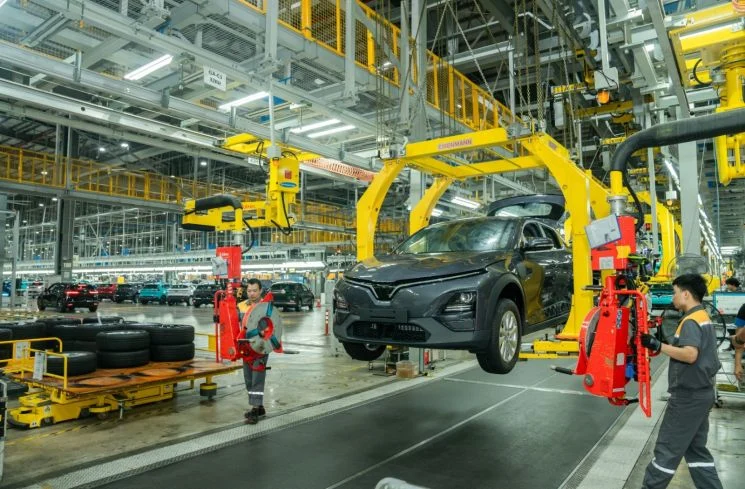
For years, Southeast Asia has been perceived as lagging in the global energy transition. The region was largely characterized by its heavy reliance on coal, unchecked urbanization, and inconsistent green policies. However, this narrative has undergone a dramatic transformation in the past decade. From Vietnam to Indonesia, Southeast Asia is now emerging as the most dynamic region in the global electric vehicle (EV) transition. This shift is not merely about policy changes; it reflects a burgeoning self-confidence that innovation is no longer the sole preserve of developed nations. Amidst this wave of change, VinFast stands as a tangible symbol of Southeast Asia’s burgeoning green industry.
Founded in Vietnam in 2017, VinFast began as a nascent player in the automotive world. Within less than two years, the company successfully established a high-tech manufacturing facility in Hai Phong and launched its first three conventional gasoline-powered cars. The pivotal moment arrived in 2022 when VinFast made a bold, radical decision to cease the production of gasoline cars and transition entirely to electric vehicles. This audacious move underscored Vietnam’s ambition to become a global pioneer in clean mobility. "We believe every nation deserves a role in the future of the world’s green industry," stated Pham Nhat Vuong, Chairman of Vingroup and founder of VinFast. "Our move is not just about electric cars; it’s about building a sustainable future for Asia."
Building a Comprehensive Green Mobility Ecosystem
VinFast’s success extends beyond its product line. The company has been instrumental in constructing one of the most integrated green mobility ecosystems globally, encompassing everything from city cars to electric buses, and from charging services to lithium-ion battery research. In Vietnam, its charging network boasts over 150,000 ports, positioning it among the most extensive in the world. This charging division now operates under V-Green, a dedicated entity tasked with building infrastructure across VinFast’s international markets.
Beyond technological innovation in vehicles, VinFast has also courageously pioneered new business models. Through a battery subscription scheme, consumers can purchase EVs at a lower initial cost, with the assurance of lifetime maintenance and battery replacement. "The battery subscription program is not merely a pricing strategy; it’s an effort to democratize access, making electric vehicles attainable for all segments of society," explained Kariyanto Hardjosoemarto, CEO of VinFast Indonesia. This innovative approach addresses one of the primary concerns for potential EV buyers: the long-term cost and management of battery health.
VinFast’s Green Expansion into Indonesia
VinFast is now strategically targeting Indonesia as a key market, referring to it as a "second home." Indonesia was chosen not only for its potential as the largest EV market in the region but also for its substantial nickel reserves, a critical raw material for EV batteries. Projections from the International Energy Agency (IEA) indicate that EV sales in Southeast Asia are expected to grow exponentially, with Indonesia poised to be a significant contributor. By 2030, the IEA forecasts that electric cars could account for over 20% of new vehicle sales in the region, a substantial increase from the less than 1% recorded in 2022. Indonesia’s commitment to developing its downstream nickel industry further solidifies its appeal for EV manufacturers looking to secure supply chains.
Among its ongoing plans, VinFast is collaborating with local partners to expand its dealer network and is preparing to establish an assembly plant in Subang, West Java. This facility is slated to have an annual capacity of 50,000 units, with an initial investment of approximately US$200 million. This investment signifies a substantial commitment to local manufacturing and job creation. Beyond vehicle production, VinFast aims to build a comprehensive green mobility ecosystem in Indonesia, including the development of 63,000 charging stations projected to cost around US$300 million. This extensive charging infrastructure is crucial for alleviating range anxiety among consumers and encouraging wider EV adoption.
"For us, this journey is more than just expanding into a new market," Kariyanto Hardjosoemarto stated. "It’s about becoming part of a larger narrative – a story of the creativity of young Indonesians, the spirit of a growing middle class, and the vision of forward-thinking policymakers." This statement reflects VinFast’s ambition to integrate itself into the fabric of Indonesian society and contribute to its economic and technological development.
A Timeline of Ambition and Growth
The trajectory of VinFast illustrates a remarkable pace of development.
- 2017: VinFast is established in Vietnam, initially focusing on conventional vehicles.
- 2018-2019: The company rapidly builds a state-of-the-art manufacturing plant in Hai Phong and introduces its first gasoline-powered car models.
- 2021: VinFast announces its strategic pivot towards electric vehicles, signaling a bold commitment to sustainable mobility.
- 2022: The company officially transitions its entire production line to electric vehicles, unveiling its EV lineup at major international auto shows, including the Los Angeles Auto Show. This year also marked its initial forays into international markets beyond Vietnam.
- 2023: VinFast commences construction of its U.S. manufacturing facility in North Carolina, signifying its global ambitions and commitment to diversifying production. Simultaneously, it intensifies its focus on Southeast Asian markets, with Indonesia identified as a priority. The company also begins establishing its charging network infrastructure internationally.
- 2024 and beyond: VinFast plans to operationalize its Indonesian assembly plant and significantly expand its charging infrastructure, aiming to become a leading EV provider in the region.
Supporting Data and Market Context
The global EV market has witnessed exponential growth, driven by environmental concerns, government incentives, and advancements in battery technology. According to the IEA, global EV sales surpassed 10 million units in 2022, representing a 55% increase from 2021. This trend is projected to continue, with further significant growth expected in the coming years.
Southeast Asia, with its large and young population, rapidly growing economies, and increasing urbanization, presents a fertile ground for EV adoption. Countries like Thailand, Vietnam, and Indonesia are actively implementing policies to encourage EV manufacturing and consumption. Thailand, for instance, has set ambitious targets to become a regional EV hub, offering tax incentives and subsidies for both manufacturers and consumers. Vietnam’s proactive stance, championed by VinFast, has set a benchmark for other nations in the region.
Indonesia’s strategic advantage lies in its vast nickel reserves, which are essential for the production of lithium-ion batteries, the power source for most EVs. Indonesia is the world’s largest producer of nickel, and its government has actively sought to develop its downstream processing capabilities, attracting foreign investment in battery manufacturing and EV production. This vertical integration offers a significant competitive advantage for companies like VinFast.
Broader Impact and Implications for Southeast Asia
VinFast’s aggressive expansion and innovative strategies have far-reaching implications for Southeast Asia.
- Technological Advancement and Job Creation: The establishment of advanced manufacturing facilities and research centers by VinFast will contribute to technological transfer, skill development, and the creation of high-value jobs within the region. This fosters a more sophisticated industrial base, moving beyond traditional manufacturing.
- Environmental Benefits: The widespread adoption of EVs, facilitated by companies like VinFast, will lead to a significant reduction in air pollution and greenhouse gas emissions in urban centers. This directly addresses critical environmental challenges faced by many Southeast Asian cities, such as smog and respiratory illnesses.
- Economic Diversification: VinFast’s focus on EVs and green technology encourages economic diversification away from fossil fuel dependence. This aligns with global trends towards decarbonization and positions Southeast Asian economies to thrive in the future green economy.
- Regional Leadership: VinFast’s success story, originating from Vietnam and expanding across the region, serves as an inspiration and a catalyst for other local companies and governments. It demonstrates that innovation and leadership in cutting-edge industries are achievable for emerging economies.
- Consumer Empowerment: The battery subscription model and the focus on building extensive charging infrastructure aim to make EVs more accessible and practical for a wider range of consumers, thereby democratizing clean mobility.
However, challenges remain. The development of robust and reliable charging infrastructure across diverse geographical terrains, ensuring grid stability to handle increased electricity demand, and addressing the initial cost barrier for consumers are critical hurdles. Furthermore, the availability of skilled labor for advanced manufacturing and maintenance will require concerted efforts in education and training.
The strategic entry of VinFast into markets like Indonesia, coupled with its commitment to building local ecosystems, signifies a pivotal moment for Southeast Asia’s electric vehicle revolution. It represents not just the ambition of a single company but a broader regional aspiration to lead in the global transition to sustainable mobility, demonstrating that innovation and industrial prowess can indeed blossom in emerging economies. The coming years will be crucial in determining the extent to which VinFast and its regional partners can fulfill this promise, reshaping the automotive landscape and contributing to a cleaner, greener future for Southeast Asia.