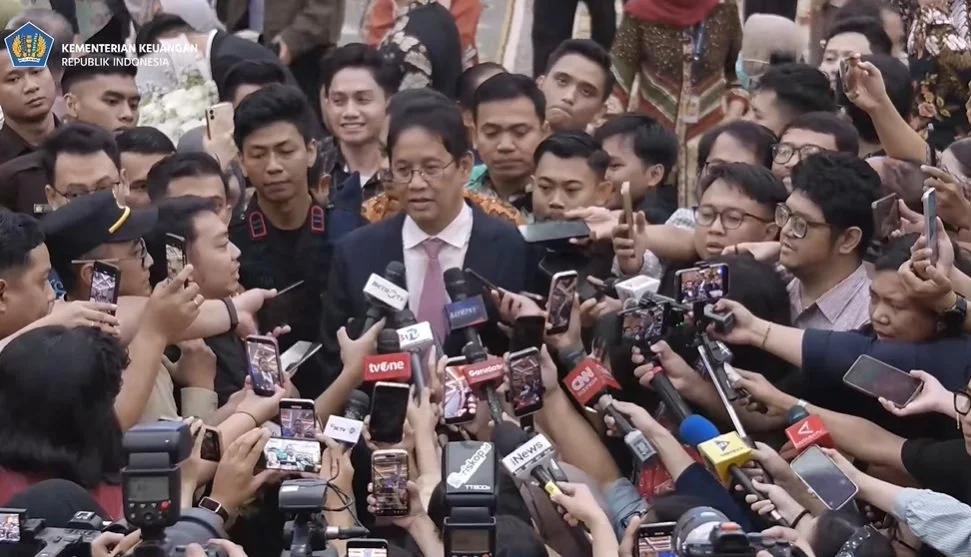
The landscape of Indonesia’s fiscal management underwent a significant transition on Tuesday, September 15, 2026, as Purbaya Yudhi Sadewa officially stepped down from his role as Minister of Finance. The handover ceremony, held at the Djuanda I Building within the Ministry of Finance complex in Jakarta, marked the formal commencement of Suahasil Nazara’s tenure as the new Minister of Finance. This transition represents a pivotal moment for the nation’s economic policy framework, coming at a time when the administration is navigating complex global headwinds, domestic fiscal consolidation, and the ongoing implementation of long-term economic reforms.
Purbaya Yudhi Sadewa, a figure long regarded for his technical expertise and calm demeanor in managing the state treasury, has concluded a tenure characterized by rigorous efforts to stabilize the national economy amidst post-pandemic recovery and fluctuating global commodity prices. As he exits the corridors of power, the public and political observers alike are keenly interested in the future trajectory of the ministry under his successor and the personal transition of a man who has been at the helm of Indonesia’s financial navigation.
The Transition: A Shift in Fiscal Leadership
The appointment of Suahasil Nazara as the Minister of Finance follows a period of intense administrative deliberation. Suahasil, who previously served in high-ranking capacities within the Ministry of Finance, is widely viewed by market analysts and international institutions as a continuity candidate. His familiarity with the ministry’s internal mechanisms, coupled with his academic background in economics, suggests that the current fiscal trajectory—focused on debt sustainability, infrastructure investment, and social welfare programs—will remain largely intact.
For Purbaya, the transition ceremony was not merely a professional obligation but a moment of reflection. During the proceedings, he maintained a composed, albeit lighthearted, demeanor, signaling a desire to detach from the high-pressure environment that defines the office of the Finance Minister. The transfer of authority involves more than just a change in leadership; it involves the handover of multi-trillion rupiah budgetary responsibilities and the stewardship of Indonesia’s sovereign credit rating, which has been a point of pride for the outgoing administration.
Fact 1: A Well-Earned Retirement and Physical Respite
In his closing remarks to the media, Purbaya candidly addressed his immediate plans, which prioritize personal well-being over professional engagement. Citing the cumulative fatigue of managing the state’s finances, he expressed a firm intention to enter a phase of genuine retirement. "I just want to retire; I am tired, and I am getting old," he remarked. This statement, while brief, reflects the immense psychological and physical burden borne by those in charge of the state budget. The role of the Minister of Finance in Indonesia is notoriously demanding, requiring constant vigilance over macroeconomic indicators, legislative interactions, and international diplomatic engagements.
When probed about whether he intended to host a celebratory event or a grand retirement reception, Purbaya opted for humor, deflecting the question with a remark about his current financial status post-government. While clearly intended as a joke, the sentiment underscores a common narrative among retiring public servants: the transition from the center of power to the quietude of civilian life.
Fact 2: Seeking Solace in Simple Pleasures
Beyond the public eye, Purbaya has signaled a shift in priorities toward simple, domestic activities. He specifically mentioned the prospect of returning to his private residence to enjoy leisure time, specifically citing fishing in the pond behind his home. This desire for tranquility stands in stark contrast to the hectic schedule of a Cabinet Minister, which is often dictated by urgent economic crises, parliamentary hearings, and international summits. The transition from the volatility of financial markets to the predictability of personal hobbies is a narrative arc often seen in long-serving technocrats, who look to reclaim time lost to the service of the state.
Chronology of the 2026 Fiscal Leadership Change
The process leading up to this transition was systematic, adhering to the standard administrative protocols of the Indonesian government.

- August 2026: Initial discussions regarding the cabinet reshuffle began to circulate within political circles. Market analysts noted that while the administration remained stable, a realignment was expected to accommodate shifting political alliances.
- September 10, 2026: Official announcements were made regarding the cabinet changes. Purbaya Yudhi Sadewa was confirmed to be stepping down, and Suahasil Nazara was named as the successor.
- September 15, 2026: The official handover ceremony (Sertijab) took place at the Ministry of Finance’s Djuanda I Building. The event was attended by senior ministry officials, representatives from the central bank, and various stakeholders from the financial sector.
- September 16, 2026: Suahasil Nazara officially began his first full day as Minister of Finance, focusing on the upcoming budgetary discussions with the House of Representatives.
Supporting Data and Economic Context
During Purbaya’s tenure, the Ministry of Finance faced several landmark challenges. The fiscal policy was heavily tested by global inflation, the need to maintain a manageable debt-to-GDP ratio, and the transition toward a greener economy.
According to data from the Ministry of Finance archives, the fiscal deficit was kept within the legal threshold of 3% for the majority of his term, a feat achieved through rigorous tax collection reforms and expenditure prioritization. Under his leadership, the tax-to-GDP ratio showed incremental improvement, driven by the implementation of the Harmonization of Tax Regulations (HPP) law. These successes provide a solid foundation for Suahasil Nazara, yet they also place a high burden of expectation on the new minister to sustain these gains.
Official Responses and Market Sentiment
The response from the financial sector has been one of cautious optimism. Institutional investors, including those in the Indonesian Stock Exchange (IDX), have noted that the continuity of personnel within the Ministry of Finance is a positive signal for market stability.
"The transition is orderly and expected," noted an analyst at a leading regional brokerage. "Suahasil Nazara is well-known to the markets, and his appointment provides the certainty that international investors look for when assessing the Indonesian fiscal landscape."
While Purbaya’s exit is seen as a personal choice to move on, his legacy as a steady hand during turbulent fiscal cycles remains highly regarded by his peers. Several former cabinet colleagues have praised his work ethic, noting that he often worked late into the night to ensure that the state budget remained responsive to the needs of the lower-income population.
Broader Implications for Indonesia’s Future
The departure of Purbaya Yudhi Sadewa signals a broader trend of generational and stylistic shifts within the Indonesian cabinet. As the country moves further into the late 2020s, the focus is increasingly shifting toward digitalization of financial services, the expansion of the tax base through technology, and the navigation of the digital economy.
The implications of this change are twofold:
- Continuity vs. Innovation: While Suahasil Nazara is expected to maintain current policy frameworks, the evolving nature of the global economy may force him to introduce new strategies. His expertise in fiscal policy suggests he will likely prioritize the digitalization of public services to increase efficiency.
- Public Perception: The narrative surrounding Purbaya’s "retirement" and his desire to return to a simpler life resonates with the public, framing him as a grounded public servant. This humanizes the high-stakes world of finance and offers a rare, relatable glimpse into the lives of those who steer the national economy.
Conclusion: The Legacy of a Technocrat
As Purbaya Yudhi Sadewa leaves the Ministry of Finance, he does so with a reputation as a dedicated technocrat who prioritized the fiscal health of the nation over political posturing. His decision to retire, punctuated by his humorous remarks and desire for a peaceful life, serves as a capstone to a career dedicated to the complex machinery of state governance.
The task now falls to Suahasil Nazara to build upon the foundations laid by his predecessor. With the macroeconomic environment remaining sensitive to global geopolitical tensions and commodity price fluctuations, the new Minister of Finance will need to balance the continuity of existing fiscal policies with the need for agile, forward-thinking solutions. For now, the nation watches as one chapter closes and another begins, ensuring that the wheels of Indonesia’s economy continue to turn with stability and purpose. The story of Purbaya’s departure—a mix of high-level administrative transition and the deeply human desire for rest—serves as a reminder that even at the highest levels of government, the individuals behind the titles are ultimately defined by their contributions to the greater good of the republic.