Global financial markets are currently undergoing a period of intense recalibration as investors grapple with the reality that the Federal Reserve’s monetary easing cycle may be significantly delayed or even reversed. Recent data releases from the United States, particularly the robust non-farm payroll figures and persistent inflationary pressures, have fundamentally altered the outlook for interest rates. Analysts now project that the Federal Reserve could maintain a high-interest rate environment—or even implement further hikes—well into the end of 2026. This shift comes as the global economic landscape remains fractured by the ongoing conflict in the Middle East, which continues to exert upward pressure on energy prices and supply chain costs, complicating the Fed’s dual mandate of maximum employment and price stability.
The Shifting Narrative of U.S. Monetary Policy
The consensus among market participants has shifted dramatically over the past several quarters. For much of 2025, the prevailing expectation was a steady path toward monetary easing. However, the latest economic data from the Bureau of Labor Statistics has painted a different picture. The U.S. labor market has demonstrated remarkable resilience, consistently adding jobs at a pace that prevents the cooling of wage inflation. When combined with headline inflation numbers that remain stubbornly above the Fed’s 2% target, the margin for error for policymakers has narrowed significantly.
Dimas Yusuf, Investment Director at Sucor Asset Management, highlighted the growing apprehension regarding the leadership transition at the Federal Reserve. With Kevin Warsh’s emerging influence at the helm, the lack of explicit "forward guidance" has left investors in a state of flux. The ambiguity surrounding the central bank’s long-term strategy has created a vacuum of certainty, forcing market participants to rely on data-dependent modeling rather than clear communication from the Fed. According to Yusuf, the probability of a 25-basis-point rate hike has gained significant traction, with current market pricing suggesting a 60% likelihood of such a move by September 2026.
Chronology of Market Expectations: 2025–2026
To understand the current sentiment, one must look at the timeline of events that led to this pivot:
- Early 2025: Optimism peaked regarding a "soft landing," with markets pricing in aggressive rate cuts starting in the second half of the year.
- Mid-2025: Geopolitical tensions in the Middle East escalated, leading to a surge in crude oil prices, which re-introduced energy-driven inflationary risks.
- Q4 2025: The U.S. non-farm payroll reports consistently outperformed analyst expectations, forcing a reassessment of the "cooling labor market" narrative.
- Q1 2026: Leadership transitions at the Federal Reserve brought new voices to the table, resulting in a more hawkish tone that prioritized inflation containment over economic stimulus.
- September 2026 (Current Period): Markets are now discounting the possibility of rate cuts and are instead preparing for potential hikes to curb persistent price increases.
The Dilemma for Bank Indonesia
The prospect of a "higher-for-longer" or an increasingly hawkish Federal Reserve presents a profound dilemma for Bank Indonesia (BI). As a central bank in an emerging market, BI operates under the constant pressure of maintaining the stability of the Indonesian Rupiah (IDR) while simultaneously fostering domestic economic growth.
When the Fed raises rates, the yield on U.S. Treasury securities increases, making dollar-denominated assets more attractive to global capital. This leads to capital outflows from emerging markets like Indonesia as investors seek higher risk-adjusted returns in the U.S. To prevent excessive depreciation of the Rupiah, which could trigger imported inflation, Bank Indonesia is often compelled to match the Fed’s hawkish stance.
However, increasing interest rates locally acts as a drag on economic growth by raising the cost of borrowing for businesses and consumers. If BI raises rates to protect the Rupiah, it risks stifling domestic credit expansion, potentially slowing down GDP growth at a time when the global economy is already facing significant headwinds. If BI fails to respond, the resulting currency volatility could undermine investor confidence and worsen the nation’s current account balance.
Economic Implications and Structural Risks
The potential for further Fed hikes is not merely a central banking issue; it has cascading effects across the real economy. For Indonesia, the impact is twofold: financial market volatility and trade-related risks.
Financial Market Volatility
Foreign institutional investors often hold a significant portion of Indonesian government bonds (SBN). A sudden shift in Fed policy typically triggers a sell-off in these assets, leading to a sharp rise in domestic bond yields. This increases the cost of government debt servicing, which can constrain fiscal space for infrastructure development and social welfare programs.
Trade and Commodity Prices
The ongoing conflict in the Middle East remains a wildcard. Should the conflict widen, it could lead to further disruptions in global energy supply chains. For Indonesia, as a major commodity exporter, higher energy prices can be a double-edged sword. While it may provide a temporary boost to export revenue, the cost of importing refined fuels to meet domestic demand—often heavily subsidized—places a significant burden on the state budget. The combination of a strong U.S. dollar (due to high Fed rates) and expensive energy imports creates a significant fiscal risk.
Analyst Perspectives and Market Sentiment
Financial analysts are closely monitoring the upcoming Federal Open Market Committee (FOMC) meetings for any signals of a pivot. The consensus is that the Fed will likely remain data-dependent, with the labor market and consumer price index (CPI) reports serving as the primary drivers of future decisions.
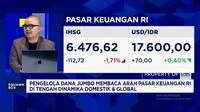
According to market commentary provided during the latest Squawk Box segment on CNBC Indonesia, the prevailing sentiment is one of caution. Investors are advised to maintain a defensive stance, focusing on assets that provide a hedge against inflation and currency volatility. The unpredictability of the Fed’s policy trajectory under the current leadership means that volatility in equity and bond markets is likely to persist for the remainder of the year.
Broader Global Context
The U.S. Federal Reserve’s decisions do not occur in a vacuum. Major central banks in Europe and Asia are also grappling with similar challenges. The European Central Bank (ECB) and the Bank of Japan (BoJ) have their own unique pressures, but the "Fed effect" remains the primary driver of global liquidity. When the Fed signals a tighter policy, it effectively exports that tightening to the rest of the world, creating a "synchronized tightening" environment that can heighten the risk of a global economic slowdown.
In the case of Indonesia, the strategy appears to be a delicate balancing act. BI has historically utilized a mix of interest rate adjustments and market intervention (through the foreign exchange market) to manage currency fluctuations. As we look toward the end of 2026, the effectiveness of this policy mix will be tested against the backdrop of potential U.S. rate hikes.
Looking Ahead: The Policy Outlook for Late 2026
As of mid-September 2026, the path forward remains highly contingent on the evolving economic data. The 60% probability of a 25-basis-point hike mentioned by Dimas Yusuf underscores the fragility of current market expectations. Should upcoming U.S. jobs data show a cooling trend, these expectations could shift rapidly. However, if the labor market continues to surprise to the upside, the Fed may have no choice but to maintain its hawkish posture.
For Indonesian policymakers and investors, the next several months will be characterized by intense focus on U.S. economic indicators. The ability of Bank Indonesia to navigate this environment—maintaining the delicate equilibrium between growth and stability—will be crucial for the nation’s economic resilience. As the global financial community continues to debate the trajectory of the Fed, one thing remains certain: the era of easy money is firmly behind us, replaced by a complex, data-driven landscape where the margin for policy error is smaller than ever.
The narrative of 2026 is becoming defined by this struggle against persistent inflation and the geopolitical realities of a fragmented world. Whether the Federal Reserve chooses to hike or hold, the implications for emerging markets like Indonesia will be profound, necessitating a strategic and proactive approach to monetary and fiscal management.