The peaceful routine of Aris Sanda, a dedicated transport driver from Toraja affectionately known by the community as Bapak Tasya, was brutally interrupted on Tuesday, September 15, in the rugged highlands of Papua Pegunungan. His life came to a harrowing end following a forced interception by an armed group on the critical transit route connecting Wamena to Mbua in the Jayawijaya Regency. The discovery of his remains inside a torched vehicle near the scenic yet volatile Danau Habema region has sent shockwaves through the local transportation community and prompted urgent calls for improved security in Papua’s most isolated districts.
The Chronology of a Targeted Attack
The events began in the early hours of Tuesday, September 15, when Aris Sanda departed Wamena. As a "lajuran" driver—a vital profession responsible for bridging the gap between urban centers and remote interior villages—Aris was tasked with transporting passengers and essential logistical supplies to Mbua.
According to reports provided by Lieutenant Colonel Inf M. Wirya Arthadiguna, Head of Information for the TNI Habema Joint Command (Koops TNI Habema), the tragedy unfolded around 06:00 WIT near the intersection of Lake Habema, Gunung Boy, in the Trikora District. A group of unidentified armed individuals obstructed the road, forcing the vehicle to stop. Upon interception, the armed group conducted a systematic screening of everyone on board. In an act of calculated intimidation, the passengers were ordered to vacate the vehicle and return to Wamena, while Aris was singled out and detained.
Evidence of the severity of the situation emerged shortly thereafter through digital channels. A video circulating on social media showed a man matching the description of Aris Sanda standing on a desolate road, surrounded by armed figures. In the footage, the victim was coerced into holding the Bintang Kejora flag—a symbol associated with the Free Papua Organization (OPM)—and forced to read a prepared statement regarding the political situation in Papua. This video, which is currently under forensic analysis by the police, serves as a critical piece of evidence in determining the nature of the abduction and the perpetrators’ motives.
Search and Recovery Amidst Harsh Conditions
For nearly 24 hours, the fate of Aris Sanda remained unknown. Security forces, hindered by the extreme topography and thick, unpredictable mountain fog, struggled to track the kidnappers through the dense wilderness of the Jayawijaya highlands. It was not until Wednesday, September 16, that a coordinated sweep by the Koops TNI Habema personnel led to a grim discovery.
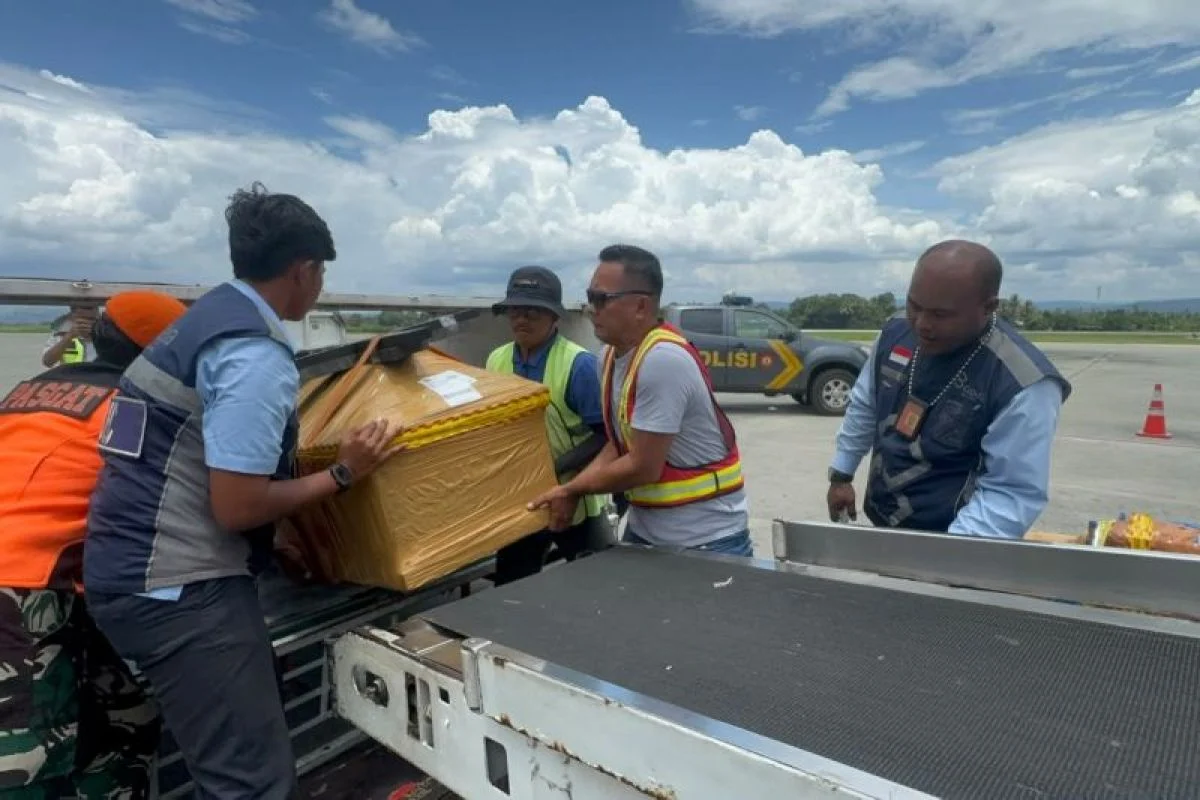
At the Danau Habema location, search teams located the charred remains of a vehicle. Inside the wreckage, authorities found the body of Aris Sanda. The condition of the remains and the state of the vehicle indicated that the car had been deliberately set on fire. The evacuation process was complex, requiring specialized teams to navigate the terrain to transport the victim to the RSUD Wamena for a formal forensic examination. The subsequent investigation at the site revealed additional physical evidence, suggesting that the incident was not merely a random act of banditry, but a premeditated operation.
Official Responses and Security Implications
The death of Aris Sanda has drawn immediate condemnation from security officials and political leaders alike. The TNI (Indonesian National Armed Forces) has officially linked the incident to the OPM Kodap III Ndugama, a group known for its persistent insurgency activities in the Nduga and Jayawijaya regions.
Lieutenant Colonel M. Wirya Arthadiguna confirmed that the military and police are engaged in an intensified pursuit of the perpetrators. "We are committed to dismantling the networks responsible for these acts of terror against civilians," a military spokesperson stated, emphasizing that the victim was a civilian service provider whose only goal was to deliver essential goods to communities in need.
Beyond the military, the legislative response has been swift. Members of Commission I of the House of Representatives (DPR RI) have expressed deep concern, noting that the killing of a driver on a public thoroughfare represents a direct threat to the safety of all civilians and the freedom of movement in the Papua region. Legislators have urged the government to conduct a comprehensive evaluation of the security strategy currently employed in the Highlands, arguing that the protection of logistics providers is paramount to maintaining economic and social stability in isolated districts.
The Vulnerability of Logistics Lifelines
The murder of Aris Sanda highlights a broader, systemic issue in the Papua Pegunungan region: the extreme vulnerability of the transport sector. Drivers who traverse the Wamena-Mbua-Nduga axis are frequently caught in the crossfire of the long-standing conflict between the Indonesian government and armed separatist groups.
For many in the mountainous interior, these drivers are the sole lifeline for food, medicine, and fuel. When these routes become "kill zones," the humanitarian impact is immediate. Villages that rely on these deliveries face shortages, and the psychological toll on the driver community is immense. Many drivers now face the agonizing choice between the economic necessity of their work and the high risk of being intercepted, interrogated, or killed by armed factions.
Contextualizing the Conflict
This incident is not an isolated case. Throughout 2025 and 2026, there has been a marked increase in the targeting of civilian infrastructure and personnel in the Papua Pegunungan and Central Papua regions. From the killing of health workers to the harassment of construction crews, the shift in tactics by armed groups suggests an intent to sever the connection between the state and the remote interior.
Analysts suggest that the use of social media to broadcast the interrogation of victims—such as the video of Aris Sanda—is a deliberate tactic designed to create fear and exert psychological pressure on the civilian population. By forcing victims to engage in political messaging, these groups seek to validate their cause, albeit through actions that are widely condemned as violations of human rights and international law.
Moving Forward: Investigation and Justice
As of Thursday, September 17, the investigation into the death of Aris Sanda remains the top priority for regional law enforcement. The police are cross-referencing the video evidence with intelligence reports to identify the specific commanders of the OPM Kodap III Ndugama who may have authorized or carried out the abduction.
The local community in Toraja, mourning the loss of one of their own, has called for a swift and transparent judicial process. Meanwhile, in Wamena, the transport workers’ union has held meetings with regional authorities to demand greater protection for drivers, including the possibility of military escorts for sensitive routes and the installation of better communication networks in high-risk zones.
The death of Aris Sanda serves as a somber reminder of the human cost of the conflict in Papua. It is a story of a man caught between the gears of a political struggle he did not choose, performing a duty that was vital to the people of the mountains. As the government evaluates its security posture and the pursuit of the perpetrators continues, the case stands as a rallying point for those advocating for a more secure environment for civilians and a peaceful resolution to the complex and enduring conflict in the region. The loss of a dedicated driver is not merely a tragedy for his family; it is a profound loss for the connectivity and the future of the communities that relied on his service every single day.