The landscape of electric vehicle adoption in Indonesia is undergoing a structural evolution, fundamentally changing how consumers perceive ownership costs, vehicle depreciation, and long-term maintenance. As the government accelerates its green energy transition targets—backed by recent data from the Ministry of Industry indicating a growing national population of electric motorbikes approaching 280,000 units—automakers are continuously innovating to lower the barriers to entry. Among the most transformative commercial strategies gaining traction in the marketplace is the battery-as-a-service (BaaS) or battery subscription model. This innovative ownership framework addresses one of the most significant cost components of an electric motorcycle: the battery pack itself.
By separating the cost of the vehicle chassis from the energy storage system, manufacturers allow consumers to purchase electric motorcycles at a substantially lower initial price point. Rather than bearing the heavy upfront capital expenditure of acquiring the battery outright, buyers enter into recurring monthly subscription agreements. Based on comprehensive market data updated through September 2026, these subscription tariffs range widely from Rp84,000 to Rp250,000 per month, depending heavily on the brand, vehicle model, battery capacity, and the specific service tier selected.
To understand the practical implications of this financial model, prospective buyers must examine how major industry players—such as VinFast, Polytron, and ALVA—implement these programs, and what these subscription models mean for the broader Indonesian electric vehicle ecosystem.
Evolution of the Battery Rental Model: Background and Market Context
The introduction of battery subscription schemes in Indonesia did not happen in a vacuum. For years, industry analysts, government bodies, and automotive stakeholders identified high initial acquisition costs as the primary bottleneck limiting mass-market adoption of electric two-wheelers. While internal combustion engine (ICE) motorcycles have enjoyed a mature, highly optimized supply chain and predictable resale values, electric motorbikes faced consumer hesitation rooted in battery longevity concerns, replacement costs, and technological obsolescence.
Recognizing these challenges, policymakers and industrial pioneers began looking at alternative economic models pioneered in other major Asian markets, particularly China and Taiwan, where battery swapping and leasing are widespread. The Indonesian government’s continued push for green energy incentives, alongside parliamentary drives to accelerate the operational readiness of the national battery industry, created a fertile regulatory and commercial environment for manufacturers to experiment with business-to-consumer leasing frameworks.
By 2026, the BaaS model matured from a niche marketing gimmick into a core strategic offering. It successfully addresses the psychological and financial barrier known as "battery anxiety"—the fear that an expensive battery will degrade over time, leaving the owner with a costly replacement bill that could exceed the residual value of the motorcycle itself.
Comparative Analysis of Brand Offerings and Monthly Tariffs
Several prominent automotive brands operating within the Indonesian market have embraced the battery subscription concept, tailoring their programs to specific vehicle segments ranging from commuter scooters to high-performance urban cruisers.
1. VinFast: The Low-Cost Pioneer
Vietnamese electric vehicle manufacturer VinFast has aggressively positioned itself in the Indonesian market by offering some of the most competitive battery subscription tariffs available. The company extends its subscription program to three key electric motorcycle models: the Evo, the Feliz II, and the Viper.
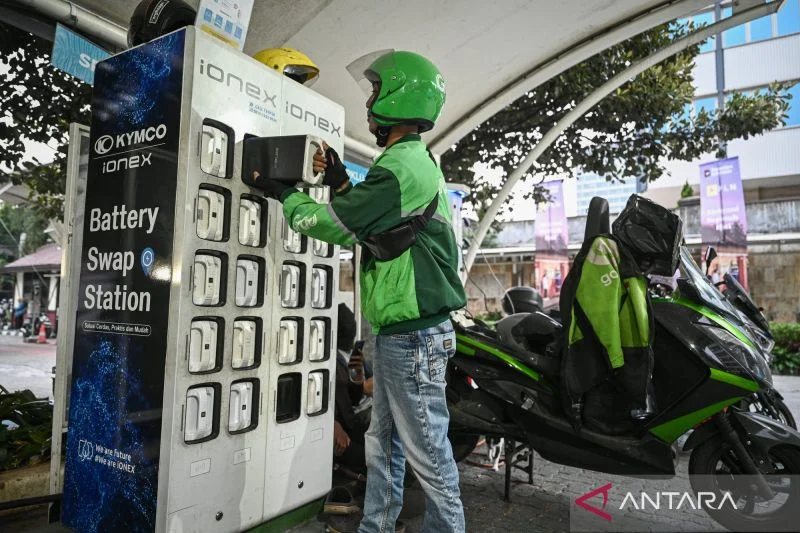
Under VinFast’s operational framework, consumers who purchase the vehicle chassis without the battery can subscribe to a single-battery setup for a remarkably low tariff of Rp84,000 per month. For models requiring a dual-battery configuration, the monthly subscription fee adjusts to Rp144,000. All three models utilize a dual-slot battery architecture strategically housed beneath the seat, ensuring seamless compatibility with swapping infrastructures. With starting rates of just Rp84,000 monthly, VinFast currently holds the title for the lowest baseline battery subscription cost among major national market participants, effectively targeting price-sensitive urban commuters and ride-hailing operators.
2. Polytron: Mitigating Degradation Risks
Local electronics and automotive powerhouse Polytron has integrated battery leasing into its diverse electric vehicle portfolio to ease market entry for models such as the Fox 200, Fox 500, and the popular Fox R.
Polytron’s pricing structure varies according to vehicle capability and power output. The monthly subscription for the Fox 200 is set at Rp125,000, while the higher-tier Fox 500 and Fox R models command a fee of Rp200,000 per month. Beyond lowering initial vehicle purchase costs, Polytron incorporates a critical risk-mitigation clause into its program: the company guarantees battery replacement if the unit’s storage capacity drops below 85 percent of its original capacity due to normal usage under the program’s terms. This reassurance directly tackles consumer apprehension regarding battery degradation over multi-year ownership lifecycles.
3. ALVA: Premium Performance and Comprehensive Bundling
Targeting the mid-to-high-end segment of the market, lifestyle mobility brand ALVA offers a dedicated program known as BEBAS (Berlangganan Baterai Sewa, or Battery Rental Subscription) for its flagship models, the ALVA N3 and the ALVA CERVO.
For the entry-to-mid urban model ALVA N3, consumers can opt for a single-battery subscription priced at Rp150,000 per month, or scale up to a dual-battery configuration for Rp250,000 per month. Meanwhile, the high-performance ALVA CERVO, which operates exclusively on a dual-battery system, carries a flat subscription rate of Rp250,000 per month. Notably, ALVA’s published subscription fees are inclusive of applicable taxes, offering transparent billing for consumers. This model ensures that the battery remains an active part of the service ecosystem, sparing owners from unexpected capital outlays for component replacements.
Financial Implications: Total Cost of Ownership (TCO) Analysis
While battery subscription models successfully slash the upfront retail price of electric motorcycles, financial analysts and consumer advocates emphasize that subscription fees represent only one variable in the broader Total Cost of Ownership (TCO).
When evaluating whether to lease or buy a battery outright, consumers must conduct a comprehensive financial assessment that encompasses:
- Initial Unit Acquisition Cost: The reduced price of the motorcycle chassis without the battery.
- Recurring Monthly Subscription Tariffs: Ranging from Rp84,000 to Rp250,000, payable regardless of monthly mileage.
- Charging and Energy Expenses: The cost of household electricity or public charging station fees used to replenish the battery pack.
- Maintenance and Servicing: General upkeep of brakes, tires, suspension, and electrical systems.
- Taxes and Legal Fees: Annual vehicle registration fees (STNK) and administrative costs regulated by regional authorities.
Industry experts note that while light users—such as casual weekend riders or short-distance commuters—might find that fixed monthly subscription fees accumulate to totals exceeding the cost of outright battery ownership over several years, heavy commercial users and fleet operators benefit immensely. For ride-hailing drivers and courier services operating high daily mileage, the predictable maintenance costs, rapid battery swapping capabilities, and guaranteed replacement policies of the BaaS model provide a distinct operational advantage.
Institutional Support and Broader Economic Impacts
The maturation of the battery rental ecosystem aligns closely with national strategic policies aimed at reducing fossil fuel dependency and curbing energy imports. The Ministry of Higher Education, Science, and Technology (Mendiktisaintek), alongside the Ministry of Industry, has consistently championed electric vehicle conversion and adoption as pivotal mechanisms for national energy security.
Furthermore, the ongoing push by the House of Representatives (DPR RI) to accelerate the operational capabilities of the domestic battery industry signals that raw material processing—particularly Indonesia’s abundant nickel reserves—will eventually feed directly into locally manufactured battery cells. This vertical integration is projected to further drive down subscription tariffs and purchase prices in the coming years.
Stakeholders within the industrial sector argue that robust public-private coordination is essential to standardize battery dimensions and swapping interfaces across different brands. A universal or interoperable battery standard could theoretically allow consumers to swap rented batteries across multiple brand networks, mirroring the convenience of traditional fuel station networks.
Strategic Recommendations for Consumers
As the Indonesian electric motorcycle market continues to expand dynamically through late 2026, prospective buyers are advised to exercise diligence before committing to a specific ownership scheme.
Consumers must calculate their anticipated daily and monthly mileage, compare the cumulative multi-year cost of the monthly subscription fee against the outright purchase price of a battery, and carefully review the fine print regarding manufacturer warranties, degradation thresholds, and termination clauses. By weighing these factors against individual lifestyle and financial requirements, riders can successfully navigate the evolving electric vehicle market and select the ownership structure that maximizes both economic efficiency and riding satisfaction.