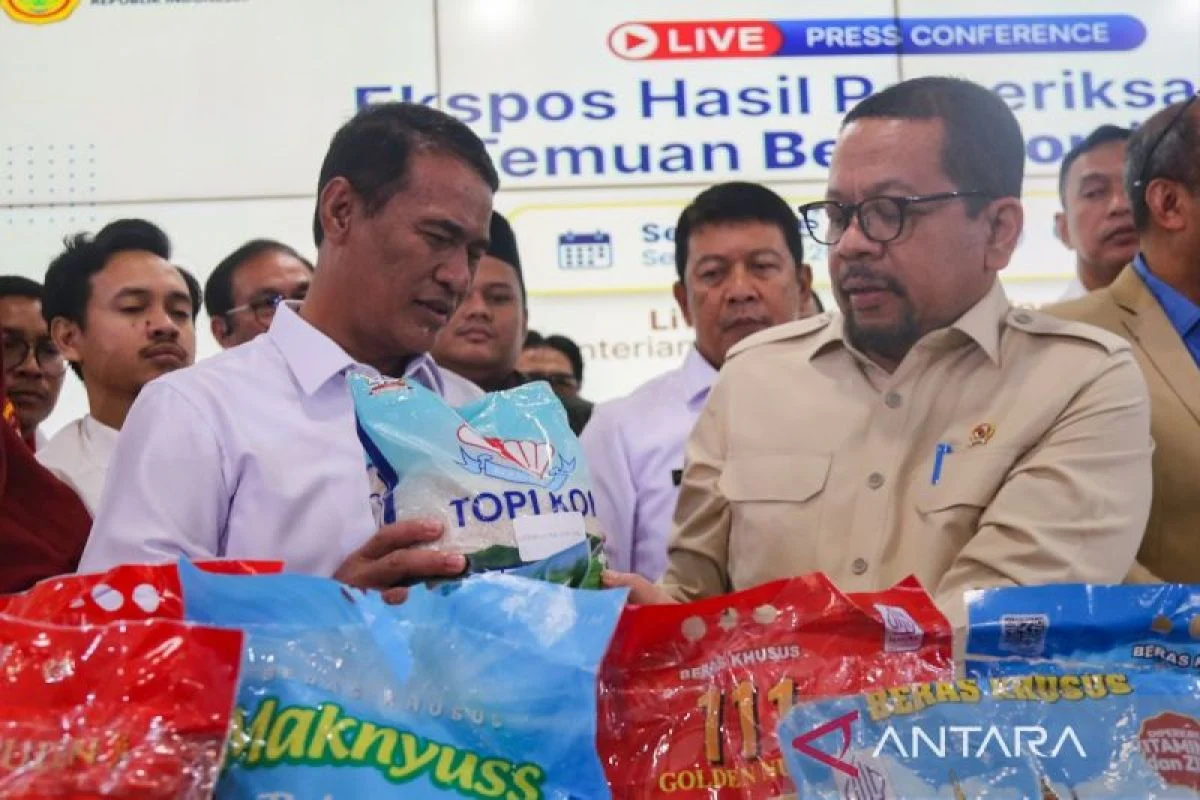
JAKARTA — In one of the most sweeping consumer protection actions in Indonesia’s recent history, federal authorities have ordered the immediate suspension of production and the widespread recall of 25 commercial fortified rice brands. The crackdown follows rigorous laboratory testing that revealed systemic discrepancies between the actual nutritional content of the products and the information printed on their packaging. The enforcement action, spearheaded by the Ministry of Agriculture and the National Food Agency (Bapanas), highlights critical vulnerabilities in the oversight of functional foods targeted at vulnerable populations, including pregnant women, nursing mothers, toddlers, and impoverished communities.
The controversy centers on the commercialization of fortified rice—a staple enhanced with specific vitamins and minerals designed to combat malnutrition and micronutrient deficiencies. While fortified rice plays a vital role in national public health strategies, the recent investigation exposed a troubling reality: the vast majority of commercial brands evaluated by government regulators failed to meet mandatory quality and nutrient composition standards. With potential consumer losses estimated in the tens of trillions of rupiah, the scandal has triggered swift interventions from food safety watchdogs, law enforcement agencies, and trade regulators.
Rigorous Laboratory Testing Exposes Systemic Non-Compliance
The investigation into the integrity of fortified rice began following mounting concerns regarding product standardization in the open market. To ascertain the validity of nutritional claims made by manufacturers, the government initiated a comprehensive testing protocol involving 27 commercial brands of fortified rice. Samples of these products were sent to four independent and accredited testing facilities: the Laboratory of Bogor Agricultural University (IPB), the Indonesian Agricultural Instrument Standardization Agency (BRMP) laboratory, Saraswanti Indo Genetech (SIG), and Eurofins Angler Biochemlab.
The results of the independent laboratory analyses were alarming. Out of the 27 brands subjected to evaluation, 25 failed to meet the rigorous quality and nutrient composition requirements stipulated by Indonesian National Standards (SNI), specifically SNI 9314:2024 concerning fortified rice kernels and SNI 9372:2025 concerning finished fortified rice products. Only two of the tested brands were found to comply fully with regulatory benchmarks.
Regulators discovered that the vitamin and mineral content embedded within the deficient rice kernels significantly deviated from the declarations on the product labels. In many cases, the actual nutritional yield was far below the advertised thresholds, effectively misleading consumers who purchased the premium-priced products under the assumption that they were investing in superior health outcomes for their families.
Comprehensive List of Implicated Brands and Regulatory Caveats
During a formal press briefing in Jakarta, Minister of Agriculture and Head of Bapanas Andi Amran Sulaiman publicly disclosed the findings, releasing the names of the 25 brands identified as non-compliant. The implicated products include Idola Fortifikasi, Idola High Quality Whole Grain Rice, Idola Long Grain Rice, Ikan Mas Cupang, AAA Wijaya Kusuma, Cantik Manis, Penari Bangkok, Topi Koki Short Grain, Topi Koki Setra Royale, Topi Koki Long Grain Crystal, HOK-1 Gohan, Maknyuss Pulen Gizi, Anak Raja Fortifikasi, Anak Raja Nusantara, and Top Anak Raja.
The list further encompasses PMS Induk Ayam, Sumo, Rasvit, FS Nutri Rice, Pelikan, Rice Rojolele, Super Kepala Beras Premium 111, 111 Golden Number, Putri Koki, and Wellfarm Beras Diabet. In official documentation released by the Ministry of Agriculture, these products were also categorized using specific product initials—such as WFO, TKS, IMF, NUR, TKL, HOK, BRV, IMR, IHJ, IAK, PBK, GNB, DTR, TKR, WJK, PLK, MKY, IMC, PTK, ARP, ARN, SKM, GNM, TAR, and CMS.
Legal experts and government officials have emphasized that the publication of these brand names represents an administrative and regulatory reporting of findings rather than a final criminal conviction. Due to minor discrepancies in how initials have been reported across various media channels, authorities have stressed that the catalog serves as an official inventory of products flagged for investigation, pending the finalization of judicial proceedings.
Pricing Discrepancies and Massive Economic Implications
Beyond the nutritional fraud uncovered by the laboratories, the investigation exposed glaring economic anomalies in the retail pricing of fortified rice products. According to data compiled by Bapanas, while standard fortified rice variants are realistically valued and produced within a market bracket of Rp13,000 to Rp13,500 per kilogram, several of the implicated brands were found retailing at exorbitant prices reaching up to approximately Rp57,000 per kilogram.
This vast price inflation, paired with the alleged failure to deliver the promised nutritional value, has raised profound economic concerns. Bapanas preliminary economic assessments estimate that the cumulative financial impact on Indonesian consumers—driven by price markups and substandard product delivery—could reach an astounding Rp89 trillion. While this figure remains an upper-bound estimate subject to ongoing forensic financial auditing, it underscores the immense scale of exploitation within the functional food sector.
Swift Enforcement, Product Recalls, and Government Intervention
In response to the laboratory findings, federal authorities moved quickly to contain the circulation of the compromised goods. Bapanas confirmed that all 25 implicated producers have been ordered to immediately halt the production of the affected fortified rice lines. Furthermore, formal warning letters have been issued to the 11 business entities holding the 25 active distribution permits associated with these brands.
The logistics of removing the products from the nationwide supply chain have involved coordination between central authorities and local food safety agencies. The Regional Food Safety Competent Authorities (OKKPD) across various provinces have been mobilized to oversee retail audits and ensure compliance. By the first week of September, regulatory tracking indicated that 12 of the 25 brands had successfully withdrawn their inventory from commercial shelves, while operations to purge the remaining stock were actively underway.
Despite the sweeping nature of the product recalls, the Ministry of Trade has stepped forward to reassure the public regarding national food security. Trade officials confirmed that the temporary removal of these specialized functional rice brands will not destabilize the broader domestic rice market, as general premium and medium rice supplies remain robust, stable, and widely available across traditional markets and modern retail chains.
Criminal Investigation and the Path Forward
The gravity of the infractions has prompted direct intervention from law enforcement. The National Police Food Task Force (Satgas Pangan Polri) has formally initiated a criminal inquiry into the manufacturers behind the 25 non-compliant brands.
Brigidier General Police Ade Safri Simanjuntak, head of the National Police Food Task Force, stated that investigators are currently building a rigorous evidence-based case through close collaboration with food scientists, academic researchers, and independent testing laboratories. The legal process will determine whether the mislabeling and pricing strategies constitute intentional consumer fraud, fraudulent misrepresentation, or violations of consumer protection laws.
Minister Amran Sulaiman has maintained an uncompromising stance on the matter, reiterating that any commercial food product proven to violate national safety, quality, and labeling standards will face permanent revocation of its distribution license alongside stringent criminal prosecution. Government officials have emphasized that the ultimate goal of the intervention is not to discourage the consumption of functional foods, but rather to protect the integrity of the market. Fortified rice remains an indispensable instrument for national nutritional advancement, but authorities have made it clear that public health initiatives cannot be compromised by illicit commercial practices.