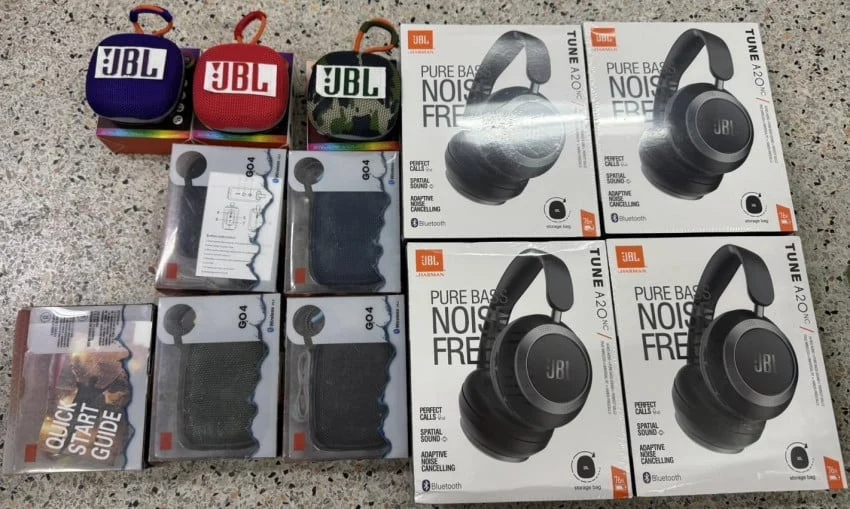
Harman International, the parent company of the globally renowned audio brand JBL, has launched an aggressive, multi-layered initiative to combat the proliferation of counterfeit audio equipment across the Asia-Pacific region. This strategic enforcement campaign, which gained significant momentum throughout 2025 and has continued into the first half of 2026, aims to neutralize the pervasive threat of illegal goods that undermine both the company’s intellectual property (IP) and the safety of unsuspecting consumers.
The scale of the operation is unprecedented. During the 2025 calendar year, Harman International successfully facilitated the removal of more than 500,000 links promoting illicit audio products across various major digital marketplaces. Of these, approximately 300,000 links were explicitly identified as selling counterfeit goods, while the remaining 200,000 were flagged for various infringements related to Harman’s intellectual property rights. This systematic digital cleansing was the result of high-level collaborations with e-commerce platform administrators, national customs authorities, and law enforcement agencies tasked with intellectual property enforcement.
A Sustained Enforcement Campaign: 2025–2026 Chronology
The crackdown is not a singular event but a sustained, coordinated effort spanning multiple jurisdictions. Following the massive digital takedown campaign of 2025, Harman entered the first half of 2026 with a renewed focus on physical seizures and supply chain disruption.
In early 2026, intelligence-led operations across Asia-Pacific resulted in the physical confiscation of thousands of units of counterfeit audio gear. In South Korea, local law enforcement agencies conducted high-profile raids that targeted distribution hubs for unauthorized electronics. Among the items seized were counterfeit JBL Flip 6 portable speakers and illicit iterations of the JBL Charge series. These operations highlighted the sophistication of modern counterfeiters, who often replicate the external design of JBL products to a degree that can easily deceive the average consumer.
Simultaneously, operations in Thailand underscored the global nature of the illicit trade. Customs authorities in Thailand intercepted shipments containing products marketed under the fictitious name "JBL Max 33," a brand identifier that does not exist within the authentic Harman product catalog. Further investigations in the country led to the seizure of counterfeit JBL Go 4 units, JBL Clip speakers, and various models from the popular JBL Tune headphone series. The breadth of these seizures indicates that counterfeiters are attempting to replicate the entire JBL product ecosystem, from entry-level portables to premium personal audio devices.
The Economic and Ethical Cost of Counterfeiting
The prevalence of counterfeit consumer electronics is a multibillion-dollar global challenge. According to industry reports from the Organization for Economic Cooperation and Development (OECD), trade in counterfeit and pirated goods accounts for roughly 2.5% of world trade. For a premium audio manufacturer like JBL, the impact is threefold: economic loss, brand dilution, and safety hazards.
Counterfeit products are often manufactured using substandard components, including low-quality lithium-ion batteries and inferior circuitry. Unlike authentic JBL products, which undergo rigorous thermal testing, electromagnetic compatibility assessments, and durability stress tests, counterfeit units lack any quality assurance. This poses a tangible safety risk to consumers, including potential overheating, battery failure, or electrical fires.
Furthermore, the economic implications extend beyond the company’s bottom line. The proliferation of fake goods undermines legitimate retail channels and small business owners who invest in authorized distribution networks. By saturating the market with inexpensive, inferior alternatives, counterfeiters disrupt fair competition and erode the trust that consumers place in established technology brands.
Official Perspectives on Brand Integrity
The timing of this crackdown coincides with a significant milestone for the brand. As JBL approaches its 80th anniversary, the protection of its legacy has become a top priority for Harman International leadership. Grace Koh, General Manager and Vice President of Consumer Audio for Harman Asia Pacific, emphasized the gravity of the situation in a formal statement released on September 25, 2026.
"Maintaining the reputation of the JBL brand is becoming increasingly critical as we approach our eight-decade milestone," Koh stated. "Counterfeit products are not just a violation of our intellectual property; they are a direct affront to the user experience. When a consumer purchases a JBL product, they are paying for a specific standard of acoustic engineering and reliability. Counterfeiters strip away that value, damaging the trust that we have spent eighty years building with our global community."
Harman’s strategy moving forward involves a "detect-and-deter" model. By working closely with platforms such as Shopee, Lazada, and other major regional e-commerce giants, Harman is deploying automated content-monitoring tools to flag suspicious listings before they can gain traction. This is augmented by traditional legal pressure on warehouse distributors and manufacturing facilities identified as sources for these illicit goods.
Fact-Based Analysis of Market Implications
The battle against counterfeiting is evolving in response to the rapid digitization of retail. In the past, counterfeit goods were primarily sold in physical "grey markets." Today, the barrier to entry for sellers is significantly lower due to social media marketplaces and cross-border e-commerce platforms.
For consumers, the risk is amplified by the sophistication of product presentation. Many counterfeit sellers utilize high-quality images stolen from legitimate advertising campaigns and even mimic the packaging design of authentic units. However, as Harman’s recent actions demonstrate, there are consistent "red flags" that alert consumers to potential fraud. These include:
- Price Discrepancy: Prices that are significantly lower than the manufacturer’s suggested retail price (MSRP) are the most common indicator of a counterfeit product.
- Unverified Sellers: Platforms that do not provide verified badges or official brand storefronts are higher-risk environments.
- Inconsistent Branding: Products marketed with names that do not exist in the official JBL product catalog—such as the "JBL Max 33" incident—are immediate warning signs of illegal activity.
- Poor Build Quality: Authentic JBL products are known for specific aesthetic and tactile standards; loose buttons, light-weight plastic casings, or poor-quality stitching on carry-straps are often indicative of fakes.
The Future of Brand Protection
Looking toward the remainder of 2026 and into 2027, industry analysts expect Harman to continue its aggressive legal and technical stance. The partnership between private industry and governmental customs agencies is proving to be the most effective mechanism for curbing the flow of illicit goods at the border.
Furthermore, Harman is expected to increase its public awareness campaigns, educating consumers on how to verify the authenticity of their purchases through official QR codes and serial number registration portals. By empowering consumers to authenticate their products at the point of sale, Harman aims to reduce the demand for counterfeit goods, thereby starving the illicit supply chain of its revenue.
The crackdown by Harman International serves as a case study for other consumer electronics firms navigating the complexities of the digital economy. As global supply chains remain fragmented and digital retail continues to expand, the ability to protect brand identity through technology, legal enforcement, and international cooperation will become a defining feature of successful global enterprises.
For JBL, the mission is clear: to ensure that the next eighty years of audio innovation remain untarnished by the low-quality, illegal imitations that currently threaten the industry. With hundreds of thousands of illicit links removed and ongoing seizures in key markets like South Korea and Thailand, the company has signaled that its commitment to intellectual property rights—and, by extension, consumer safety—remains absolute. Consumers are advised to purchase only from authorized retailers and to exercise extreme caution when encountering audio products at prices that seem too good to be true. Through these coordinated efforts, Harman is setting a new precedent for how legacy technology brands can successfully defend their market space in the digital age.