
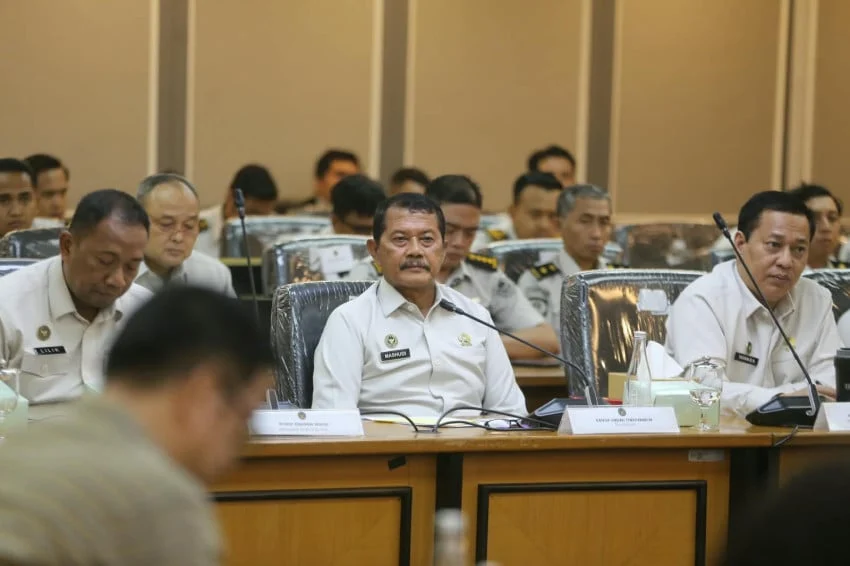
The Ministry of Immigration and Corrections has initiated a sweeping nationwide crackdown on unauthorized architectural modifications within correctional facilities, signaling a decisive shift toward stricter regulatory enforcement and institutional transparency. Speaking before the parliamentary oversight body in Jakarta, Director General of Corrections Mashudi formally committed to dismantling any unauthorized buildings, commercial outposts, or irregular structural expansions located within the perimeters of state penitentiaries and detention centers. This decisive policy directive comes as a direct response to intense legislative scrutiny regarding oversight failures, administrative non-compliance, and systemic vulnerabilities that have historically plagued the nation’s correctional architecture.
The announcement was delivered during a high-stakes, televised Hearing Session held jointly with Commission XIII of the House of Representatives (DPR RI). The proceedings quickly zeroed in on operational deviations across multiple facilities, with particular attention directed toward the state of governance within specific regional institutions. By establishing a zero-tolerance baseline for unauthorized construction, the Directorate General aims to reassert absolute state control over physical spaces that have occasionally fallen outside standard regulatory compliance, thereby minimizing security risks and eliminating potential avenues for illicit activities within the correctional system.
Legislative Scrutiny and the Catalyst for Reform
The origins of this aggressive policy pivot trace back to mounting parliamentary frustration regarding administrative accountability and facility management. During the parliamentary session, members of Commission XIII expressed deep dissatisfaction with institutional reporting standards, specifically highlighting discrepancies between official ministerial briefings and the actual physical realities observed during unannounced field inspections. The interrogation of regional correctional leaders laid bare instances where facility spaces had been repurposed without formal authorization, prompting lawmakers to demand immediate, tangible corrective measures.
The focus intensified significantly around the operational practices at Class IIA Cibinong Penitentiary in West Java. Lawmakers openly challenged local prison leadership regarding discrepancies in facility management, accusing administrators of severe transparency failures. The exchange underscored a broader legislative anxiety: that unauthorized physical structures within correctional facilities are not merely zoning or architectural infractions, but physical manifestations of compromised security protocols and weakened administrative oversight. In response to these pointed legislative inquiries, the Directorate General recognized the urgent necessity of enacting systemic structural remediation to restore public trust and legislative confidence in the correctional apparatus.
Immediate Directives and Nationwide Enforcement Protocol
Demonstrating swift administrative follow-through, Director General Mashudi confirmed that formal notification letters have already been dispatched to all Regional Office Heads (Kakanwil) and operational unit leaders (Ka UPT) across the Indonesian archipelago. These directives mandate a comprehensive internal audit of all physical infrastructure, tasking local administrators with identifying any building, partition, or facility expansion that deviates from standardized architectural blueprints and official budgetary allocations.
The enforcement protocol outlines a strict compliance timeline, stripping local administrators of discretion regarding whether to dismantle non-compliant structures. According to the directive, any architectural addition that lacks explicit central authorization or compromises the standardized security layout of a penitentiary must be systematically leveled. To ensure compliance, the central leadership has established a strict monitoring mechanism. Regional directors who fail to execute these demolition orders within the stipulated timeframe will face severe administrative penalties, including immediate suspension, demotion, or formal disciplinary proceedings for insubordination.
The Director General emphasized that the administration views this initiative not as a routine maintenance task, but as a fundamental correctional security measure. Unauthorized structures within high-security perimeters can serve multiple illicit functions, ranging from unauthorized visitor staging areas and unofficial storage facilities to blind spots that evade closed-circuit television monitoring and correctional officer patrols. By eliminating these architectural anomalies, the ministry intends to re-establish unobstructed lines of sight and rigorous perimeter security across all detention facilities.
Background Context: Structural Challenges in Indonesia’s Correctional System
To fully understand the gravity of the Ministry’s recent mandate, it is essential to examine the historical and systemic challenges confronting Indonesia’s correctional infrastructure. For decades, the Directorate General of Corrections—formerly operating under the Ministry of Law and Human Rights before structural administrative realignments under the Ministry of Immigration and Corrections—has grappled with chronic overcrowding, budgetary constraints, and personnel shortages. These systemic pressures frequently led to localized, ad-hoc solutions by facility wardens attempting to manage swelling inmate populations without immediate capital expenditure from the central government.
Over time, these localized adaptations often manifested as unauthorized extensions, makeshift visiting rooms, vocational workshops built outside approved footprints, or staff quarters encroaching upon secure zones. While some of these structures were established with benign intentions—such as alleviating overcrowding or expanding basic inmate services—the cumulative effect was a fragmented architectural landscape that blurred the boundaries between secure containment areas and public accessibility zones. This architectural ambiguity created systemic vulnerabilities, occasionally facilitating corruption, unauthorized communications, and security breaches that compromised the integrity of the correctional system.
The newly formed Ministry of Immigration and Corrections, operating under a refreshed mandate, has identified institutional normalization as a core pillar of its administrative tenure. By systematically dismantling unauthorized infrastructure, the current leadership seeks to eradicate the physical legacy of informal governance, replacing it with standardized, centrally monitored operational environments that align with international human rights standards and rigorous national security protocols.
Chronology of Events Leading to the Policy Announcement
The sequence of events leading to the nationwide demolition directive highlights the rapid acceleration of legislative oversight meeting executive action:
- Initial Field Inspections: Members of Commission XIII of the DPR conduct unannounced visits to several regional correctional facilities, identifying architectural anomalies and structural expansions not reflected in official ministry blueprints.
- Parliamentary Summons: The leadership of the Ministry of Immigration and Corrections, alongside regional facility heads including representatives from Class IIA Cibinong Penitentiary, are summoned to the parliamentary complex in Senayan for a formal Hearing Session.
- Legislative Confrontation: Lawmakers aggressively question regional wardens regarding administrative discrepancies, culminating in sharp rebukes concerning transparency and adherence to ministerial guidelines.
- Formulation of Recommendations: Commission XIII issues a binding set of oversight recommendations demanding immediate corrective actions, structural audits, and accountability measures across the correctional network.
- Executive Directive Issued: Director General of Corrections Mashudi responds immediately during the session, announcing the nationwide policy to identify and demolish all unauthorized structures, backed by formal written orders dispatched to regional office heads.
Implications for Facility Management and Regional Administration
The implementation of Director General Mashudi’s directive carries profound operational implications for regional correctional administrators across Indonesia. Historically, facility leaders enjoyed a degree of operational autonomy regarding day-to-day facility management and minor infrastructure adjustments. The current mandate effectively curtails this autonomy, subordinating local infrastructural decisions to strict, centralized oversight.
Facility directors are now compelled to initiate self-audits, reviewing every building erected during their tenure or inherited from predecessors. Those found to possess unauthorized structures must coordinate immediate demolition schedules, absorbing any operational disruptions caused by the removal of these spaces. Furthermore, the explicit warning regarding administrative sanctions for non-compliance ensures that regional leaders treat the directive with absolute urgency.
Beyond the immediate administrative disruption, this policy signals a cultural transformation within the correctional service. It reinforces the principle that correctional facilities are high-security state installations governed by precise legal and architectural standards, rather than autonomous domains managed at the discretion of individual wardens. This shift is expected to enhance internal discipline, improve risk management, and foster a more uniform application of security policies nationwide.
Broader Impact on National Security and Institutional Reform
The broader socio-legal implications of the government’s crackdown extend far beyond the physical act of demolishing unauthorized brick-and-mortar structures. By addressing infrastructural non-compliance, the Ministry of Immigration and Corrections is tackling one of the foundational root causes of institutional corruption and security laxity.
Standardized facility design is critical for maintaining clear zones of control, ensuring effective surveillance, and preventing the establishment of internal power dynamics among inmates that often thrive in irregular, unmonitored spaces. When physical structures are strictly regulated and aligned with official security blueprints, the opportunities for illicit trafficking, unauthorized personnel movement, and clandestine operations are significantly reduced.
Moreover, this policy aligns with the wider national agenda of bureaucratic reform and good governance championed by the current administration. By demonstrating a willingness to hold its own personnel accountable—confronting administrative failures head-on and submitting to rigorous legislative oversight—the Ministry aims to restore public confidence in the state’s ability to manage its correctional institutions justly, securely, and transparently.
As the directives take root and regional offices mobilize to execute the mandated demolitions, the success of this initiative will be measured not only by the physical removal of unauthorized buildings, but by the permanent establishment of a culture of strict regulatory compliance, institutional integrity, and unwavering administrative accountability across Indonesia’s correctional landscape.
