
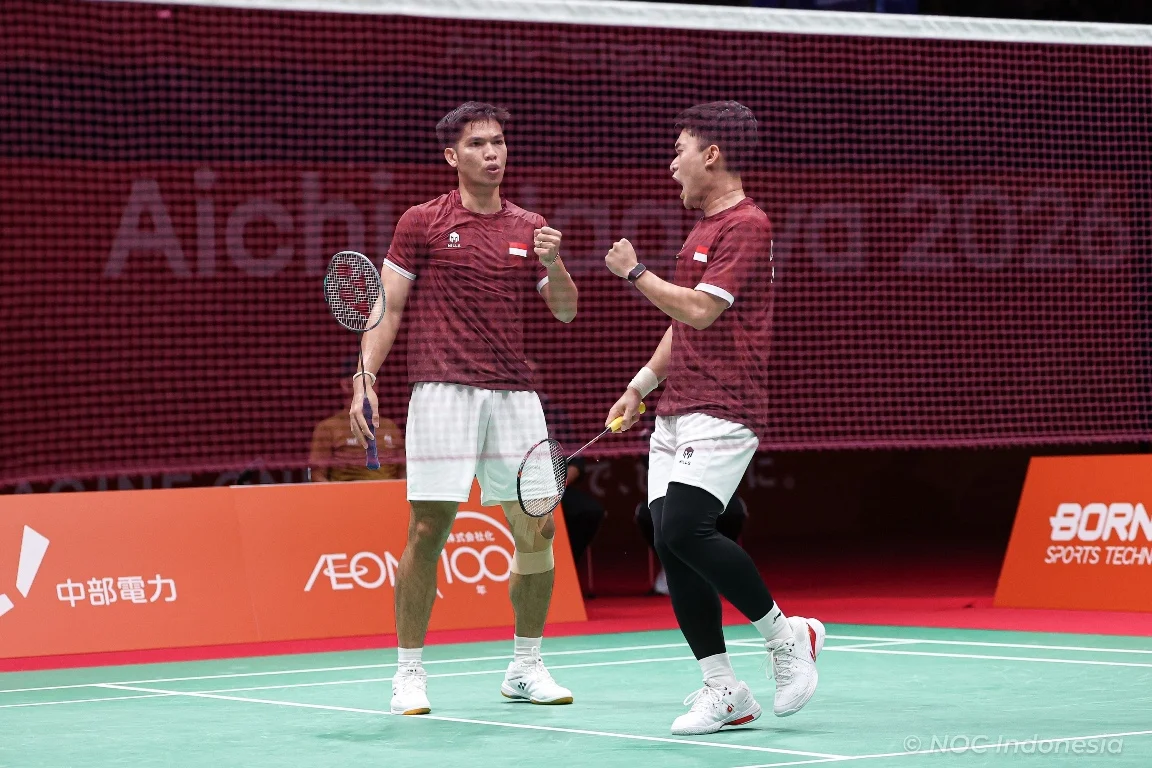
The stage is set for a dramatic conclusion to the badminton individual events at the 2026 Asian Games, as two Indonesian pairs prepare to contest the gold medal matches in Ichinomiya, Japan. With the tournament reaching its climax at the Ichinomiya City Municipal Gymnasium on Tuesday morning, September 29, 2026, the Indonesian contingent carries the heavy expectations of a nation yearning to reclaim past glory on the continental multi-sport stage. Among the finalists are the mixed doubles duo Amri Syahnawi and Nita Violina Marwah, alongside the formidable men’s doubles pair Leo Rolly Carnando and Daniel Marthin. As anticipation builds across the badminton world, sports analysts and fans alike are asking whether these two pairings can successfully convert their exceptional runs into a historic double-gold harvest for the red-and-white flag.
Background and Context of the 2026 Asian Games Badminton Competition
The badminton tournament at the 2026 Asian Games has proven to be a crucible of elite athletic talent, featuring the absolute best players from across the continent. Badminton remains one of Asia’s most fiercely contested disciplines, often serving as a barometer of global dominance given that the continent’s elite essentially comprise the world rankings’ upper echelons. Hosted in Ichinomiya, the event has witnessed grueling rallies, tactical masterclasses, and shocking upsets that have reshaped the landscape of international badminton in this post-Olympic cycle.
For the Indonesian badminton association, PBSI, the Asian Games represent a vital opportunity to validate ongoing developmental reforms and squad rotations. Following a demanding schedule of international opens and continental qualifiers, the Indonesian team arrived in Japan with a balanced blend of seasoned veterans and hungry, emerging talents. The pressure on the individual event finals is immense, as the contingent looks to cap off a successful team and individual campaign with the highest honors the continent has to offer.
Chronology of the Road to the Finals
The journey to the finals has been nothing short of cinematic for the Indonesian representatives, particularly for the unseeded or underdog pairs who had to navigate treacherous draws against top-seeded powerhouses.
In the mixed doubles category, Amri Syahnawi and Nita Violina Marwah orchestrated one of the most stunning upsets of the entire tournament. En route to the championship match, Amri and Nita crossed paths with the reigning world number one pair from China, Feng Yan Zhe and Huang Dongping. Exhibiting tactical discipline, ferocious net play, and unyielding defensive resilience, the Indonesian pair dismantled the top-ranked Chinese duo in straight sets with a scoreline of 21-12 and 21-14. This masterclass victory not only propelled them into the gold medal match but also sent shockwaves through the tournament, establishing them as legitimate title contenders.
Similarly, the men’s doubles division witnessed the clinical efficiency of Leo Rolly Carnando and Daniel Marthin, affectionately known to fans as "The Babies." Navigating a minefield of world-class pairs from powerhouse nations such as Japan, South Korea, and China, Leo and Daniel displayed remarkable emotional control and tactical adaptability. Their path to the final was characterized by explosive smashes, high-speed rotations at the net, and crucial clutch points won during high-pressure deuce situations in the semi-finals.
Supporting Data and Historical Significance
The stakes for Tuesday’s finals extend far beyond the immediate glow of medals; they represent a chase against history. In the mixed doubles discipline, Indonesia’s relationship with the Asian Games gold medal is defined by a lengthy drought. The last time an Indonesian mixed doubles pair stood on the highest tier of the podium at the Asian Games was back in 1982, when the legendary pairing of Christian Hadinata and Ivana Lie secured the prestigious title.
For over four decades, the mixed doubles gold has eluded Indonesian athletes, slipping through their fingers amidst generations of shifting tactical paradigms and the rise of dominant Asian rivals, particularly from China, South Korea, and Thailand. Therefore, Amri and Nita’s appearance in the final is not merely a shot at individual glory; it is a historic opportunity to break a 44-year jinx. While a silver medal is already secured, the psychological transition from finalists to champions is the final barrier they must cross.

Tactical Breakdown and Final Matchups
When the action commences on Tuesday at 09:00 local time, Amri Syahnawi and Nita Violina Marwah will step onto the court for the opening fixture against yet another formidable Chinese pair, Jiang Zhen Bang and Wei Yaxin. Having already slain the world number one partnership, Amri and Nita possess the blueprint for neutralizing elite Chinese pressure: maintaining a high-tempo attack, cutting off mid-court lifts, and minimizing unforced errors during prolonged baseline exchanges. Jiang Zhen Bang and Wei Yaxin, known for their relentless power game and airtight defensive formations, will undoubtedly seek to exploit any lapses in the Indonesian pair’s concentration.
Following the mixed doubles showdown, attention will shift to Leo Rolly Carnando and Daniel Marthin in the men’s doubles final. The pair’s dynamic playing style relies heavily on early initiative, aggressive service returns, and converting defensive transitions into immediate counter-attacks. Their opponents in the final will face a pair riding a massive wave of momentum, fueled by the vocal support of travelling fans and the collective backing of the national coaching staff.
Official Reactions and Internal Perspectives
Behind closed doors at the Indonesian team headquarters in Ichinomiya, coaching staff and officials have emphasized the importance of mental fortitude and emotional regulation ahead of the finals. Speaking on the eve of the championship matches, representatives from the national coaching team highlighted that physical preparation has largely concluded, leaving mental readiness as the decisive factor.
"Reaching the final of the Asian Games is a testament to the hard work, sweat, and sacrifices made by the athletes and the entire support system," noted a high-ranking PBSI official. "However, our job is not finished yet. We have secured silver, but our eyes and hearts are set firmly on the gold. The players understand the history attached to these matches, particularly in mixed doubles, but our instruction to them is simple: focus on the process, execute the game plan, and play without fear."
Analysts within the regional badminton community have also weighed in on Indonesia’s prospects. Many observers note that the psychological barrier of facing top-tier Chinese opponents was decisively shattered by Amri and Nita’s semi-final masterclass. This psychological shift could prove pivotal, transforming anxiety into calculated aggression on the court.
Broader Impact and Implications for Indonesian Badminton
The outcome of these final matches will carry significant implications for the future trajectory of Indonesian badminton on the global stage. A successful campaign resulting in multiple gold medals would validate the strategic overhaul implemented by the national sports federation, proving that younger generations are capable of stepping into the shoes of retired legends. It would also inject crucial funding, increased corporate sponsorship, and heightened public interest into the domestic training infrastructure.
Conversely, a runner-up finish, while still an admirable achievement at a continental multi-sport event of this magnitude, would serve as a reminder of the narrow margins separating silver from gold at the elite level. Win or lose, the performances of Amri/Nita and Leo/Daniel have already cemented their status as central figures in the ongoing narrative of Indonesian sports excellence.
As the clock ticks down to Tuesday morning at the Ichinomiya City Municipal Gymnasium, the international badminton community holds its collective breath. The stage is set, the tactical preparations are complete, and two Indonesian pairs stand on the precipice of immortality. Whether they can successfully convert their phenomenal runs into a historic double-gold medal haul remains the ultimate question as the 2026 Asian Games badminton competition reaches its glorious crescendo.
