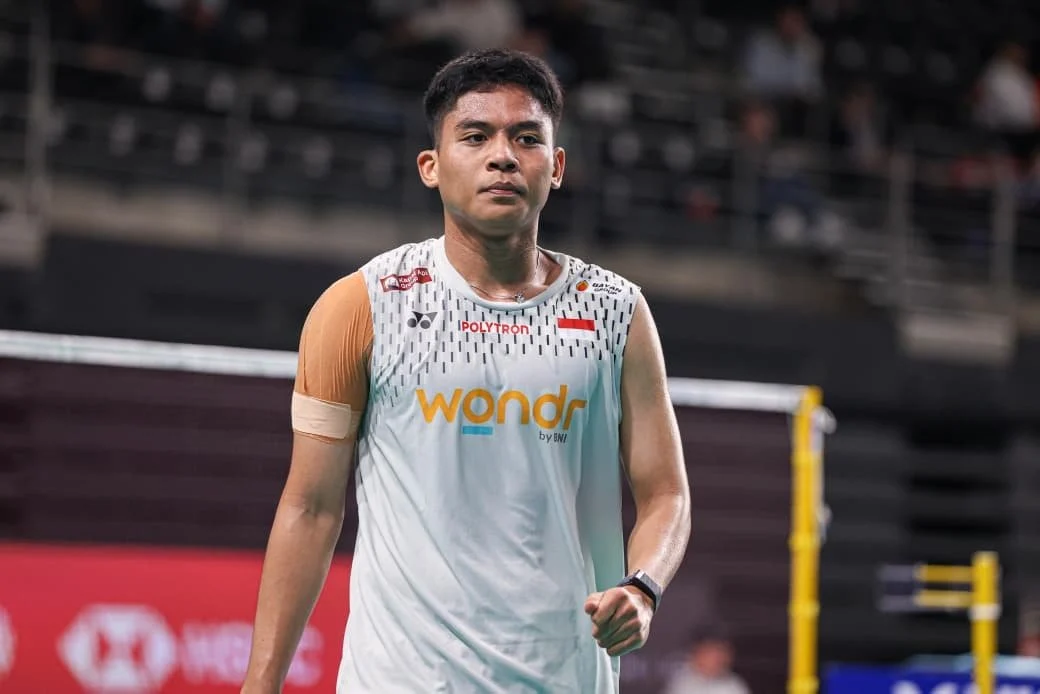
The landscape of international badminton is perpetually shifting, driven by the relentless emergence of young prodigies testing their mettle against seasoned global elites. In the men’s singles division, the narrative is no different. As the global badminton circuit moves into its critical final stretch of the season, attention has intensely focused on the upcoming round of 16 clash at the Kumamoto Masters Japan 2026. Indonesia’s burgeoning men’s singles talent, Moh Zaki Ubaidillah—affectionately known by fans and peers alike as Ubed—is preparing for what is arguably one of the most defining encounters of his young career. Set to take place at the Kumamoto Prefectural Gymnasium in Kumamoto, Japan, on Thursday, November 12, 2026, the match pits the talented Indonesian against a towering obstacle: France’s Christo Popov, who currently sits perched at the very pinnacle of the international badminton rankings as the world number one.
For Ubed, currently ranked 26th in the world, this encounter is far more than a routine tournament fixture. It represents an acid test of his developmental trajectory, a test of tactical adaptability, and, above all, a high-stakes mission of redemption. Having suffered two consecutive defeats at the hands of the French standout earlier in the season, Ubed enters the court carrying both the psychological weight of past losses and the fierce competitive hunger required to overturn the deficit. As coaching staff, fans, and pundits alike tune in for this heavyweight showdown, the broader implications of the match extend well beyond the borders of the Kumamoto Prefectural Gymnasium, signaling a potential turning point in the young Indonesian’s ascent toward the upper echelons of world badminton.
The Anatomical Breakdown of a Developing Rivalry
To fully understand the gravity of the upcoming clash at the Kumamoto Masters 2026, one must examine the chronological foundation of the competitive relationship between Moh Zaki Ubaidillah and Christo Popov. While professional badminton is characterized by fluid matchups across dozens of annual World Tour stops, specific player pairings often crystallize into defining narratives over the course of a competitive calendar year. For Ubed and Popov, the 2026 season has provided a fascinating study in contrasting styles, tactical evolution, and the steep learning curve associated with competing against the world’s elite.
The first chapter of their competitive history was written in May 2026 at the prestigious Malaysia Masters. As a rising talent breaking through into the upper-tier World Tour events, Ubed arrived in Kuala Lumpur looking to make a definitive statement. Instead, he ran into a masterclass in tactical maturity courtesy of the French stalwart. The encounter was a grueling affair, characterized by extended baseline rallies and razor-thin margins. Although Ubed pushed his opponent to the absolute limit, experience and composure ultimately favored the European contender. Popov secured the victory in straight games, but the scorelines—23-21 and 21-19—indicated that the gulf in ranking did not necessarily translate to an insurmountable gap in skill. Ubed had proven he could trade blows with the best, but he lacked the clinical finishing touch required to close out tight sets against top-tier opposition.
Undeterred by the setback in Southeast Asia, Ubed continued his relentless training regimen under the guidance of the Indonesian Badminton Association (PBSI) coaching system. His dedication bore fruit a few months later at the prestigious French Open in October 2026. Playing on European soil in front of a partisan crowd that heavily favored the French contingent, Ubed demonstrated a marked improvement in his tactical execution and physical resilience. This second encounter evolved into a demanding three-game battle that pushed both athletes to their physical limits.
In the opening game of the French Open clash, Popov capitalized on Ubed’s initial tactical missteps, cruising to a dominant 21-11 win. However, true to his burgeoning reputation as a resilient competitor, Ubed completely turned the tide in the second game. By varying his pace, tightening his net play, and forcing Popov into defensive errors, the Indonesian stormed back to take the game 21-14, leveling the match and stunning the local crowd. The rubber game, however, exposed the lingering disparities in stamina and high-pressure game management. Popov regrouped, tightened his defensive block, and capitalized on Ubed’s fatigue to close out the decider 21-13.
Despite the loss, the performance in Paris was widely regarded by analysts as a massive moral victory for the young Indonesian. He had taken a game off the world number one on foreign territory and demonstrated that his previous defeat in Malaysia was not a fluke occurrence, but rather part of a competitive learning curve. Now, arriving at the Kumamoto Masters 2026, Ubed has the opportunity to convert those valuable lessons into a winning formula.
The Significance of the Kumamoto Masters in the 2026 BWF Calendar
The Kumamoto Masters Japan holds a prestigious and demanding position within the Badminton World Federation (BWF) World Tour calendar. Classified as a Super 500 tournament, the event attracts the absolute cream of the crop, offering lucrative ranking points and substantial prize pools that are critical for qualification into the season-ending BWF World Tour Finals. Held annually in the historic city of Kumamoto on the island of Kyushu, the tournament is renowned for its electric atmosphere, enthusiastic local fan base, and the exceptionally high standard of play it consistently produces.
For a young athlete like Moh Zaki Ubaidillah, navigating the rigorous draw of a Super 500 event is a vital rite of passage. Entering the tournament ranked 26th in the world, Ubed’s primary objective throughout the 2026 season has been consistent progression—winning matches against higher-ranked opponents to steadily climb the global hierarchy. Reaching the round of 16 at the Kumamoto Masters is a testament to his hard work, discipline, and tactical growth. Yet, the reward for his early-round success is arguably the hardest assignment in modern men’s singles: facing the world number one.
The psychological dimension of facing a top-ranked player cannot be overstated. Athletes frequently speak of the invisible aura that surrounds world number ones—an intangible pressure that can cause lower-ranked opponents to second-guess their shots, rush their execution, or tighten up in crucial moments. For Ubed, overcoming this psychological hurdle is the ultimate objective of his mission in Kumamoto. Having already shared the court with Popov twice this year, the Indonesian no longer views his opponent through a lens of intimidation. Instead, he approaches the match with the analytical clarity of an athlete who knows exactly where his opponent’s strengths lie and, more importantly, where the vulnerabilities can be exploited.

Tactical Analysis: How Ubed Can Overcome the World Number One
From a technical and tactical standpoint, the round of 16 clash between Moh Zaki Ubaidillah and Christo Popov promises to be an absorbing tactical chess match. Popov is celebrated for his exceptional defensive resilience, remarkable court coverage, and ability to transition seamlessly from defense to attack. The Frenchman relies on deep, accurate clears and disciplined lifts to neutralize his opponent’s initial attacks, waiting patiently for a loose return before launching a punishing counter-offensive.
To breach this defensive fortress, Ubed cannot afford to play a passive game. His previous encounters yielded vital clues regarding how to dismantle Popov’s strategy. In their match at the French Open, Ubed found success in the second game by employing a varied attack that mixed hard-smashing power with delicate, tight net shots. By denying Popov a comfortable rhythm and forcing him to move forward, Ubed effectively disrupted the Frenchman’s preferred baseline comfort zone.
Furthermore, physical endurance and mental fortitude will dictate the outcome of the match. Because Popov is exceptionally adept at dragging opponents into long, energy-sapping rallies, Ubed must maintain high levels of patience and composure. Unforced errors—the undoing of many young talents facing elite opposition—must be kept to an absolute minimum. PBSI analysts and coaching staff have reportedly worked extensively with Ubed on shot selection under pressure, emphasizing the importance of constructing rallies methodically rather than seeking premature winners.
If Ubed can execute his game plan with precision, exploit the forecourt opportunities, and sustain his intensity across what is expected to be another grueling encounter, the door to an upset is wide open. The pressure, after all, rests squarely on the shoulders of the world number one, who enters the match as the clear favorite and has everything to lose.
Broader Implications for Indonesian Badminton
The development of Moh Zaki Ubaidillah carries significant weight for the broader ecosystem of Indonesian badminton. Historically renowned as a global powerhouse in the men’s singles discipline—producing legendary world and Olympic champions—Indonesia has continually sought fresh talent to shoulder the immense legacy of the national jersey. As established veterans face the twilight of their careers or contend with fluctuating form, the emergence of the next generation is critical to sustaining the nation’s proud sporting heritage.
Ubed’s journey through the 2026 BWF World Tour illustrates the encouraging depth of talent currently being cultivated within the national training center in Cipayung. His ability to consistently break into the latter stages of Super 300 and Super 500 events demonstrates that the pipeline of young talent remains robust. A victory over the world number one at the Kumamoto Masters 2026 would not only be a career-defining milestone for Ubed personally, but it would also serve as a powerful morale booster for the entire Indonesian contingent. It would signal to the international badminton community that the nation’s young stars are fully prepared to challenge the established global order.
Moreover, the psychological impact of a successful revenge mission on the international circuit cannot be underestimated. In elite sports, confidence is a self-fulfilling prophecy. A breakthrough win against a player of Popov’s caliber changes the internal calculus for a young athlete, transforming potential into proven capability. It alters how future opponents perceive Ubed across the net, instilling a newfound sense of caution in the minds of the world’s elite.
Conclusion: A Defining Moment in Kumamoto
As the badminton world turns its eyes to the Kumamoto Prefectural Gymnasium on Thursday, November 12, 2026, all elements are aligned for a memorable encounter. For Moh Zaki Ubaidillah, the round of 16 match against Christo Popov is the ultimate crucible. Armed with the tactical insights gained from their previous battles in Malaysia and France, and driven by an unwavering desire for redemption, the young Indonesian enters the court with everything to gain.
Whether Ubed can successfully execute his mission of revenge and claim the biggest scalp of his career remains to be seen. Regardless of the final scoreline, this high-stakes encounter in Kumamoto represents another crucial stepping stone in the maturation of a future star. For fans of the sport, the clash promises high-intensity rallies, tactical brilliance, and the raw, unadulterated drama that makes international badminton one of the most compelling sports spectacles in the world today.