
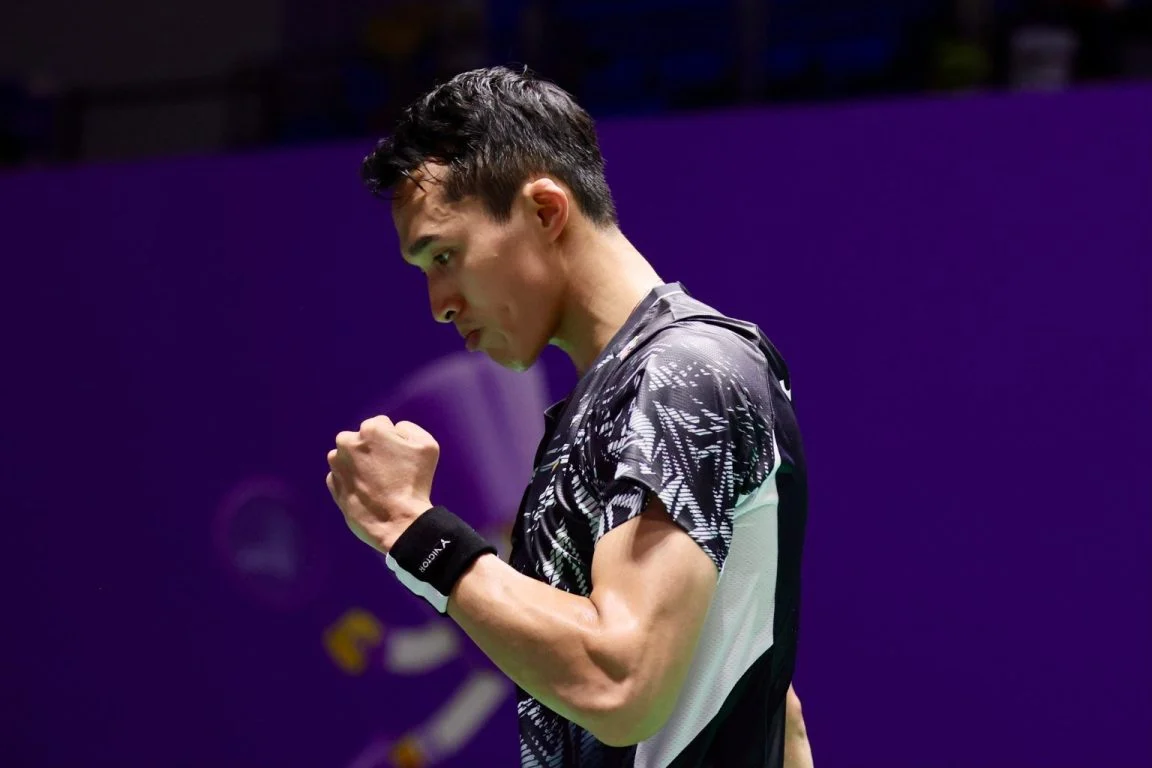
The Indonesian national badminton contingent has officially arrived in Japan to begin a high-stakes preparation phase ahead of the 2026 Asian Games. Tasked with a clear and demanding mandate by the government, the squad—featuring top-tier athletes such as men’s singles star Jonatan Christie—is leaving nothing to chance. To ensure optimal adaptation to local conditions, the coaching staff has orchestrated a rigorous four-day training camp in Tokyo before the team transitions to Nagoya, the primary hub for their competition schedule.
This strategic deployment underscores the immense pressure and high expectations resting on the shoulders of the national badminton association, Persatuan Bulu Tangkis Seluruh Indonesia (PBSI). As one of the country’s most historically reliable sources of multi-event medals, the badminton team carries the hopes of millions of Indonesian sports enthusiasts. The current training camp represents the culmination of months of tactical fine-tuning, physical conditioning, and mental preparation designed to peak at the exact moment the continental multi-sport quadrennial event commences.
The Government Mandate and Strategic Targets
The Ministry of Youth and Sports (Kemenpora) has set a definitive target for the Indonesian badminton contingent: bring home at least one gold medal. While a single gold medal might appear conservative to casual observers given Indonesia’s illustrious badminton history, the target reflects a realistic appraisal of the fiercely competitive global landscape. Nations such as China, Japan, South Korea, Chinese Taipei, and Denmark continue to field formidable squads across all categories, making podium finishes increasingly difficult to secure.
Eng Hian, the Head of PBSI’s Development and High-Performance (Binpres) division and simultaneously serving as the Manager of the Indonesian Badminton Team for the Asian Games 2026, acknowledged the weight of this directive. Speaking from Japan, he emphasized that while the government’s target presents a significant challenge, the collective resilience, unity, and preparation of the squad remain the ultimate catalysts for success.
"The target, as conveyed by the government through the Ministry of Youth and Sports, is one gold medal," Eng Hian stated. "This target serves as a formidable challenge for us, but undoubtedly, the hard work, shared commitment, and solidarity of the entire team are far more critical elements in achieving that objective."
PBSI’s leadership has meticulously analyzed past performances at major international events, including the previous Asian Games and the BWF World Tour circuit, to formulate a strategy that minimizes fatigue while maximizing tactical sharpness. The decision to establish a pre-competition training camp in Tokyo is a direct outcome of this strategic foresight, aiming to neutralize external variables such as climate adjustment, dietary adaptation, and jet lag.
The Tokyo Training Camp Chronology and Transition to Nagoya
The Indonesian contingent touched down in Tokyo on Sunday, September 13, 2026. Rather than heading directly to the athletes’ village or the official competition venues in Nagoya, the coaching staff opted for a localized training regimen in the Japanese capital. This four-day preparatory window is structured to allow players to ease into the East Asian time zone, adjust to the local atmospheric conditions, and regain their rhythm following international travel.
During this four-day period at the Tokyo training base, athletes are undergoing intensive closed-door sparring sessions, tactical drills, and physical maintenance routines overseen by the coaching staff, conditioning trainers, and medical teams. The emphasis is heavily placed on court familiarity, shuttlecock control under specific arena air-flow conditions, and sharp tactical execution.
"For four days, we will undergo this training camp in Tokyo before we depart for Nagoya. Our primary hope is that the young athletes and senior players alike can better adapt to the environment ahead of the Asian Games," Eng Hian explained.

Once the Tokyo training block concludes, the entire contingent will travel to Nagoya. Nagoya serves as a vital focal point for the 2026 Asian Games, hosting the badminton events amidst state-of-the-art sporting infrastructure designed to accommodate thousands of elite athletes from across the continent. The transition from Tokyo to Nagoya marks the final phase of preparation before competition draws are finalized and matches begin.
Squad Composition: A Balanced Mix of Youth and Experience
To meet the government’s expectations and navigate the grueling tournament bracket, PBSI has selected a formidable roster consisting of 20 elite players. This contingent comprises the nation’s finest talents across men’s singles, women’s singles, men’s doubles, women’s doubles, and mixed doubles categories.
The inclusion of seasoned veterans like Jonatan Christie provides invaluable leadership, composure, and tactical maturity, particularly during high-pressure knockout stages. Alongside Christie, the squad features rising stars and established international campaigners who have consistently proven their mettle on the BWF World Tour. This blend of generational hunger and championship pedigree is expected to give Indonesia tactical flexibility in both individual and team events.
The 20 athletes have undergone rigorous domestic selection processes and performance reviews over the preceding months. Training at the Cipayung national training center in Jakarta served as the primary crucible, where players were pushed to their physical and mental limits. The current contingent in Japan represents the survivors of that grueling selection gauntlet—athletes who have demonstrated peak physical fitness, tactical comprehension, and mental fortitude.
Broader Context and Historical Significance of Badminton in Asian Games
The Asian Games hold a unique and prestigious place in the hearts of Indonesian sports fans. Historically, badminton has been the spearhead of Indonesia’s medal collection at the quadrennial games, frequently delivering the nation’s most prized gold medals. From the legendary exploits of Liem Swie King and Rudy Hartono in decades past to the modern triumphs of Taufik Hidayat, Markis Kido, Hendra Setiawan, and Jonatan Christie himself, badminton has consistently elevated Indonesia’s standing on the international sporting stage.
At the previous editions of the Asian Games, the competition has only grown fiercer. The dominance once shared primarily between Indonesia, China, and Malaysia has expanded into a multi-nation battleground, with Japan, South Korea, India, and Thailand producing world-class champions capable of upsetting traditional powerhouses on any given day. Consequently, securing a gold medal is no longer merely a matter of routine execution; it requires flawless tactical preparation, exceptional physical endurance, and immense psychological resilience.
Furthermore, the timing of the 2026 Asian Games places it amidst a heavily congested international badminton calendar. Elite athletes must balance their commitments to the BWF World Tour—including Super 750 and Super 1000 tournaments—with peak conditioning cycles for multi-event games. This reality makes pre-event training camps like the one currently underway in Tokyo indispensable for managing athlete fatigue and injury prevention.
Implications and Outlook
As the Indonesian team wraps up its Tokyo camp and prepares to move to Nagoya, the focus shifts entirely to execution. The primary challenge for the coaching staff will be translating the hard work completed at Cipayung and the adaptive training in Japan into clinical performances on the court.
The pressure from Kemenpora and PBSI to secure at least one gold medal acts as both a driving force and a psychological hurdle. However, historical precedent suggests that Indonesian badminton players often thrive when the nation’s expectations are highest. The collective experience of the 20-player squad, combined with the meticulous logistical and tactical planning overseen by Eng Hian and his team, provides a solid foundation for optimism.
Ultimately, the success of the Indonesian badminton contingent at the 2026 Asian Games will not only be measured by the color of the medals brought home, but also by the depth of character, sportsmanship, and competitive spirit displayed throughout the tournament. As Jonatan Christie and his compatriots step onto the courts in Nagoya in the coming days, the entire nation will be watching, hoping that the rigorous preparations in Tokyo will translate into glorious triumphs on the podium.
