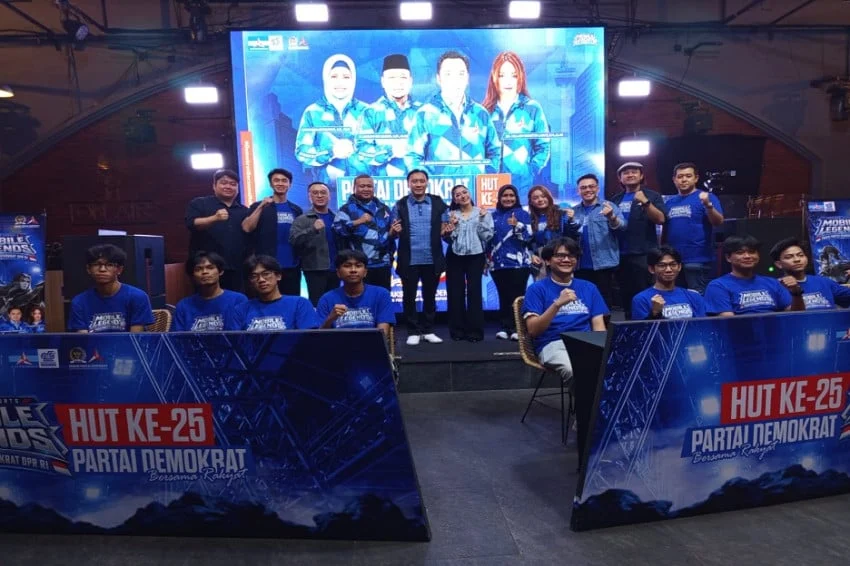
JAKARTA — Demonstrating a strategic pivot toward contemporary youth engagement and the burgeoning digital economy, the Democratic Party Fraction (Fraksi Partai Demokrat) of the People’s Representative Council (DPR RI) officially hosted a high-profile Mobile Legends: Bang Bang (MLBB) esports tournament. Held on Tuesday, September 8, 2026, at the vibrant Saka Social House in South Jakarta, the competitive gaming event formed a core component of the grand silver jubilee celebrations marking the 25th anniversary of the founding of the Democratic Party.
The tournament drew a massive turnout of 320 competitive players organized into numerous regional teams, transforming a mainstream political milestone into a dynamic arena of digital sportsmanship. By integrating competitive gaming into official political anniversary celebrations, the parliamentary fraction sought to underscore its commitment to recognizing esports not merely as a pastime, but as a legitimate frontier of modern creative industry, professional sports, and sustainable youth development in Indonesia.
The high-stakes competition witnessed intense tactical showdowns, with participating teams demonstrating advanced macro-strategy, seamless real-time communication, synchronized team coordination, and rapid decision-making under intense pressure. Beyond the physical matches, the event served as a high-level networking and engagement platform, bridging the gap between national legislators and the tech-savvy millennial and Generation Z demographics.
High-Profile Attendance and Political Leadership Support
The grand commemoration and tournament drew significant political figures, led by Edhie Baskoro Yudhoyono—widely known as Ibas—who serves a dual role as the Chairman of the Democratic Party Fraction in the DPR RI and Deputy Speaker of the People’s Consultative Assembly (MPR RI), alongside his duties as the Vice Chairman of the Democratic Party. Accompanied by Aliya Baskoro Yudhoyono, Ibas’s presence signaled the highest level of institutional backing from the party leadership toward the integration of digital culture into mainstream national policy frameworks.
Also in attendance were prominent legislative figures from the Democratic Party, including Hillary Brigitta Lasut, Harmusa Oktaviani, and Hasani Bin Zuber. These lawmakers engaged extensively with constituents, gaming community leaders, and tournament organizers. Notably, Hillary Brigitta Lasut captivated the audience and participants by stepping onto the virtual battlefield herself, actively joining a special fan-match exhibition alongside professional and amateur Mobile Legends players. This interactive session bridged formal legislative presence with grassroots digital culture, fostering an atmosphere of mutual accessibility between elected officials and digital-native youth.
Strategic Vision and Prevention of Negative Youth Activities
Addressing the participants, supporters, and media personnel gathered at the venue, Edhie Baskoro Yudhoyono emphasized that the rapid evolution of esports must be embraced as a vital ecosystem for constructive youth empowerment. He articulated a forward-looking vision wherein structured digital gaming provides an essential institutional outlet for young Indonesians to channel their boundless energy, technological aptitude, and competitive creativity into positive, productive outcomes.
"Esports represents more than just entertainment; it is a profound medium for developing critical cognitive skills, teamwork, and strategic discipline," Ibas noted during his address. Furthermore, the parliamentary leadership framed the tournament as a proactive social intervention. By providing accessible, organized, and rewarding competitive platforms, the initiative aims to offer a compelling alternative that steers youth away from detrimental activities such as online gambling, street brawls, and substance abuse—social maladies that frequently threaten vulnerable segments of the younger demographic.
The endorsement from high-ranking political figures reflects a growing realization within Indonesian governance that digital literacy and esports infrastructure are critical components of contemporary national human resource development.
The Chronology and Execution of the 25th Anniversary Tournament
The execution of the Mobile Legends tournament on September 8, 2026, was the culmination of weeks of careful planning, logistical coordination, and preliminary outreach managed by the organizing committee of the Democratic Party Fraction.
Phase One: Registration and Regional Selection
Weeks prior to the main event at Saka Social House, digital registration portals were opened to teams across the Greater Jakarta region. Within days, the cap of 320 participating players was reached, demonstrating the immense popularity of Mobile Legends: Bang Bang within the Indonesian capital. Online qualifiers narrowed down the contenders, ensuring that only the most proficient, cohesive, and strategically sound squads advanced to the final live tournament stage in South Jakarta.
Phase Two: The Main Event at Saka Social House
On Tuesday morning, the venue was transformed into a professional esports arena complete with high-definition display screens, high-speed fiber-optic internet infrastructure, casting stages, and dedicated spectator zones. The atmosphere buzzed with the energetic commentary of professional esports casters, matching the intensity of traditional athletic tournaments.
Matches were structured in a rigorous single-elimination and double-elimination bracket format, testing the endurance and adaptability of the 320 competitors. Teams engaged in complex drafting phases, balancing hero synergies, map control objectives, and tactical rotations.
Phase Three: Exhibition Fan Matches and Award Ceremonies
The afternoon schedule featured the highly anticipated celebrity fan-match, where lawmakers such as Hillary Brigitta Lasut teamed up with tournament finalists and community influencers. This segment highlighted the egalitarian nature of digital gaming, where social and political strata dissolve behind smartphone screens. The event concluded with a formal award ceremony, where leaders presented trophies, recognition plaques, and development grants to the victorious teams, cementing a memorable milestone for the party’s silver jubilee.
Background Context: The Rise of Esports in Indonesia
To fully appreciate the significance of the Democratic Party Fraction’s initiative, one must examine the broader socio-economic landscape of esports in Indonesia. Over the past decade, Indonesia has ascended to become one of the most lucrative and dynamic esports markets in Southeast Asia. Driven by widespread smartphone penetration, increasingly affordable mobile data plans, and a massive youth demographic, games like Mobile Legends: Bang Bang have evolved from casual pastimes into professional career paths.
National governing bodies, including the Indonesian Esports Executive Board (PB ESI), have worked systematically to legitimize and regulate competitive gaming. Indonesian esports athletes have achieved international acclaim, securing podium finishes at prestigious multi-sport events such as the Southeast Asian Games (SEA Games) and global world championships.
However, despite these macroeconomic successes, accessibility to structured training, professional management, and legal recognition remains uneven, particularly for grassroots communities and suburban youth. By hosting localized tournaments that draw hundreds of participants, political factions and civil society organizations play an increasingly vital role in democratizing access to the esports ecosystem, identifying raw talent, and providing platforms for community-building.
Fact-Based Analysis of Economic and Social Implications
The integration of esports into political anniversary programming carries multifaceted implications for both the Democratic Party and the broader trajectory of Indonesia’s digital economy.
1. Bridging the Political Engagement Gap
Historically, political parties struggled to forge meaningful connections with Gen Z and millennial voters, who often express fatigue with traditional, top-down political campaigns. By embedding political milestones within culturally relevant spaces like esports tournaments, parties can communicate their policy platforms regarding digital infrastructure, creative economy development, and youth empowerment in an organic, non-coercive environment. This strategy humanizes political figures and positions the party as an active stakeholder in the daily passions of young citizens.
2. Economic Validation of the Creative Industry
The digital economy, encompassing game development, content creation, streaming, tournament organization, and hardware merchandising, is a critical pillar of Indonesia’s transition toward high-value economic output. When parliamentary leaders publicly champion esports, it sends a strong signaling effect to regulatory bodies, financial institutions, and private investors. Increased institutional support helps legitimize the creative economy, paving the way for better intellectual property protections, tax incentives for gaming startups, and expanded venture capital funding for local game developers.
3. Mental Health, Discipline, and Digital Literacy
While critics frequently voice concerns regarding screen time and sedentary lifestyles associated with gaming, organized esports events emphasize structured discipline, teamwork, mental resilience, and time management. Tournaments require participants to balance academic or professional responsibilities with rigorous practice schedules. By promoting responsible gaming and highlighting its cognitive benefits, initiatives led by figures like Edhie Baskoro Yudhoyono help shift public perception away from fear-based narratives toward constructive digital literacy.
Official Responses and Stakeholder Perspectives
Reactions from the participating players, local community organizers, and digital economy analysts have been overwhelmingly positive. Many competitors expressed pleasant surprise at seeing senior national legislators take a direct, hands-on interest in the mechanics of competitive mobile gaming.
"Usually, politicians only talk about youth issues in abstract terms during election seasons," remarked Reza Pratama, a 21-year-old team captain who competed in the tournament. "Seeing leaders like Pak Ibas and Bu Hillary actually show up, understand the culture, and support an event like this makes us feel genuinely seen and valued as contributors to the nation’s future."
Industry observers note that as Indonesia approaches future national development milestones, political alignment with the digital generation will no longer be optional. The success of the Democratic Party’s 25th-anniversary esports tournament sets a benchmark for how political institutions can modernize their outreach efforts while simultaneously contributing to the social and economic upliftment of the nation’s youth.
As the echoes of victory cheers faded from Saka Social House on that Tuesday evening, the event left an enduring imprint on the intersection of Indonesian politics and digital culture—demonstrating that the future of civic engagement lies in meeting the younger generation within the spaces they inhabit, value, and master.