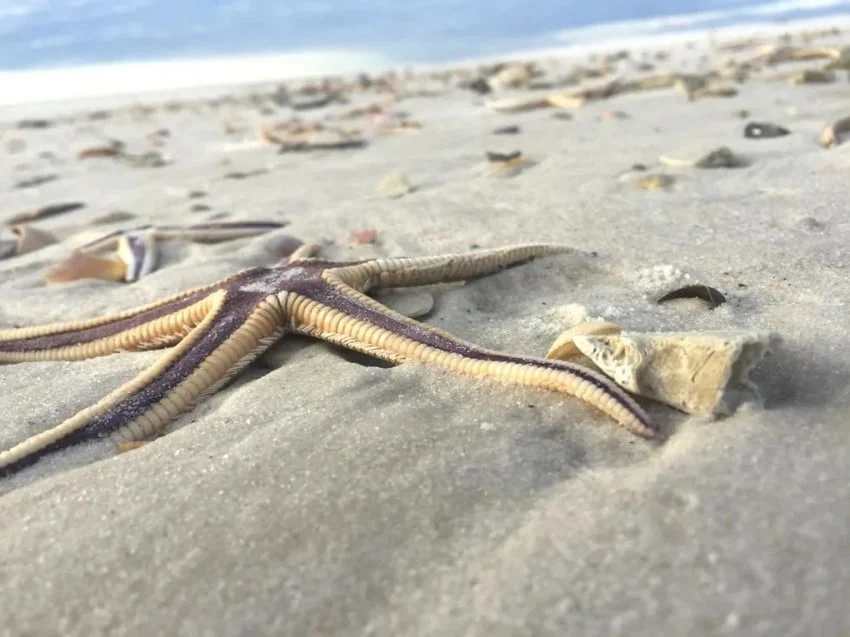
Hundreds of starfish were discovered stranded along the shoreline of Karon Beach in Phuket, Thailand, on Wednesday morning, creating a scene that has prompted significant alarm among local residents, tourists, and marine biologists. The phenomenon, which saw a large concentration of echinoderms scattered across the sand, was first brought to public attention through social media reports, triggering a broader investigation into the health of the local marine ecosystem and the potential environmental stressors currently affecting the Andaman Sea.
Chronology of the Discovery and Initial Observations
The event began early Wednesday morning when beachgoers at Karon Beach, a popular tourist destination in the Mueang Phuket district, encountered a stretch of coastline covered with hundreds of starfish. The animals, characterized by their long, distinctively patterned arms featuring alternating dark and light pigmentation, appeared to be lifeless.
The discovery was documented by Dechaphawida Chueanak, a social media user who shared visual evidence on Facebook. The images depicted the organisms distributed along the high-tide line, with many showing no signs of movement. The post quickly went viral, drawing questions regarding the ecological triggers behind such a mass stranding. Local witnesses reported that by midday, as the tide began to rise and waves pushed further inland, the majority of the stranded specimens were reclaimed by the sea, leaving behind a vacuum of information regarding their actual survival rate or the underlying cause of their emergence onto the sand.
Marine Biological Context and Environmental Factors
Starfish, or sea stars, are integral components of the benthic marine ecosystem, serving as predators that regulate populations of mollusks and other small invertebrates. Their sudden appearance on a beach in such large numbers is statistically anomalous, suggesting a disruption in their natural habitat.
Marine biologists often point to several environmental factors when mass strandings of marine invertebrates occur. Primary among these are abrupt changes in sea surface temperature, fluctuations in salinity levels due to extreme weather, or the presence of harmful algal blooms—commonly known as red tides. When oxygen levels in the water drop significantly, a condition known as hypoxia, bottom-dwelling creatures are often forced to move toward shallower waters to survive, which can result in them being trapped by receding tides.
Furthermore, the physical dynamics of the Andaman Sea during seasonal transitions can be volatile. Strong currents, increased wave energy, or localized upwellings can displace marine life, physically carrying them from deeper reef structures onto the sandy shores. However, because the starfish were found in such high densities, experts are also considering the possibility of a biological or chemical stressor—such as pollution or toxins—that may have debilitated the organisms, rendering them unable to anchor themselves to the substrate as they normally would during turbulence.
Supporting Data and Previous Occurrences
While this specific event in Karon Beach is currently under review, Phuket has experienced similar marine anomalies in the past. In recent years, reports of jellyfish blooms, mass fish die-offs, and coral bleaching have underscored the vulnerability of the island’s coastal waters to climate change and human impact.
According to data from the Department of Marine and Coastal Resources (DMCR) in Thailand, the Andaman coast is subject to seasonal monsoon cycles that significantly influence marine behavior. During the transition periods between the northeast and southwest monsoons, oceanographic conditions can shift rapidly. Historical data from marine monitoring stations indicates that in similar instances across Southeast Asian coastal regions, mass strandings are frequently linked to rapid drops in water temperature or severe storms that disrupt the marine floor.
However, the localized nature of this incident at Karon Beach warrants a specific assessment of the water quality. The area is highly trafficked by both commercial and recreational vessels, and the potential for nutrient runoff—which can lead to deoxygenated zones—remains a critical point of investigation for environmental scientists.
Official Responses and Preliminary Inquiries
Following the circulation of the footage, local authorities and environmental bodies in Phuket have begun to coordinate efforts to monitor the coastline. While no formal government report has yet identified a single cause, officials from the Phuket Marine Biological Center are expected to conduct water quality tests and analyze samples of the species found.
The silence of local authorities in the immediate hours following the event reflects a cautious approach to data collection. In such scenarios, the standard operating procedure involves assessing whether the starfish were already dead before reaching the shore or if they were alive and trapped by the tide. If the organisms were found to be in poor health or exhibiting signs of disease, it would imply a broader ecological failure that could affect other marine species in the vicinity.
Conversely, if the stranding was purely a result of hydrodynamic forces, the impact on the local ecosystem might be minimal. Nevertheless, the public outcry has necessitated a transparent communication strategy from the provincial government to prevent misinformation from impacting the region’s tourism industry, which is a vital component of Phuket’s economy.
Broader Implications for Coastal Management
The incident at Karon Beach serves as a reminder of the fragility of coastal ecosystems in the face of anthropogenic pressure. Marine ecosystems are often the first to exhibit signs of environmental imbalance. The stranding of hundreds of starfish is not merely an isolated curiosity; it is a signal that warrants longitudinal study.
- Environmental Monitoring: There is a growing consensus that the frequency of monitoring stations along Phuket’s beaches must be increased. Real-time data regarding water temperature, pH levels, and dissolved oxygen would allow authorities to predict potential stranding events and mitigate damage before they occur.
- Pollution Control: The proximity of Karon Beach to urbanized areas means that runoff from heavy rains can carry pollutants and nutrients into the sea. Assessing the impact of coastal development on the local reef systems is essential to ensuring that the habitat remains hospitable for native marine life.
- Public Awareness and Science: The role of social media in this event highlights the importance of "citizen science." By documenting such events, members of the public provide raw data that can assist researchers in identifying the timing and location of ecological anomalies. However, authorities advise that the public should avoid handling marine life during such events, as some species may harbor toxins or be suffering from pathogens that could be harmful to humans.
Conclusion: A Call for Scientific Rigor
As the waters of Karon Beach return to a state of apparent normalcy, the task of determining the "why" remains. Was this a freak occurrence caused by a combination of high-tide wave patterns and natural population density, or is it a symptom of an underlying issue in the Andaman Sea?
The answer will depend on the findings of the environmental scientists currently analyzing the situation. For the residents and the tourism sector of Phuket, the event serves as a stark reminder of the connection between the health of the ocean and the well-being of the land. As the region continues to develop, balancing economic interests with the preservation of marine biodiversity will remain the most significant challenge. The hundreds of starfish found on the sand represent more than just a passing curiosity; they represent an ecosystem in flux, demanding a measured, scientific, and proactive response to ensure that the wonders of the Andaman remain intact for future generations. Future updates from the DMCR are anticipated as the investigation into the Karon Beach stranding continues.