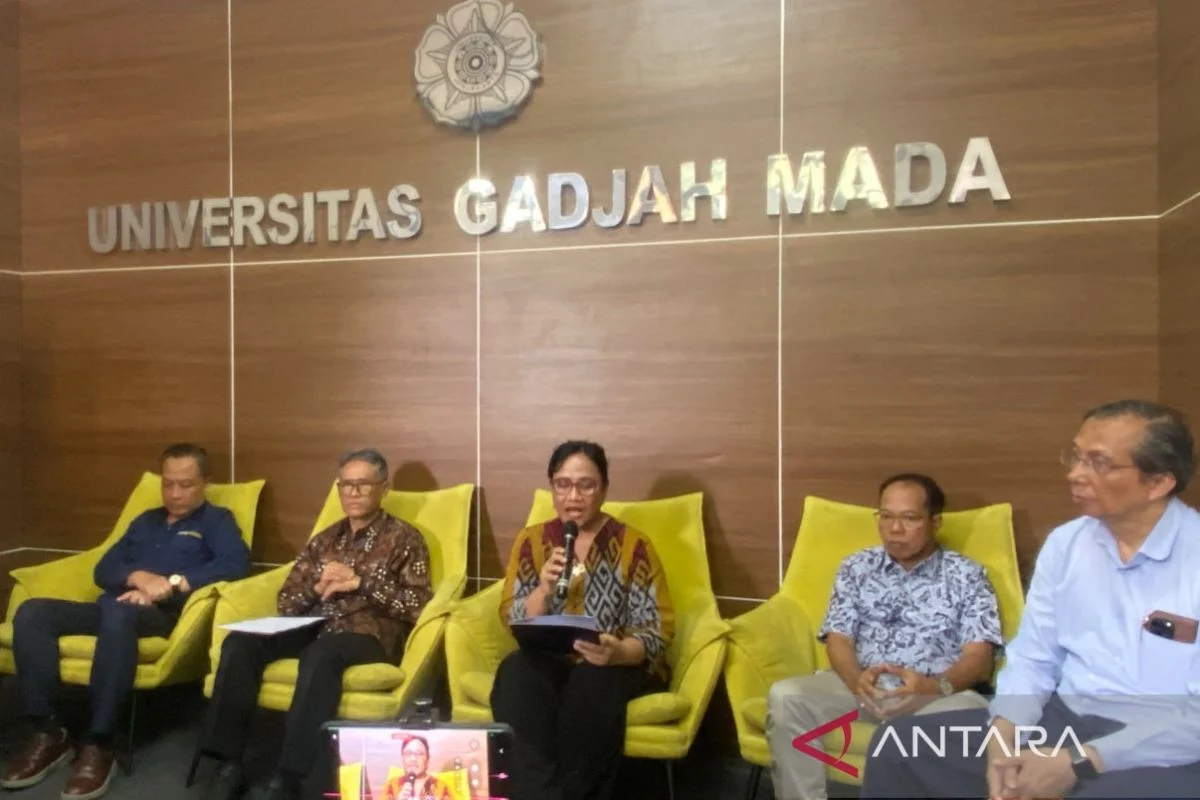
The leadership of Universitas Gadjah Mada (UGM) has issued a resolute stance against the deployment of security forces utilizing tear gas and tactical vehicles (rantis) within university perimeters. This declaration follows heightened tensions surrounding the demonstrations held on November 10, which saw significant public discourse regarding the conduct of law enforcement during the dispersal of protesters. As an institution of higher learning, UGM emphasized that the sanctity of the academic environment must remain inviolable, asserting that the campus serves as a protected space for intellectual discourse, free from the intimidation of force.
Wening Udasmoro, the Vice Rector for Education and Teaching at UGM, articulated this position during a press conference held at the university’s Yogyakarta campus. Her statement serves as a formal demarcation of the university’s boundaries regarding the presence of security personnel during civil unrest. According to the university administration, the physical and psychological safety of students and faculty is paramount, and the introduction of combat-style tactics—such as the use of chemical irritants—within an academic setting is fundamentally antithetical to the principles of higher education.
The Context of the November 10 Demonstrations
The incident in question originated from a series of protests held on November 10, a date traditionally significant in Indonesia as National Heroes Day. In various urban centers across the country, including Yogyakarta, student-led groups and civil society organizations took to the streets to voice concerns over government policies, economic conditions, and the state of democracy.
In the vicinity of UGM, the atmosphere became particularly charged as security forces engaged in crowd control operations. Reports emerged on social media and through eyewitness accounts suggesting that tactical vehicles may have encroached upon university territory while attempting to disperse protesters. While these reports remained, as Vice Rector Wening noted, "somewhat ambiguous" and subject to verification, the mere perception of such an incursion prompted an immediate and firm reaction from the university administration.
The tension between security forces and protesters is not a new phenomenon in Indonesia’s democratic history. Since the reform era (Reformasi) began in 1998, campuses have historically functioned as the primary hubs for student activism. However, the use of tear gas and heavy-handed tactics near or inside educational institutions remains a highly sensitive issue that often triggers debates regarding the proportionality of force used by the police and the preservation of academic freedom.
Chronology of Events and Internal Verification
Following the demonstrations, a period of internal assessment began at UGM to determine the exact extent of the police presence near university property. The university’s primary concern was not only to protect the physical integrity of the campus but also to ensure that the fundamental rights of students to assemble and express their grievances were respected.
The timeline of the administration’s response unfolded as follows:
- November 10: Large-scale protests occurred in various parts of Yogyakarta. As evening fell, dispersal tactics were employed by local authorities to clear public roads and surrounding areas.
- November 11: Reports of police vehicles and tear gas usage near the UGM perimeter circulated widely among students and academic staff, sparking concern about the safety of those still on campus.
- November 12: University leadership initiated an internal review of security protocols and surveillance footage to assess the validity of the claims regarding the presence of tactical units within university grounds.
- November 13: The UGM administration, represented by Vice Rector Wening Udasmoro, held a press conference to clarify the university’s position, unequivocally stating that the use of force within campus zones is unacceptable.
The Stance of Local Law Enforcement
In response to the growing public scrutiny and the university’s firm rejection of police tactics, the Yogyakarta Regional Police (Polda DIY) issued a clarification. Representatives from the police force denied the allegations that their personnel had intentionally entered the university’s private grounds during the operation. According to official police statements, their activities were confined to public thoroughfares necessary for maintaining public order and facilitating traffic flow.
This discrepancy in accounts highlights a recurring friction point in Indonesian civil-military/police relations. While the police prioritize the maintenance of public order under the banner of security, universities prioritize the protection of their autonomy and the safety of their student body. The debate essentially hinges on where the "public space" ends and "academic space" begins, a boundary that often becomes blurred during the heat of a protest.
The Philosophy of Academic Freedom and Democracy
UGM’s reaction is deeply rooted in the university’s institutional philosophy. Vice Rector Wening highlighted that the institution views student activism not as a nuisance, but as a vital component of a healthy democracy. According to the administration, the ability of students to critique government policy is an essential feedback loop that prevents systemic complacency.
"When students or academics provide input, the state should be grateful," Wening remarked. She warned that a society where dissent is silenced—where everyone simply agrees with the status quo—is a society that faces greater long-term risks. UGM maintains that by fostering an environment where critical thinking is encouraged, they are fulfilling their role as a beacon of intellectual development.
The university’s policy is to treat even its own students with the same level of openness; when students critique the university’s internal policies, the leadership claims to welcome such feedback as an opportunity for institutional growth. By extending this principle to the national stage, UGM is positioning itself as a defender of the democratic process, asserting that the suppression of protest is a detriment to the nation’s political maturity.
Implications for Future Security Coordination
The incident has triggered a broader discussion regarding the coordination between universities and the Indonesian National Police (Polri) during times of civil unrest. Historically, there has been a tacit "gentleman’s agreement" that security forces exercise extreme restraint near university gates to prevent the escalation of violence and to avoid the perception of state-sponsored suppression of intellectuals.
Experts in public policy and human rights suggest that the following steps are necessary to prevent future conflicts:
- Clearer Protocol Definitions: The establishment of a formal memorandum of understanding (MoU) between universities and regional police regarding the "no-go" zones for tactical vehicles during demonstrations.
- De-escalation Training: Enhancing the training of field officers in managing student protests, emphasizing the importance of non-violent de-escalation over the use of chemical agents or heavy machinery.
- Communication Channels: Maintaining open and active communication channels between university security departments and police commanders on the ground during active protests to prevent misunderstandings about territorial boundaries.
Broader Societal Impact
The firm stance taken by UGM resonates with a wider audience concerned about the shrinking space for civil society in Indonesia. As global democracy indices show varying degrees of backsliding, the role of universities as "safe havens" for expression becomes increasingly critical. When a major institution like UGM—often considered a barometer for national sentiment—takes a hard line against the use of force, it creates a precedent that other universities are likely to follow.
The implications are clear: the use of tactical weaponry against students is seen as a failure of democratic management. By refusing to accept such measures, UGM is signaling to both the government and law enforcement that the autonomy of the university is a non-negotiable right. This stance serves as a reminder that the suppression of peaceful expression does not solve the root causes of public dissatisfaction; rather, it often serves to catalyze further unrest.
In conclusion, UGM’s firm rejection of tactical force within its gates is a manifestation of its commitment to the dual values of academic freedom and democratic participation. As the university moves forward, it remains focused on ensuring that its campus stays a "safe space" for students to study, debate, and engage with the world, free from the shadow of institutionalized violence. The administration’s call for gratitude toward those who provide critical input reflects a mature understanding of the role of higher education in the 21st century—a role that demands courage, transparency, and a steadfast commitment to the principles of human rights.