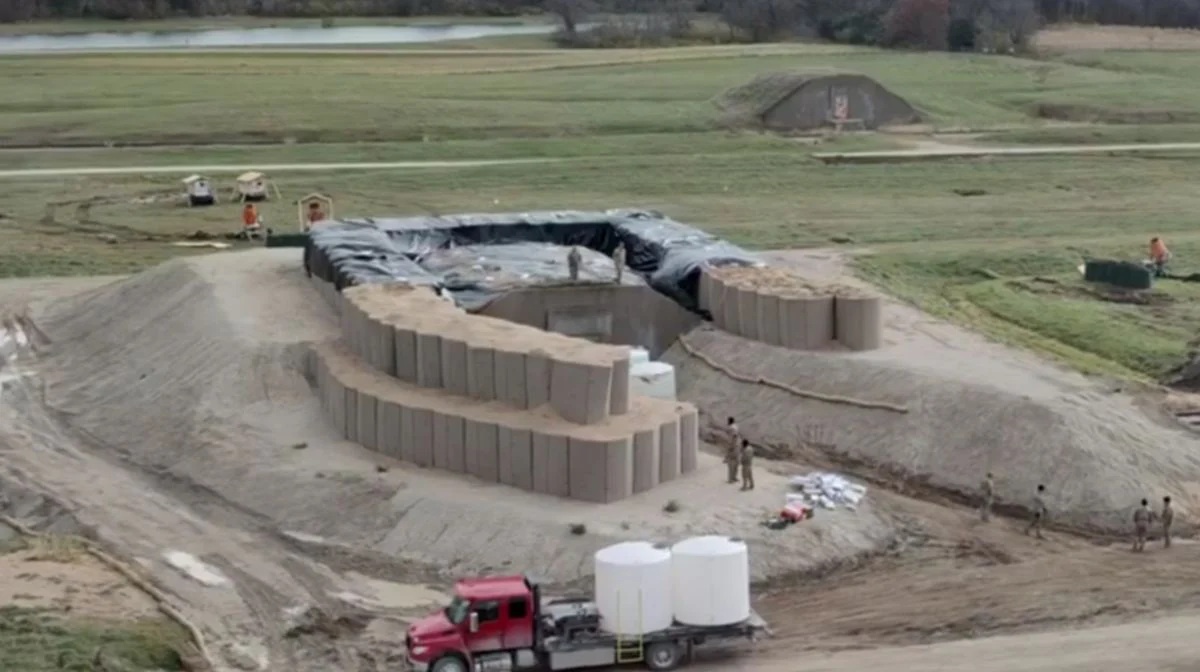
The United States Army conducted a high-stakes, controlled demolition of approximately 4.5 tons of volatile explosive materials at the Iowa Army Ammunition Plant (IAAP) in Middletown, Iowa, on Wednesday, November 26, 2026. The operation, which involved the destruction of 68 barrels of lead azide, marked the culmination of a protracted period of regulatory uncertainty, public outcry, and logistical anxiety regarding the disposal of hazardous military ordnance. While the Army has declared the mission a success, the event has reignited long-standing debates over the safety of legacy chemical stockpiles and the environmental stewardship responsibilities of federal military installations.
The Nature of the Threat: Understanding Lead Azide
Lead azide is a highly sensitive primary explosive, typically used as a detonating agent in primers and blasting caps. Unlike secondary explosives that require significant energy to ignite, lead azide is notoriously volatile; it can be triggered by friction, impact, or even minor changes in temperature. As it ages, the chemical compound becomes increasingly unstable.
The materials destroyed in Middletown had been in storage since 2009. Over the course of seventeen years, the internal chemical structure of the substance had deteriorated, rendering it too dangerous to transport or handle for conventional chemical neutralization. According to military safety protocols, moving the barrels posed an unacceptable risk of accidental detonation, leaving the Army with the singular, albeit controversial, option of a controlled open-air burn and detonation.
A Chronology of the Middletown Disposal Operation
The decision to proceed with the explosion was not reached lightly. The path to the November 26 detonation was marked by a series of legal and environmental hurdles:
- 2009: The batch of lead azide was officially logged into the IAAP inventory, intended for use in military munitions production.
- 2020–2023: Periodic inspections revealed that the stabilization agents within the barrels were failing, leading to a classification of the material as "imminently hazardous."
- Early 2026: The Army formally announced its intention to destroy the materials. Local community groups, citing fears of heavy metal contamination and potential respiratory health risks, filed several petitions and legal challenges to block the operation.
- November 2026: After rigorous environmental impact assessments were reviewed and specific safety mitigations were put in place, the military received the final green light to execute the disposal.
- November 26, 2026: At approximately 23:30 WIB, the controlled detonation was initiated, drawing significant attention from local authorities and regional media.
The Military Rationale: Why Controlled Destruction?
Major General Eric Shirley, Commander of the Army Sustainment Command, defended the operation as a necessary preemptive measure. In a statement released following the blast, Shirley emphasized that the status quo had become untenable. "Sikap pasif bukan lagi pilihan—passivity was no longer an option," Shirley stated.
The logic employed by the Department of the Army was based on risk assessment statistics. They argued that the probability of an uncontrolled, catastrophic explosion at the facility—if the material continued to degrade—far outweighed the calculated risks associated with a controlled, monitored demolition. By conducting the explosion in a contained environment with specific meteorological conditions, the Army aimed to minimize the dispersion of hazardous particulates.
Environmental and Public Health Concerns
Despite the military’s assurances, the local community in Iowa remained deeply skeptical. The primary concern is the potential for lead-laden dust to settle on surrounding agricultural lands, water sources, and residential areas. Lead is a potent neurotoxin, and its inhalation or ingestion—even in minute quantities—can lead to long-term health complications, particularly in children.

Before the detonation, the Army released a dispersion model indicating that, under certain wind conditions, lead particles could theoretically travel up to 75 miles (120 kilometers) from the blast site. While the military clarified that these models represented a "worst-case scenario" rather than an expected outcome, the mere possibility of such a wide radius of contamination caused significant anxiety among residents.
In the hours following the operation, military officials provided a briefing confirming that air quality sensors positioned around the perimeter of the facility did not detect lead concentrations exceeding federal safety standards. However, independent environmental watchdogs have pointed out that real-time sensor data is often limited in its ability to detect long-term soil accumulation or microscopic particulate fallout that may settle miles away from the primary blast zone.
Broader Implications for U.S. Military Ordnance Disposal
The Middletown operation serves as a case study for the broader challenge facing the U.S. Department of Defense: the management of aging munitions stockpiles. As chemical components in legacy munitions reach the end of their shelf life, the military is increasingly forced to confront the environmental costs of disposal.
This incident highlights several critical systemic issues:
- The Aging Stockpile Problem: The U.S. maintains vast quantities of munitions produced during the early 21st century. As these materials enter their second or third decade of storage, the cost and danger of disposal are rising exponentially.
- Infrastructure Limitations: The IAAP facility, like many other military sites, is equipped for production but not necessarily for the high-tech, environmentally neutral disposal of highly sensitive chemical explosives.
- Community-Military Relations: The friction between the residents of Middletown and the Army underscores a growing disconnect between national security requirements and local public health priorities. Future operations will likely face even stricter regulatory scrutiny and demands for transparency.
Analysis of the Aftermath
While the operation was executed with high-level coordination, the long-term impact on the Middletown ecosystem remains a subject of ongoing monitoring. The Army has committed to continued testing of soil and water samples in the surrounding area to ensure that no toxic accumulation occurred.
From an engineering perspective, the use of controlled open-air detonation remains a legacy practice. Many experts are now calling for the implementation of advanced supercritical water oxidation or other closed-loop disposal technologies that could neutralize such hazardous materials without the need for atmospheric release. However, these technologies are expensive and currently lack the scale required to handle the volume of material present at sites like Middletown.
As the smoke clears, the residents of Iowa are left with the task of holding the military to its promise of safety. For the Army, the event is a reminder that in an era of heightened environmental awareness, the disposal of weapons is as much a political and public relations challenge as it is a technical one. The successful completion of this operation may have averted an immediate disaster, but it has solidified the demand for more sustainable and transparent methods of managing the detritus of modern warfare.
Moving forward, the Department of Defense will likely face increased pressure from Congress and environmental advocacy groups to expedite the modernization of disposal facilities. The events of November 26, 2026, will almost certainly be referenced in future hearings as a catalyst for changing how the U.S. handles its most volatile legacy materials. Whether this leads to a shift in policy or merely a refinement of current open-burn practices remains to be seen, but the Middletown incident has undoubtedly set a new, higher bar for public accountability in military logistics.