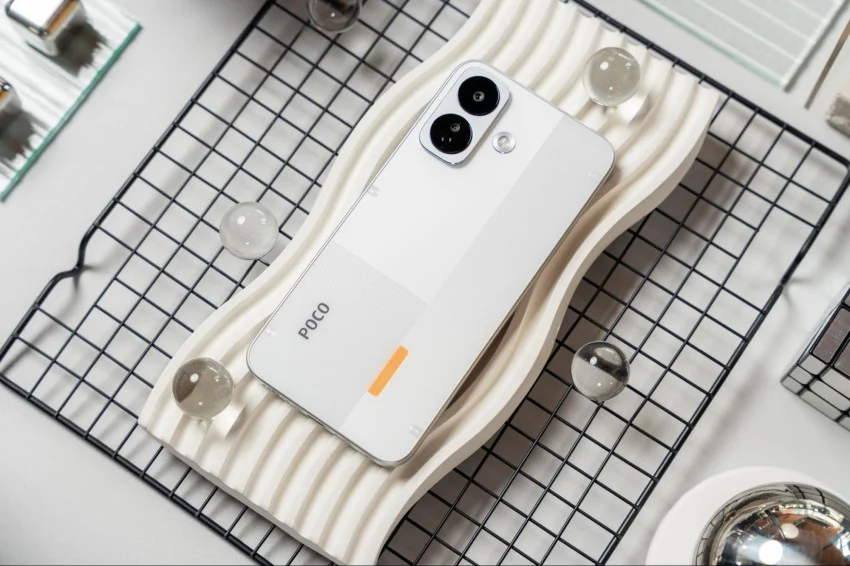
JAKARTA — The Indonesian mobile gaming landscape is undergoing a significant transformation, driven by a growing demand for hardware that can keep pace with increasingly complex competitive titles. Addressing the primary technical pain points identified by the local gaming community, POCO Indonesia has officially launched the POCO X8, a device marketed as "The Control Weapon," specifically engineered to mitigate the performance bottlenecks that often plague mobile gamers.
The launch follows the release of the Indonesian Gaming Behavior 2025 report by the market research firm Jakpat, which identified device performance—specifically "lagging"—as the second most significant frustration for gamers in Indonesia, trailing only behind unstable network connectivity, commonly referred to as "red ping." This empirical data underscores a shift in consumer priority: for the modern Indonesian gamer, victory is no longer solely a matter of tactical skill or macro-management, but a consequence of the hardware’s ability to sustain high-intensity performance during critical moments.
Contextualizing the Demand for High-Performance Hardware
The rise of competitive mobile gaming in Southeast Asia, particularly in Indonesia, has created a niche for smartphones that prioritize thermals, battery longevity, and processing efficiency. Historically, the mid-range smartphone market has struggled to balance portability with the endurance required for prolonged gaming sessions.
Industry analysts note that as mobile titles like Mobile Legends: Bang Bang, PUBG Mobile, and Genshin Impact continue to push the boundaries of graphical fidelity and processing requirements, the lifecycle of a typical mid-range smartphone in a gamer’s hands is shortening. Thermal throttling—where a phone slows down its CPU to manage heat—often leads to the "lag" reported by users. By introducing the POCO X8, the manufacturer is attempting to solve this through a combination of hardware optimization and high-capacity power management.
Technical Specifications: Bridging Power and Portability
At the core of the POCO X8’s value proposition is its substantial battery capacity. The device is equipped with an 8,340 mAh battery, a significant departure from the industry standard of 5,000 mAh. This capacity is intended to allow for extended, uninterrupted gaming sessions without the necessity of tethering the device to a power source.
To complement the large battery, POCO has integrated 67W HyperCharge technology. While fast charging is common in the segment, the inclusion of a 22.5W wired reverse-charging feature is a notable strategic addition. This functionality allows the POCO X8 to serve as a portable power bank, enabling users to charge a teammate’s device during a match—a feature that subtly reinforces the device’s identity as a tool for competitive team-based gaming.
The display, a critical component for competitive advantage, features a 6.83-inch AMOLED panel. AMOLED technology is preferred by gamers for its superior contrast ratios, deep blacks, and faster pixel response times compared to traditional LCD screens. While the official specifications emphasize the display’s size and panel type, the market expectation for a device in this category is a high refresh rate (typically 120Hz) to ensure smooth input registration, which is essential for "clutch" moments in fast-paced games.
Corporate Strategy and Market Positioning
Novita Krisutami, PR Manager of POCO Indonesia, emphasized that the product development strategy was informed by a desire to remove the technical barriers that lead to "lose streaks."
"Control, for a gamer, is not limited to selecting the right hero or character class; it is fundamentally about the reliability of the hardware throughout the day," said Krisutami. "Our objective with the POCO X8 is to provide ‘Gamer Kalcer’—a term we use for the modern, culturally aware gamer—the freedom to execute complex maneuvers without the fear of system instability or sudden power loss."
This positioning suggests a pivot from the traditional "specs-first" marketing approach to one that highlights the experience of gaming. By framing the device as a "Control Weapon," POCO is targeting a demographic that is increasingly aware of the correlation between technical specifications and competitive performance.

Timeline of Development and Market Entry
The development of the POCO X8 corresponds with a broader timeline of smartphone market stabilization in Indonesia. Following the supply chain disruptions of 2022 and 2023, 2025 has been marked by a return to aggressive hardware competition.
- Q1 2025: Initial industry reports indicate a surge in demand for gaming-specific smartphones among the Gen Z and Millennial demographics in Indonesia.
- Q3 2025: Jakpat publishes the "Indonesian Gaming Behavior 2025" report, confirming that technical performance is a primary barrier to entry for casual gamers looking to go professional.
- Late Q4 2025: POCO Indonesia confirms the final testing phase for the X8 series, focusing on battery optimization under high-stress gaming loads.
- November 2026: The official launch event in Jakarta, signaling the immediate availability of the device across national retail channels.
Broader Economic and Tech Implications
The entry of the POCO X8 into the Indonesian market has several implications for the local tech ecosystem. First, it sets a new baseline for battery expectations in the sub-premium gaming segment. Competitors will likely face pressure to either increase their battery capacity or improve the efficiency of their power management systems to match the 8,000 mAh+ threshold.
Second, the integration of reverse-charging as a "team utility" feature suggests a growing trend of social, community-based hardware marketing. By promoting features that benefit the team rather than just the individual, POCO is appealing to the social nature of the Indonesian gaming community, where the "mabar" (main bareng/playing together) culture is deeply ingrained.
From a manufacturing perspective, the device demonstrates how smartphone OEMs are overcoming the weight and bulk traditionally associated with large batteries. Through advancements in lithium-ion density, manufacturers are now able to house larger power cells in chassis that do not significantly compromise ergonomics.
Market Analysis: Can Hardware Solve the "Lag" Problem?
While the POCO X8 addresses the power-related causes of performance drops, it is important to note that mobile gaming performance remains a tripartite challenge: hardware, software optimization, and network connectivity.
While the POCO X8 provides the necessary "headroom" for high-performance gaming, users must still contend with the realities of mobile data infrastructure in Indonesia. Even the most powerful device will experience "lag" if the network latency is high. However, by eliminating hardware-based thermal throttling and battery-related performance dips, the POCO X8 effectively removes one of the three pillars of frustration.
Financial analysts monitoring the mobile sector suggest that POCO’s aggressive pricing strategy—typical of the brand—coupled with these high-spec hardware inclusions, will likely force competitors to re-evaluate their mid-range product roadmaps for the upcoming fiscal year.
Conclusion: The Future of "Gamer Kalcer"
The POCO X8 is more than a simple iterative update; it is a response to a specific set of user data that highlights a growing sophistication among Indonesian consumers. By acknowledging that hardware performance is synonymous with competitive integrity, POCO is aligning itself with the needs of a community that views gaming as a legitimate lifestyle and professional pursuit.
As the Indonesian digital economy continues to mature, the hardware that supports this growth must also evolve. Whether the POCO X8 will successfully curb the "lag" that plagues so many players remains to be seen in real-world, long-term testing. However, the move represents a clear commitment to addressing the practical, daily frustrations of a gaming population that is tired of losing to anything other than their opponent’s superior strategy.
For the average Indonesian consumer, the POCO X8 provides a compelling case for an upgrade. With a robust battery, a large and responsive AMOLED screen, and a design philosophy centered on competitive endurance, the device is well-positioned to become a staple in the Indonesian mobile gaming scene for the remainder of 2026 and beyond.