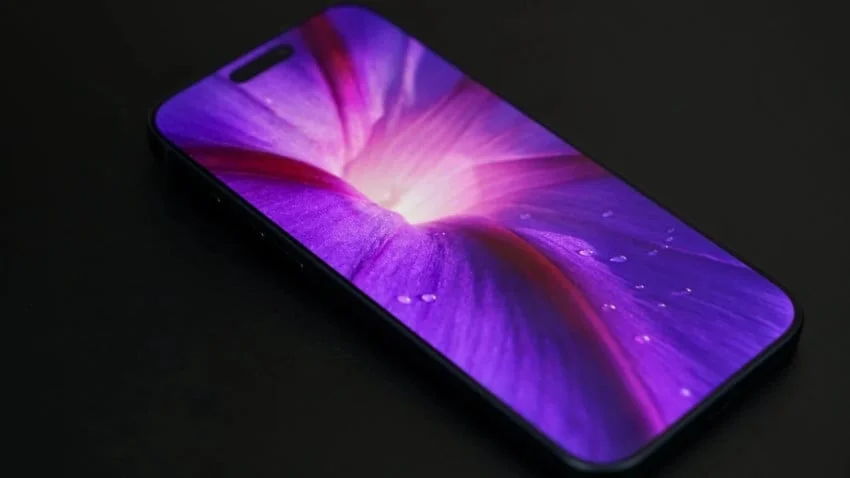
Cupertino, California – In a move that could redefine the smartphone landscape and mark a significant milestone in its product history, Apple is reportedly in the advanced stages of testing a revolutionary display for a future iPhone model, potentially slated for release in 2025 to commemorate the 20th anniversary of the original iPhone’s launch. Sources close to the matter suggest this upcoming device, rumored to be designated the iPhone 20 Pro Max, will feature an unprecedented 7-inch screen with a daring "quad-curved" design, curving on all four edges, promising the most substantial design overhaul since the introduction of the iPhone X.
This potential shift represents not merely an incremental hardware upgrade but a strategic re-imagining of Apple’s flagship smartphone, signaling a bold new direction in its design philosophy. The whispers from the tech community, amplified by insights from prominent leaker Digital Chat Station on Weibo and subsequently reported by MacRumors, point towards Apple actively evaluating a 7-inch display panel specifically for this anniversary edition iPhone. This would position the device as the largest iPhone ever released, surpassing even the recently expanded screen sizes of the iPhone 16 Pro Max, which saw an increase from 6.7 inches to an anticipated 6.9 inches in 2024.
While a 0.1-inch increase in diagonal measurement, roughly equivalent to 3 millimeters, might seem minor in isolation, the true significance lies in Apple’s rumored approach to optimizing the overall device architecture. The overarching narrative suggests a concerted effort to further minimize display bezels to an absolute minimum, thereby maximizing screen real estate without unduly expanding the physical dimensions of the handset. This engineering feat would allow users to experience a larger display within a form factor that remains familiar and comfortable in hand, a delicate balance Apple has long strived to achieve.
A Look Back: The iPhone’s Display Evolution
To fully appreciate the potential impact of a 7-inch display, it’s crucial to contextualize Apple’s journey with iPhone screen sizes. The original iPhone, unveiled by Steve Jobs on January 9, 2007, and released in June of that year, featured a modest 3.5-inch display. This size was revolutionary at the time, offering a touch interface that was intuitive and immersive. For years, Apple adhered to this screen size, facing increasing competition from Android manufacturers who championed larger displays.
The first significant departure came with the iPhone 6 and 6 Plus in 2014, introducing 4.7-inch and 5.5-inch screens, respectively. This marked a clear acknowledgment of market trends and consumer demand for larger displays. The iPhone X, launched in 2017, then ushered in a new era of edge-to-edge displays with its 5.8-inch screen and the controversial, yet iconic, notch. Subsequent models saw further refinements, with the Pro Max variants consistently pushing the boundaries of screen size within Apple’s lineup, culminating in the anticipated 6.9-inch display of the iPhone 16 Pro Max. The proposed 7-inch display for the 20th-anniversary model would represent an escalation of this trend, albeit with a more ambitious design.
The "Quad-Curved" Display: A Design Paradigm Shift
The mention of a "quad-curved" design is particularly intriguing. This implies that the display glass will not only curve on the sides but also potentially on the top and bottom edges, creating a seamless, almost bezel-less visual experience. Such a design, if executed flawlessly, could eliminate traditional bezels entirely, offering an uninterrupted canvas for content consumption, gaming, and productivity. This ambitious curvature would necessitate advanced manufacturing techniques and materials to ensure durability and prevent accidental touches.
Historically, curved displays have been a feature more commonly associated with Samsung’s Galaxy S series, often marketed for their aesthetic appeal and immersive viewing angles. However, Apple’s approach, if the rumors hold true, may focus more on functional integration, utilizing the curved edges for enhanced multitasking gestures, contextual controls, or even notification indicators, all while striving for a more unified and elegant aesthetic. The challenge for Apple will be to integrate this curvature in a way that complements its established design language and user interface, avoiding the pitfalls of previous implementations that sometimes led to unintended touch inputs or display distortions.
Beyond Size: Enhancements to Visual Experience
The projected 7-inch screen size is not the sole focus of this alleged overhaul. Reports indicate that Apple is simultaneously working on a suite of visual enhancements designed to complement the new display technology. While specifics remain scarce, these enhancements could encompass advancements in display brightness, color accuracy, refresh rate, and perhaps even new underlying panel technologies that offer superior energy efficiency and durability. The goal, it appears, is to deliver an "entirely different experience" compared to current iPhone generations, moving beyond mere spec bumps to a fundamental rethinking of visual interaction.
The 20th Anniversary Context: A Momentous Occasion
The timing of this potential release – for the 20th anniversary of the original iPhone – is not coincidental. It suggests a deliberate effort by Apple to create a truly landmark device, one that pays homage to its revolutionary past while boldly charting a course for the future. The original iPhone was a product that fundamentally changed the mobile industry, ushering in the era of the smartphone as we know it. A 20th-anniversary device that pushes boundaries in display technology and design would serve as a powerful statement of Apple’s continued innovation and its commitment to shaping the future of personal technology.
Apple’s product launches are meticulously planned, and the anniversary year would provide a unique marketing narrative, allowing the company to draw parallels between the groundbreaking nature of the original iPhone and the transformative potential of this new model. Analysts anticipate that Apple would leverage this anniversary extensively in its promotional campaigns, highlighting the lineage of innovation that began two decades ago.
Navigating the Technical Challenges
Implementing a 7-inch quad-curved display presents significant engineering hurdles. The increased screen size necessitates a larger battery to maintain acceptable battery life, which in turn impacts the overall device thickness and weight. Apple’s engineers will need to find innovative solutions for battery technology and internal component stacking to accommodate these demands.
Furthermore, the durability of such a display will be paramount. Curved glass, while aesthetically pleasing, can be more susceptible to damage from drops and impacts. Apple’s renowned attention to detail in material science and structural engineering will be put to the test. The company has a history of introducing new materials and manufacturing processes, and it is plausible that they are developing advanced glass formulations or protective coatings specifically for this device.
The integration of the camera system, sensors, and speakers into a device with such minimized bezels and curved edges also poses a complex design challenge. The notch, which has been a defining visual element of recent iPhones, might be re-imagined or even eliminated altogether, potentially through the adoption of under-display camera technology or a more discreet pill-shaped cutout, as speculated for some iPhone 16 models.
Industry Reactions and Implications
While official statements from Apple are, as expected, nonexistent at this early stage, the tech industry is abuzz with speculation. Competitors will undoubtedly be watching closely. A successful implementation of a 7-inch quad-curved display could set a new benchmark for flagship smartphones, forcing rivals to accelerate their own display innovation efforts.
From a consumer perspective, the appeal of a larger, more immersive display is undeniable. For users who consume a significant amount of media, play games, or engage in productivity tasks on their phones, a 7-inch screen could offer a more compelling experience. However, the increased physical size might alienate users who prefer more compact devices, highlighting the continued importance of offering a range of sizes within the iPhone lineup.
The potential for reduced bezels also has broader implications for augmented reality (AR) and virtual reality (VR) experiences on mobile devices. A more expansive, uninterrupted display could enhance the immersion of AR applications and pave the way for new forms of mobile-based immersive content.
The Road Ahead: A Glimpse into the Future
The rumors surrounding the iPhone 20 Pro Max and its groundbreaking display are, at this stage, speculative. However, they paint a compelling picture of Apple’s forward-thinking approach to smartphone design. The company has a proven track record of pushing the boundaries of what’s possible, and a 20th-anniversary celebration with such a significant hardware and design evolution would be a fitting testament to its legacy.
As we move closer to 2025, more concrete information is likely to emerge. The coming months will be crucial for observing Apple’s development trajectory and for discerning the true extent of this anticipated revolution. Whether the iPhone 20 Pro Max delivers on the promise of a 7-inch quad-curved display, it is clear that Apple is not resting on its laurels, continuing to invest heavily in display technology and design innovation to define the next chapter of the smartphone era. The evolution of the iPhone, from its humble 3.5-inch beginnings to a potential 7-inch immersive canvas, underscores Apple’s relentless pursuit of the next big leap in personal technology.