JAKARTA – Iran has completely sealed off the Strait of Hormuz, issuing a stern warning to all vessels attempting to traverse the vital waterway, according to industry sources. The drastic measure follows reports of two commercial ships being targeted by Iranian naval forces after allegedly attempting to pass through the strategic chokepoint, marking a severe escalation of regional tensions.
The closure, announced via a broadcast message to mariners, explicitly linked the action to what Iran described as the "failure of the US government to meet its commitments in negotiations." This declaration sent immediate shockwaves through global energy markets and international shipping, leaving hundreds of vessels and approximately 20,000 sailors stranded in the Gulf region, awaiting clarity on passage through a channel that handles roughly 20 percent of the world’s liquefied natural gas (LNG) and a significant portion of its crude oil flow.
Chronology of Escalation: From Notice to Confrontation
The events leading to the full closure began with a period of apparent, albeit limited, allowance for transit. Earlier in the week, commercial vessels had received a "notice to mariners" indicating that navigation through the Strait would be permitted, but restricted to specific routes deemed "safe" by Iranian authorities. This advisory, while imposing new limitations, offered a glimmer of hope for continued, albeit controlled, maritime traffic.
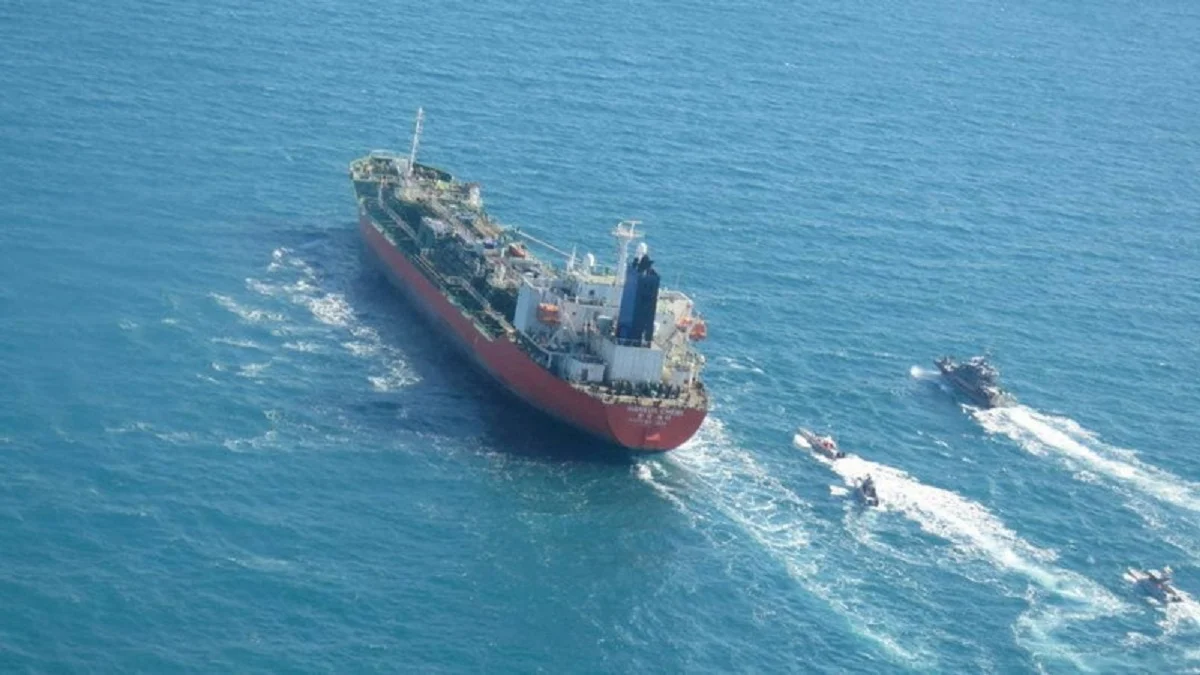
However, this fragile arrangement shattered on Saturday, April 18, 2026. According to shipping and maritime security sources who spoke to Reuters, at least two commercial vessels reported coming under fire from Iranian ships. The incidents reportedly occurred in the sensitive waters between Iran’s Qeshm Island and Larak Island, a narrow and heavily monitored section of the Strait. Both vessels, after being targeted, were forced to turn back without completing their transit, underscoring the immediate and dangerous shift in Iranian posture.
The United Kingdom Maritime Trade Operations (UKMTO) swiftly acknowledged the gravity of the situation, stating it had received reports of incidents occurring approximately 20 nautical miles northeast of Oman. Further details emerged from a captain of a tanker, who recounted that his vessel was approached by two Islamic Revolutionary Guard Corps Navy (IRGCN) warships. These Iranian vessels subsequently opened fire on the tanker. Fortunately, the tanker and its entire crew were reported safe, though the psychological impact and the sheer audacity of the attack were profound.
Adding to the alarming reports, a container ship was also reportedly struck by gunfire, according to maritime security sources. These direct confrontations signaled a dramatic departure from previous patterns of harassment or intimidation, marking a clear escalation to the use of force against commercial shipping.
The Definitive Closure: A Radio Broadcast Heard Globally
Following these violent encounters, multiple ships reported receiving a definitive radio broadcast message from the Iranian Navy via VHF channels, declaring the Strait of Hormuz completely shut down. The message, stark and unambiguous, resonated across the international maritime community:
"Attention all vessels, in view of the failure of the US government to meet its commitments in negotiations, Iran declares the Strait of Hormuz fully closed again. No vessel of any type or nationality is permitted to pass through the Strait of Hormuz."
This broadcast not only confirmed the closure but also explicitly attributed it to a diplomatic breakdown with the United States. While the specific "negotiations" were not detailed in the broadcast, analysts quickly linked it to ongoing or stalled discussions surrounding the Joint Comprehensive Plan of Action (JCPOA), commonly known as the Iran nuclear deal, or broader efforts to de-escalate regional tensions and lift sanctions. The direct linkage of the closure to US actions suggests a calculated and retaliatory move aimed at exerting maximum leverage on the international stage.
The Strategic Lifeline: Why Hormuz Matters
The Strait of Hormuz, a narrow sea passage separating Iran from Oman and the United Arab Emirates, is undeniably one of the world’s most critical maritime chokepoints. Its strategic significance cannot be overstated, particularly for global energy markets. Approximately one-fifth of the world’s total petroleum liquids consumption, or about 21 million barrels per day (bpd) in recent years, transits through this 21-mile wide channel. This includes nearly all the oil exports from Saudi Arabia, Iran, Iraq, Kuwait, Qatar, and the United Arab Emirates.
Beyond crude oil, the Strait is also a vital conduit for an estimated one-third of the world’s seaborne LNG trade, primarily from Qatar, the world’s largest LNG exporter. Any disruption to traffic through Hormuz, therefore, has immediate and profound implications for global energy security, supply chains, and prices. The current closure threatens to paralyze a significant portion of international trade, affecting economies far beyond the Middle East.
Background Context: A History of Tensions and Maritime Incidents
Iran’s latest action is not an isolated event but rather the culmination of decades of fraught relations with Western powers, particularly the United States, and a long history of tensions in the Persian Gulf. The Strait of Hormuz has frequently been a flashpoint for these antagonisms.
The 1980-1988 Iran-Iraq War, often referred to as the "Tanker War," saw both sides targeting commercial shipping in the Gulf, highlighting the vulnerability of the waterway. More recently, since the US withdrawal from the JCPOA in 2018 and the subsequent re-imposition of crippling sanctions on Iran, maritime incidents in the region have become increasingly frequent. These have included:
- Mine Attacks (2019): Several tankers were damaged by limpet mines in the Gulf of Oman, with the US and its allies blaming Iran.
- Drone and Missile Attacks: Attacks on Saudi Arabian oil facilities, attributed by many to Iran or its proxies, demonstrated the potential for broader regional conflict impacting energy infrastructure.
- Tanker Seizures: Iran has repeatedly seized foreign-flagged tankers, often citing alleged maritime violations, which international observers view as acts of retaliation or leverage. Notable incidents include the seizure of the British-flagged Stena Impero in 2019.
- Harassment of US Naval Vessels: Encounters between IRGCN speedboats and US Navy vessels have been common, sometimes involving close passes and aggressive maneuvers.
These incidents, while concerning, had not led to a complete, declared closure of the Strait of Hormuz to all traffic. The current announcement represents an unprecedented escalation in the post-JCPOA era, signaling a more aggressive and direct challenge to the principle of freedom of navigation. The explicit reference to "failure of the US government to meet its commitments" suggests that Tehran perceives its diplomatic options as exhausted or ineffective, resorting to its most potent leverage – control over a vital global chokepoint.
Statements and Reactions: A Chorus of Condemnation and Concern
The international community reacted with alarm to Iran’s announcement and the preceding naval confrontations.
- United States: The US State Department, in an initial statement, condemned Iran’s actions as a "blatant violation of international law and a grave threat to global commerce and energy security." It reiterated its commitment to freedom of navigation and vowed to "take all necessary steps to protect US interests and personnel in the region." The Pentagon indicated that US naval assets in the Fifth Fleet area of responsibility were on high alert, with options being evaluated.
- United Kingdom: The UK Foreign Office expressed deep concern and called for immediate de-escalation, urging Iran to reopen the Strait and adhere to international maritime conventions. UKMTO, while continuing to issue warnings to mariners, stressed the importance of ensuring the safety of the thousands of sailors currently trapped in the Gulf.
- United Nations: The UN Secretary-General issued a statement calling for all parties to exercise maximum restraint and engage in dialogue to resolve the crisis peacefully. The UN emphasized the potential for a humanitarian crisis given the stranded crews and the severe economic repercussions of a prolonged closure.
- International Chamber of Shipping (ICS): The ICS, representing global shipowners, issued a strong condemnation, calling the closure an "unacceptable act of aggression against global trade and the fundamental right of innocent passage." It urged governments to prioritize the safety and well-being of the estimated 20,000 seafarers affected.
- Oil Market Response: Global crude oil prices surged dramatically in early trading following the news. Brent crude futures jumped by over 10% initially, reaching levels not seen in years, as traders priced in the immediate supply shock and the heightened risk premium. Analysts warned of potential spikes to over $150 per barrel if the closure persists, threatening to trigger a global recession.
- Regional Powers: Saudi Arabia and the UAE, major oil exporters heavily reliant on Hormuz, expressed grave concern and called for international intervention to ensure the security of maritime traffic. Their statements highlighted the existential threat the closure poses to their economies and national security.
Broader Impact and Implications: A Looming Crisis
The full closure of the Strait of Hormuz presents a multifaceted crisis with far-reaching implications across economic, geopolitical, and humanitarian spheres.
- Economic Fallout: The most immediate and tangible impact is on global energy prices. A prolonged closure would lead to severe supply shortages, particularly in Asia, which is heavily dependent on Middle Eastern oil. This would trigger widespread inflation, dampen economic growth, and potentially plunge the world into a deep recession. Shipping costs would skyrocket due to rerouting (if alternative routes like the Saudi East-West pipeline or UAE’s Fujairah pipeline could handle additional capacity, which is limited) and exorbitant insurance premiums. Global supply chains, already strained, would face unprecedented disruption.
- Geopolitical Instability: The incident drastically elevates the risk of military confrontation in the Persian Gulf. The US and its allies maintain a significant naval presence in the region, tasked with ensuring freedom of navigation. A direct challenge to this principle, especially involving the use of force against commercial vessels, could necessitate a military response. This scenario risks drawing in regional actors and potentially igniting a wider conflict with devastating consequences for the Middle East and beyond. The closure also tests the resolve of international alliances and their ability to respond to such a direct threat to global commerce.
- Energy Security Concerns: The crisis underscores the vulnerability of the global energy system to chokepoint disruptions. While some countries maintain strategic petroleum reserves, these are finite and not designed for a complete, sustained cut-off from a major supply source. The incident will undoubtedly accelerate discussions on diversifying energy sources and routes, but such long-term strategies offer little immediate relief.
- Humanitarian Crisis: The plight of the 20,000 stranded seafarers is a pressing humanitarian concern. Access to supplies, medical aid, and potential repatriation efforts would be severely hampered. The psychological toll on these individuals, caught in a high-stakes geopolitical standoff, cannot be underestimated.
- International Law and Diplomacy: Iran’s actions directly challenge established principles of freedom of navigation under international law, specifically the UN Convention on the Law of the Sea (UNCLOS). The crisis demands a robust diplomatic response from the international community, including potential sanctions, UN Security Council resolutions, and intensified mediation efforts, to compel Iran to reopen the Strait and de-escalate tensions. However, given Iran’s explicit linkage to US "commitments," any diplomatic solution would likely require addressing the underlying grievances related to sanctions and the nuclear deal.
The complete closure of the Strait of Hormuz marks a dangerous new chapter in the ongoing tensions in the Middle East. With commercial ships under fire and global energy arteries severed, the world watches with bated breath, hoping for a diplomatic resolution to avert a full-blown crisis with potentially catastrophic consequences.
(Rahman Asmardika)