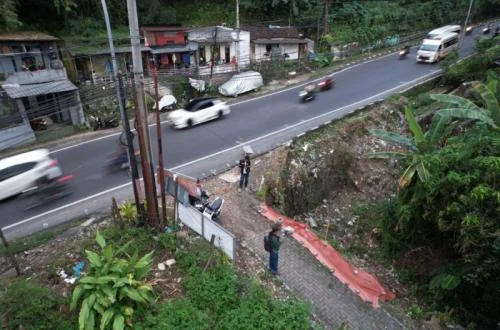
JAKARTA – The Indonesian Ministry of Public Works (Kementerian PU) has significantly accelerated its disaster response and recovery operations across Sumatra, with the vast majority of national and regional infrastructure, including critical roads and bridges, now fully functional. Minister Dody Hanggodo confirmed that national transportation arteries have largely withstood the recent natural calamities, attributing swift action to the rapid restoration of connectivity. This robust response underscores Indonesia’s commitment to immediate relief and long-term resilience in the face of recurring natural disasters, a persistent challenge for the sprawling archipelago.
The Context of Sumatra’s Vulnerability and Recent Calamities
Sumatra, one one of Indonesia’s largest islands, is inherently susceptible to a range of natural disasters, primarily due to its geographical characteristics. The Barisan Mountains, a volcanic chain running the length of the island, combined with its location within the Pacific Ring of Fire and a tropical monsoon climate, make it prone to heavy rainfall, flash floods, landslides, and seismic activity. The recent series of events, characterized by intense and prolonged rainfall, triggered widespread landslides and localized flooding, disrupting critical infrastructure and affecting thousands of residents. These incidents, while not unprecedented, highlight the escalating frequency and intensity of extreme weather events, which many scientists link to broader climate change patterns. The immediate aftermath saw communities isolated, supply chains interrupted, and essential services severely compromised, necessitating an urgent and comprehensive governmental response.
Accelerated Recovery of Critical Infrastructure
Minister Dody Hanggodo, speaking in Jakarta on Sunday, emphasized the remarkable speed of the recovery operations. "National roads and bridges faced no significant issues. There were indeed landslides, but we managed to clear them within less than 24 hours," he stated, highlighting the effectiveness of rapid deployment and pre-positioned resources. This swift action prevented prolonged disruptions to inter-provincial connectivity, which is vital for economic activity and emergency logistics. The Ministry’s proactive approach and readiness protocols played a crucial role in mitigating what could have been far more extensive and enduring damage.
According to data compiled by the Ministry, a total of 107 national road sections and 43 national bridges that were affected by the disasters have now been fully restored and are 100 percent functional. This achievement is critical for maintaining national supply chains and ensuring unimpeded movement of goods and people across the island. At the regional level, where the impact is often more localized but equally devastating, significant progress has also been made. Out of 2,421 affected regional road segments, an impressive 2,277 (94 percent) are now passable. Similarly, 792 out of 1,181 regional bridges (67 percent) have been brought back into operation. The remaining affected infrastructure is currently undergoing intensive repair, with teams working around the clock to ensure full restoration. This dual focus on both national and regional networks demonstrates a holistic approach to disaster recovery, acknowledging the interconnectedness of different administrative levels in ensuring overall societal function.
Intensified Focus on Aceh: Battling Mud and Persistent Rain
While significant strides have been made across Sumatra, the province of Aceh remains a focal point for the Ministry’s recovery efforts due to its unique challenges. Aceh has been particularly hard-hit by sustained high rainfall and extensive mudslides, which continue to complicate restoration work. "The main problem in Aceh is mud, and it’s still raining today. Under these conditions, work must be accelerated," Minister Dody noted, underscoring the dynamic and often hazardous environment in which recovery teams operate. The sheer volume of mud and debris necessitates specialized heavy equipment and sustained human effort, often in difficult terrain. The persistent rain not only hampers clearance operations but also poses a continuous risk of secondary landslides and flooding, demanding constant vigilance and adaptive strategies from the ground teams.
The geological characteristics of Aceh, particularly its mountainous interior and coastal plains, make it susceptible to such events. Deforestation in some upstream areas, combined with intense rainfall, can exacerbate soil erosion and increase the likelihood of massive mudslides, bringing down trees and sediment that clog rivers and inundate communities. The Ministry’s strategy in Aceh extends beyond immediate clearance to proactive mitigation measures designed to prevent future occurrences or lessen their impact. This includes the expedited implementation of sediment control programs, such as the construction of sabo dams.
Proactive Mitigation: Sabo Dam Construction and Sediment Control
Recognizing the cyclical nature of these disasters and the specific challenges posed by sediment buildup, the Ministry of Public Works is proactively accelerating sediment control initiatives. A key component of this strategy is the construction of sabo dams, even in areas where such projects might not have been initially scheduled for immediate commencement. "I see a lot of logs still on the national road towards Gayo Lues. I’m afraid these will come down again towards Tamiang. So, the Ministry of Public Works has started working on sabo dams, even though they weren’t supposed to start yet," Minister Dody explained.
Sabo dams are specialized structures designed to control the flow of sediment, debris, and logs from upstream areas, particularly in mountainous regions prone to erosion and landslides. By trapping large quantities of material, these dams protect downstream communities, infrastructure, and agricultural lands from destructive debris flows and flash floods. Their early construction in vulnerable areas like the Gayo Lues-Tamiang corridor is a critical preventative measure, reflecting a shift from purely reactive disaster response to a more comprehensive, forward-looking risk reduction strategy. This proactive stance aims to build long-term resilience, safeguarding communities and infrastructure against future hydrological events that are increasingly anticipated due to climate variability.
Inter-Agency Synergy for Comprehensive Recovery
Effective disaster management in a country like Indonesia demands seamless coordination across multiple governmental layers and agencies. The Ministry of Public Works has significantly strengthened its collaboration with local governments and the Agency for Meteorology, Climatology, and Geophysics (BMKG). This partnership is vital for a range of activities, from implementing weather modification techniques – which can help manage rainfall intensity in critical areas – to ensuring timely early warning systems are in place. BMKG’s accurate meteorological forecasts are crucial for anticipating potential new threats and guiding the deployment of resources, allowing recovery teams to operate more safely and effectively.
Furthermore, the Ministry is intensifying its efforts to clear residential areas through cash-for-work (padat karya) programs, particularly in heavily impacted regions such as Pidie Jaya and Aceh Tamiang. These programs serve a dual purpose: they expedite the clean-up of homes and public spaces, and they provide much-needed temporary income for affected communities, contributing to local economic recovery. This approach recognizes that disaster recovery is not just about physical infrastructure but also about supporting the livelihoods and well-being of the people.
Restoring Essential Services and Livelihoods
Beyond physical infrastructure, the restoration of basic services is paramount for community recovery. The Ministry’s efforts in this area have shown significant progress. Of the 176 affected water supply systems (SPAM), 165 units (94 percent) have been restored to full functionality, ensuring access to clean drinking water for the affected populations. Access to safe water is a critical public health priority in post-disaster scenarios, preventing the spread of waterborne diseases.
In terms of raw water provision, the Ministry has also been active in developing new sources. The construction of deep bore wells has reached 70 units (27 percent completion), while shallow bore wells are at 34 units (86 percent completion). These efforts diversify water sources and enhance resilience against future disruptions.
The agricultural sector, often the backbone of local economies in rural Sumatra, has also received dedicated attention. The Ministry of Public Works is coordinating closely with the Ministry of Agriculture to accelerate the clearing of agricultural lands, particularly rice fields, from mud and debris. Simultaneously, efforts are underway to ensure irrigation networks are fully restored. The rapid revival of agricultural activities is crucial for food security and the economic stability of farming communities. Without functional irrigation and clear fields, farmers face prolonged hardship, impacting regional food supplies and income.
Ensuring Logistical Flow and Reaching Remote Areas
A fundamental aspect of disaster response and recovery is maintaining logistical connectivity. The Ministry of Public Works is committed to ensuring that critical supplies and aid can reach all affected areas, including the most remote villages. Minister Dody emphasized the importance of continuous field monitoring, even in remote locations. "I have instructed the PPK (Project Commitment Officers) to frequently check remote areas. This way, if any place needs a bridge, we can address it immediately in cooperation with the Indonesian Army (TNI AD) to ensure logistics are not disrupted," he stated.
This close collaboration with the TNI AD highlights the comprehensive approach taken by the Indonesian government, leveraging military resources for rapid deployment, engineering support, and logistical assistance in difficult-to-access areas. The provision of temporary bridges, for instance, is a common and effective strategy to quickly restore connectivity across rivers or ravines where permanent structures have been damaged or destroyed. These temporary solutions are vital for the distribution of humanitarian aid, construction materials, and everyday necessities, preventing further isolation and hardship for affected communities.
Building Back Better: A National Commitment to Resilience
The Ministry of Public Works firmly reiterates its commitment to accelerating disaster management through the principle of "build back better." This internationally recognized approach goes beyond simply restoring damaged infrastructure to its previous state. Instead, it advocates for rebuilding structures and systems in a way that makes them more resilient, sustainable, and better equipped to withstand future hazards. For Indonesia, a nation frequently exposed to a multitude of natural disasters, "build back better" is not merely a slogan but a critical operational philosophy.
This commitment translates into practical actions:
- Enhanced Engineering Standards: Rebuilding with stronger materials and improved designs that can better resist seismic activity, floods, and landslides.
- Strategic Planning: Incorporating disaster risk reduction principles into urban and regional planning, including land-use zoning and early warning systems.
- Environmental Rehabilitation: Restoring natural protective barriers, such as mangroves and forests, which can mitigate the impact of floods and coastal erosion.
- Community Engagement: Empowering local communities with knowledge and resources to participate in risk assessment and preparedness.
- Sustainable Development: Ensuring that recovery efforts contribute to long-term social and economic development, creating more robust and equitable societies.
By adopting the "build back better" philosophy, the Ministry of Public Works aims to ensure that infrastructure not only recovers but also emerges more robust and capable of supporting the sustainable socio-economic recovery of communities across Sumatra. This long-term vision is crucial for a nation that continues to grapple with the unpredictable and often devastating forces of nature, transforming vulnerability into an opportunity for strengthened resilience and sustainable growth. The ongoing efforts in Sumatra, particularly the concentrated focus on Aceh, serve as a testament to this unwavering national commitment.