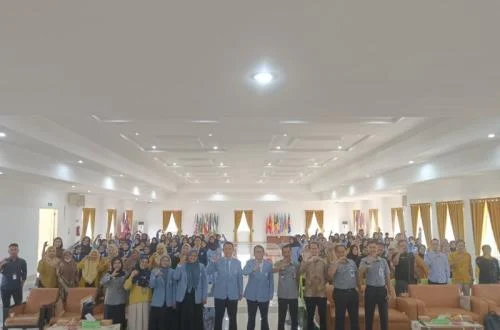
PANGKALPINANG, Bangka Belitung – The Regional Office of the Ministry of Law and Human Rights (Kanwil Kemenkumham) for the Bangka Belitung Islands conducted a comprehensive educational program on intellectual property (IP) protection, specifically focusing on patents and music royalties, at the Institut Citra Internasional (ICI) in Pangkalpinang on Tuesday. This initiative, a strategic outreach by the ministry, aimed to significantly elevate public awareness regarding the crucial importance and multifaceted benefits of intellectual property rights, particularly within the burgeoning academic and creative sectors of the region. The event underscored the government’s commitment to fostering an innovation-driven economy by empowering creators and innovators with the knowledge to safeguard their creations and derive economic value from them.
The session, attended by a diverse group of faculty members and students from ICI, served as a vital platform for demystifying the often-complex landscape of intellectual property law. It highlighted how robust IP protection is not merely a legal formality but a fundamental pillar for economic growth, technological advancement, and cultural enrichment. By targeting an academic institution, Kemenkumham Babel aimed to instill this understanding at the very source of future innovations and creative works, ensuring that the next generation of professionals and entrepreneurs are well-equipped to navigate the intricacies of IP.
The Strategic Imperative: Nurturing Innovation in Academia
Johan Manurung, the Head of Kanwil Kemenkumham Bangka Belitung, delivered a compelling address emphasizing the critical need to cultivate awareness of intellectual property from the earliest stages of academic life. "Higher education institutions are inherently vibrant centers of innovation and intellectual creation," Manurung stated. "It is therefore paramount for the entire academic community – from researchers and educators to students – to gain a profound understanding of how to effectively utilize the intellectual property system. This understanding is crucial not only for the protection of their invaluable work but also for significantly enhancing its economic potential and societal impact." His remarks resonated with the audience, reinforcing the idea that IP is an asset that can be strategically leveraged for personal and institutional benefit.
The program, aptly themed "Intellectual Property Protection in the Fields of Patents and Music Royalties," was meticulously designed to provide actionable insights into these specific domains. Manurung expressed his optimism that the discussions and presentations would lead to a substantial improvement in the academic community’s comprehension and appreciation of IP protection. He further articulated the hope that such heightened awareness would act as a catalyst, encouraging the proliferation of innovative ideas and creations that are not only groundbreaking but also legally protected and economically viable for the future. This forward-looking perspective positions IP education as an investment in the region’s long-term economic prosperity and innovative capacity.
Deep Dive into IP Mechanisms: Patents and Music Royalties
The selection of patents and music royalties as focal points for the education program reflects their significant economic and cultural relevance. Patents, a cornerstone of technological and scientific innovation, grant exclusive rights to inventors for their novel creations, allowing them to control the commercial exploitation of their inventions for a defined period. This exclusivity incentivizes research and development by providing a return on investment and fostering a competitive environment for innovation. Discussions during the event delved into the types of inventions eligible for patent protection, the meticulous application process, and the strategic advantages patents offer in commercialization and market leadership. Practical examples, such as new medical devices developed in healthcare or novel processes in agricultural technology, were used to illustrate the applicability of patents across various academic disciplines.
Music royalties, on the other hand, represent the economic lifeline for artists, composers, and publishers within the creative industries. The program elucidated the complex ecosystem of music rights, including performance rights, mechanical rights, synchronization rights, and master recording rights. Experts explained how these royalties are collected and distributed through various collective management organizations (CMOs) and licensing bodies, ensuring creators are compensated for the public use of their musical works. Given the burgeoning creative economy in Indonesia, particularly among younger generations, understanding these mechanisms is vital for artists to secure their livelihoods and for the industry to thrive sustainably. The educational content aimed to empower students and faculty, particularly those involved in arts, media, or even event management, to navigate these systems effectively.
Background and Context: Kemenkumham’s Role in National IP Strategy
The Ministry of Law and Human Rights (Kemenkumham) plays a pivotal role in Indonesia’s intellectual property ecosystem. As the primary government body responsible for IP policy formulation, legal framework development, and the administration of IP rights (including patents, trademarks, copyrights, industrial designs, geographical indications, and trade secrets), Kemenkumham is at the forefront of promoting an IP-friendly environment. Its regional offices, such as the Kanwil Kemenkumham Bangka Belitung, serve as critical conduits for translating national IP strategies into local action, tailoring programs to meet the specific needs and potential of their respective regions.
Indonesia has been steadily strengthening its IP framework in line with international standards, recognizing that a robust IP system is essential for attracting foreign direct investment, stimulating domestic innovation, and fostering a competitive knowledge-based economy. Despite significant progress, challenges remain, particularly in raising broad public awareness and simplifying access to IP registration services, especially for micro, small, and medium enterprises (MSMEs) and individuals. National statistics indicate a growing trend in IP registrations, yet the potential for innovation remains largely untapped, partly due to insufficient understanding of how to protect and commercialize intellectual assets. This ongoing educational campaign by Kemenkumham Babel is a direct response to these challenges, aiming to bridge the knowledge gap and actively encourage IP utilization.
Expert Insights: The Value of Registration and Economic Empowerment
Adi Riyanto, the Head of Intellectual Property Services at Kanwil Kemenkumham Bangka Belitung, further elaborated on the indispensable role of IP registration. He emphatically stressed that registering intellectual property is not merely a bureaucratic step but a fundamental act of safeguarding both the moral and economic rights inherent in a creation. "The protection afforded by intellectual property registration extends beyond mere legal certainty," Riyanto explained. "It bestows tangible economic value upon the owner of the work, transforming an idea or creation into a marketable asset. This proactive measure is critically important in mitigating potential disputes and legal conflicts that could arise in the future, thereby providing creators with peace of mind and a secure foundation for commercialization."
Riyanto’s intervention underscored the practical benefits of IP protection, framing it as an investment rather than an expense. He detailed the process of registration, highlighting the resources available through Kemenkumham to assist applicants. This included guidance on conducting prior art searches for patents, understanding the scope of protection, and navigating the nuances of copyright registration for creative works. His insights were particularly valuable for the academic audience, many of whom are engaged in research and creative endeavors that could directly benefit from formal IP protection. The session also touched upon the enforcement mechanisms available to IP rights holders, ensuring that creators understand how to defend their rights against infringement.
Academic Leadership and the Broadening Scope of IP Potential
The Rector of Institut Citra Internasional, whose name was not explicitly mentioned but whose perspective was highlighted, provided a crucial academic viewpoint on the strategic role of higher education in fostering IP protection. The Rector emphasized that universities, by their very nature, are fertile grounds for generating intellectual assets across a wide spectrum of disciplines. He specifically pointed out that diverse fields of study offered at ICI, such as nursing, midwifery, and tourism, possess immense potential for producing innovative works that warrant legal protection.
For instance, in nursing and midwifery, IP could manifest in novel patient care protocols, specialized medical devices, innovative educational materials for health promotion, or even patented methodologies for specific therapeutic interventions. In the tourism sector, IP could include unique tourism concepts, destination branding, innovative hospitality services, or copyrighted cultural performances. The Rector’s vision articulated a future where academic research and creative output are systematically assessed for their IP potential, leading to a culture where innovation is not only celebrated but also strategically protected and commercialized. This institutional commitment is vital for translating academic endeavors into tangible economic and societal benefits for the Bangka Belitung region.
Broader Impact and Implications for Bangka Belitung
The Kemenkumham Babel’s IP education program at ICI carries significant broader implications for the Bangka Belitung Islands:
- Stimulating the Local Innovation Ecosystem: By educating future professionals and innovators, the program contributes to building a robust local innovation ecosystem. This ecosystem, characterized by a high degree of IP awareness and utilization, is crucial for fostering entrepreneurship and attracting investment in technology and creative industries.
- Economic Diversification: Bangka Belitung, traditionally known for its mining and tourism sectors, stands to benefit immensely from economic diversification driven by innovation. Protected intellectual assets can create new industries, generate high-value jobs, and reduce reliance on finite natural resources.
- Enhancing Competitiveness: A region with a strong IP culture is more competitive on national and international stages. Universities that produce patented inventions or copyrighted works gain prestige and attract more talent and funding, further strengthening their research capabilities.
- Empowering the Creative Economy: With a focus on music royalties, the initiative directly supports the burgeoning creative economy in Indonesia. Empowering artists and creators with knowledge of their rights ensures fair compensation, which in turn fosters a more vibrant and sustainable creative sector. According to data from the Ministry of Tourism and Creative Economy, Indonesia’s creative economy contributed significantly to the national GDP, and a large portion of this value is directly tied to protected intellectual property.
- Legal Certainty and Dispute Prevention: Proactive IP registration significantly reduces the likelihood of costly and time-consuming legal disputes over ownership and infringement. This legal certainty benefits individuals, institutions, and businesses alike, fostering a more stable environment for commercialization and collaboration.
- Integration with National Development Goals: This local initiative aligns perfectly with Indonesia’s national agenda to transition towards a knowledge-based economy, as outlined in the National Medium-Term Development Plan (RPJMN). Investing in IP education at the grassroots level is fundamental to achieving these broader strategic objectives.
Future Outlook and Collaborative Synergies
The successful execution of this IP education program at Institut Citra Internasional marks a pivotal step in Kemenkumham Babel’s ongoing efforts to cultivate an IP-savvy community. Moving forward, such initiatives are expected to expand in scope and frequency, targeting other academic institutions, business associations, and local communities across the Bangka Belitung Islands. There is potential for Kemenkumham to forge deeper collaborations with universities, not only for educational outreach but also for establishing IP clinics or desks within academic settings, offering direct assistance to researchers and students in the IP registration process.
Furthermore, leveraging digital platforms and developing accessible online resources could amplify the reach of these educational efforts. The engagement of local government bodies, industry associations (e.g., local chambers of commerce, creative industry guilds), and legal professionals will be crucial in building a comprehensive support system for IP protection and commercialization. By fostering a collaborative ecosystem, Bangka Belitung can unlock its full potential for innovation, transforming creative ideas and scientific discoveries into tangible assets that drive sustainable development and enhance the quality of life for its citizens. This systematic approach to IP awareness and protection is an investment in the intellectual capital that will define the region’s prosperity for generations to come.