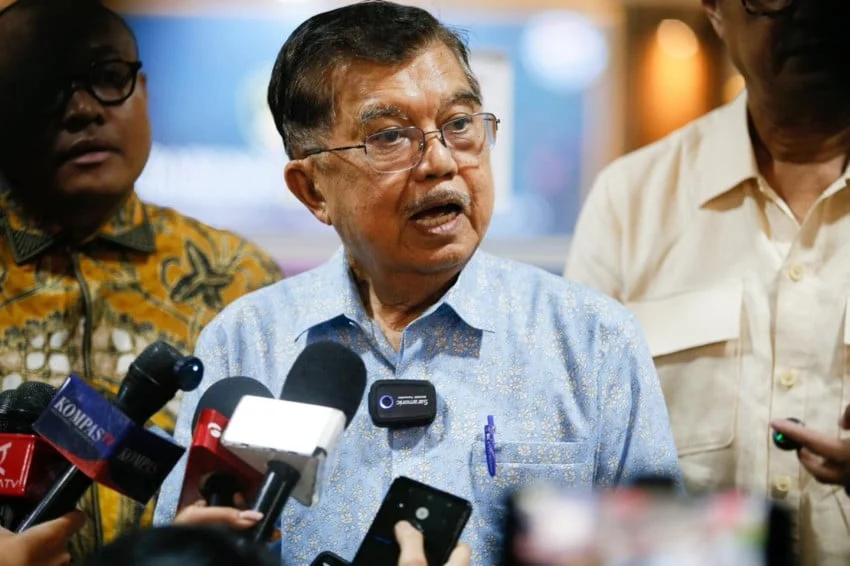
JAKARTA – Allegations of religious blasphemy leveled against former Indonesian Vice President Jusuf Kalla (JK) are increasingly being interpreted as having a strong political undertone. According to Nasky Putra Tandjung, a prominent Public Policy and National Political Analyst and Chairman of the Indonesia Youth Epicentrum (Pusat Perkumpulan Pemuda Indonesia), the accusations against Kalla lack proportionality, objectivity, and a constructive approach necessary for a comprehensive assessment of the issue. Tandjung contends that the controversy stemming from interpretations of Kalla’s speech at Gadjah Mada University (UGM) is exaggerated, strongly suggesting a deliberate effort to create a wild public opinion and systematic negative framing aimed at discrediting Kalla personally.
The alumnus of INDEF School Of Political Economy Jakarta believes that the reactions to Kalla’s statement are excessively emotional and reactionary, employing agitative and provocative narratives that risk triggering a much broader conflict. "The legal effort to report Mr. JK to the police also appears baseless, considering Mr. JK did not accuse, denounce, or insult, let alone condemn, any specific religion. Therefore, the accusation of religious blasphemy is utterly unfounded and fabricated," Nasky stated in a press release issued on Wednesday, April 15, 2026. He further argued that Kalla’s remarks were, in fact, an invitation for Indonesia’s diverse and pluralistic population to grasp the essence and substance of dynamic inter-religious relations, ultimately converging on universal values, particularly humanity.
Background on Jusuf Kalla’s Distinguished Career and Public Stature
Jusuf Kalla, often affectionately referred to by his initials JK, is one of Indonesia’s most enduring and influential political figures. Born in Watampone, South Sulawesi, on May 15, 1942, Kalla has served two non-consecutive terms as Vice President of Indonesia, first from 2004 to 2009 under President Susilo Bambang Yudhoyono, and again from 2014 to 2019 alongside President Joko Widodo. His political career spans decades, marked by significant roles as a businessman, minister, and a key mediator in various peace processes, including conflicts in Aceh and Poso. Kalla is widely respected for his pragmatic approach, extensive experience in governance, and his consistent advocacy for economic development and national unity. Given his long-standing position as a statesman and his reputation for fostering inter-religious dialogue and harmony, any accusation of religious blasphemy against him immediately draws significant public and media scrutiny, often prompting questions about the underlying motivations. His public image is generally associated with moderation and a commitment to pluralism, making the current allegations particularly jarring to many observers.
The Genesis of the Controversy: Kalla’s UGM Address
The contentious remarks that sparked the blasphemy accusations reportedly originated during a speech delivered by Jusuf Kalla at Gadjah Mada University in Yogyakarta. While the precise date and full transcript of the speech were not provided in the original excerpt, the context implies it was a recent event prior to the police report and Nasky Putra Tandjung’s statement. Kalla’s address, as interpreted by Nasky, was intended to foster understanding and highlight the shared universal values among Indonesia’s diverse religious communities. In a nation built on the principle of Bhinneka Tunggal Ika (Unity in Diversity), such discussions are common and generally welcomed. However, certain phrases or interpretations of Kalla’s speech were evidently taken out of context or deliberately misconstrued by some parties, leading to the serious accusation of religious blasphemy. The controversy underscores the extreme sensitivity surrounding religious discourse in Indonesia, where even well-intentioned statements by public figures can be subject to intense scrutiny and potentially weaponized in the political arena.
Chronology of Events Leading to the Accusation
The sequence of events surrounding the accusations against Jusuf Kalla, as can be inferred from the available information and typical patterns of such incidents in Indonesia, likely unfolded as follows:
- Kalla’s UGM Speech: At an unspecified but recent date, former Vice President Jusuf Kalla delivered a speech at Gadjah Mada University. The core message, according to analysts, revolved around promoting inter-religious understanding and universal values of humanity.
- Emergence of Controversy: Following the speech, selected portions or interpretations of Kalla’s remarks began to circulate, possibly amplified through social media channels. These interpretations framed Kalla’s statements as potentially offensive or derogatory towards a particular religion.
- Formal Police Report: Subsequently, a party (unnamed in the provided text but confirmed by the linked article, "Jusuf Kalla Dilaporkan ke Polda Metro Jaya") lodged a formal complaint against Jusuf Kalla with the Polda Metro Jaya (Jakarta Metropolitan Police), accusing him of religious blasphemy. This report is a significant escalation, initiating a formal legal process.
- Public Outcry and Media Attention: The news of the police report quickly garnered widespread public and media attention, fueling debate and discussion across traditional and social media platforms.
- Official Response from Kalla’s Camp: As indicated by the linked article, Jusuf Kalla’s spokesperson released a statement addressing the allegations, likely defending Kalla and clarifying the intent behind his speech.
- Analyst’s Intervention: On Wednesday, April 15, 2026, Nasky Putra Tandjung, a political analyst, issued a press release strongly criticizing the accusations, labeling them politically motivated and baseless, and providing his expert analysis on the situation. This statement marks a key point in the unfolding narrative, offering a critical perspective on the legal and political dimensions of the controversy.
Indonesia’s Blasphemy Law: A Potent and Contentious Instrument
The legal basis for the accusation against Jusuf Kalla lies in Indonesia’s controversial blasphemy law, primarily Article 156a of the Criminal Code (KUHP). This article stipulates that "anyone who intentionally publicly expresses feelings or commits an act which principally has the character of hostility, abuse or degradation of a religion, or prevents someone from embracing a religion, or persuades someone not to embrace a religion, or to abandon their religion, shall be punished with a maximum imprisonment of five years."
Originally enacted in 1965 during the tumultuous period of the Old Order, the law was intended to maintain public order and protect the six officially recognized religions in Indonesia (Islam, Protestantism, Catholicism, Hinduism, Buddhism, and Confucianism). However, in recent decades, and particularly in the era of heightened political polarization and pervasive social media, the law has frequently been criticized by human rights organizations and legal experts for its ambiguity and its potential for misuse. Critics argue that its broad interpretation can stifle freedom of expression, especially for minority groups or those who challenge established religious norms.
The law has been invoked in numerous high-profile cases, often leading to convictions and sparking significant social and political unrest. These cases highlight how accusations of blasphemy can be highly sensitive, capable of mobilizing large segments of the population, and often carry severe implications for the accused, irrespective of their intent. The very act of reporting someone for blasphemy can immediately damage their reputation and create a climate of fear, irrespective of the legal outcome. The political weaponization of this law is a recurring concern, where religious sentiments are leveraged to achieve political ends, particularly against public figures.
Expert Analysis: Political Motives and Misinformation
Nasky Putra Tandjung’s assertion that the accusations against Jusuf Kalla are "more inclined towards a political nuance" resonates with a broader understanding of Indonesia’s political landscape. Analysts frequently observe that allegations of religious insensitivity or blasphemy often emerge during periods of heightened political activity or against figures who hold significant influence or are perceived as potential rivals. The deliberate "framing" and "opinion-girding" mentioned by Nasky suggest a calculated strategy rather than an organic public reaction to genuinely offensive remarks.
Indonesia, with its vast and diverse population, is prone to rapid dissemination of information—and misinformation—through social media. A short clip or an out-of-context quote can quickly go viral, inciting strong emotional responses before a full clarification can be issued. This digital environment provides fertile ground for "agitative and provocative narratives" to flourish, potentially leading to "trigger conflict that is wider." Such tactics are often employed to damage the credibility of public figures, divert attention from other issues, or to consolidate support among specific demographic groups by appealing to religious sentiments.
The "baseless" nature of the report, as per Nasky, further reinforces the idea of political maneuvering. If Kalla genuinely did not "accuse, denounce, or insult" any religion, the legal action becomes questionable, indicating that the primary objective might be public condemnation and political delegitimization rather than a sincere pursuit of justice for religious affront. The analyst’s emphasis on Kalla’s intent to promote "universal values of humanity" suggests that the controversy is a distortion of his original message, transforming a call for harmony into a divisive issue.
Reactions from Related Parties and Broader Public Discourse
While the original excerpt does not provide direct quotes from Jusuf Kalla’s spokesperson beyond mentioning their statement, it is highly probable that their reaction would involve a strong denial of the blasphemy charges, a clarification of Kalla’s original intent during the UGM speech, and a call for calm and nuanced understanding. Spokespersons for public figures in such situations typically emphasize the individual’s commitment to religious harmony and national unity, highlighting their track record in interfaith dialogue.
The reporting party, though unnamed, would likely defend their actions by claiming to uphold religious sanctity and expressing a sense of offense on behalf of their community. Their motivations, whether genuinely aggrieved or politically driven, would be central to the public debate.
Beyond the immediate parties, the controversy would inevitably draw reactions from a spectrum of voices:
- Political figures: Some might express solidarity with Kalla, emphasizing his contributions to the nation and calling for due process. Others, particularly those with opposing political affiliations, might maintain a cautious silence or subtly fuel the narrative of offense, depending on their strategic interests.
- Academics and legal experts: Many would likely echo Nasky Putra Tandjung’s concerns about the weaponization of the blasphemy law and advocate for freedom of speech within the bounds of respectful discourse. They might call for a review of the law itself or its application.
- Religious leaders: Leaders from various faiths would likely issue statements urging their followers to remain calm, avoid hasty judgments, and prioritize interfaith dialogue and mutual respect. Some might offer interpretations of Kalla’s statements that align with principles of universal humanity, while others might cautiously acknowledge the concerns of those who felt offended.
- Civil society organizations: Human rights groups would undoubtedly voice concerns about the potential chilling effect on freedom of expression and the risk of exacerbating religious tensions.
The incident thus becomes a significant point of discussion, not just about Jusuf Kalla, but about the delicate balance between religious freedom, freedom of expression, and political maneuvering in a diverse democracy.
Implications and Societal Impact
The accusations against Jusuf Kalla, regardless of their legal outcome, carry several significant implications for Indonesian society and its political landscape:
- Freedom of Speech vs. Religious Sensitivity: This case reignites the perennial debate in Indonesia concerning the boundaries of freedom of speech, especially when it intersects with deeply held religious beliefs. It underscores the challenges public figures face in navigating a pluralistic society where statements can be easily misinterpreted or deliberately weaponized.
- Political Weaponization of Religion: The strong assertion of political motivation by analysts like Nasky Putra Tandjung highlights a persistent concern in Indonesian politics: the use of religious issues to attack political opponents or consolidate power. This trend can undermine democratic processes and exacerbate societal divisions.
- Impact on Jusuf Kalla’s Legacy: Despite his long and distinguished career, such accusations can cast a shadow on a public figure’s legacy, particularly if not handled effectively. Kalla’s reputation as a moderate and unifying figure could be challenged in certain segments of the public.
- Interfaith Harmony: While Kalla’s alleged intent was to promote interfaith harmony, the controversy itself risks creating new rifts or exacerbating existing tensions between religious groups, especially if the narrative of blasphemy gains traction. It underscores the fragility of social cohesion in a diverse nation.
- Role of Social Media: The rapid spread of partial information and inflammatory narratives through social media platforms plays a crucial role in amplifying such controversies. This incident serves as another reminder of how digital communication can be both a tool for engagement and a conduit for misinformation that can destabilize public order.
- Precedent for Future Discourse: The way this case is handled, both legally and politically, could set a precedent for how similar issues are addressed in the future. A strong defense against politically motivated accusations could reinforce the importance of evidence and intent, while a weak response might embolden those who seek to use blasphemy charges for political gain.
In conclusion, the allegations of religious blasphemy against former Vice President Jusuf Kalla are more than just a legal matter; they are a complex tapestry woven with threads of political strategy, societal sensitivities, and the ongoing struggle to balance freedom of expression with religious respect in a deeply pluralistic nation. As Nasky Putra Tandjung suggests, a comprehensive and objective assessment is paramount to prevent the issue from becoming a trigger for wider conflict and to uphold the principles of justice and national unity. The resolution of this controversy will be closely watched, offering insights into the evolving dynamics of Indonesian politics and society.