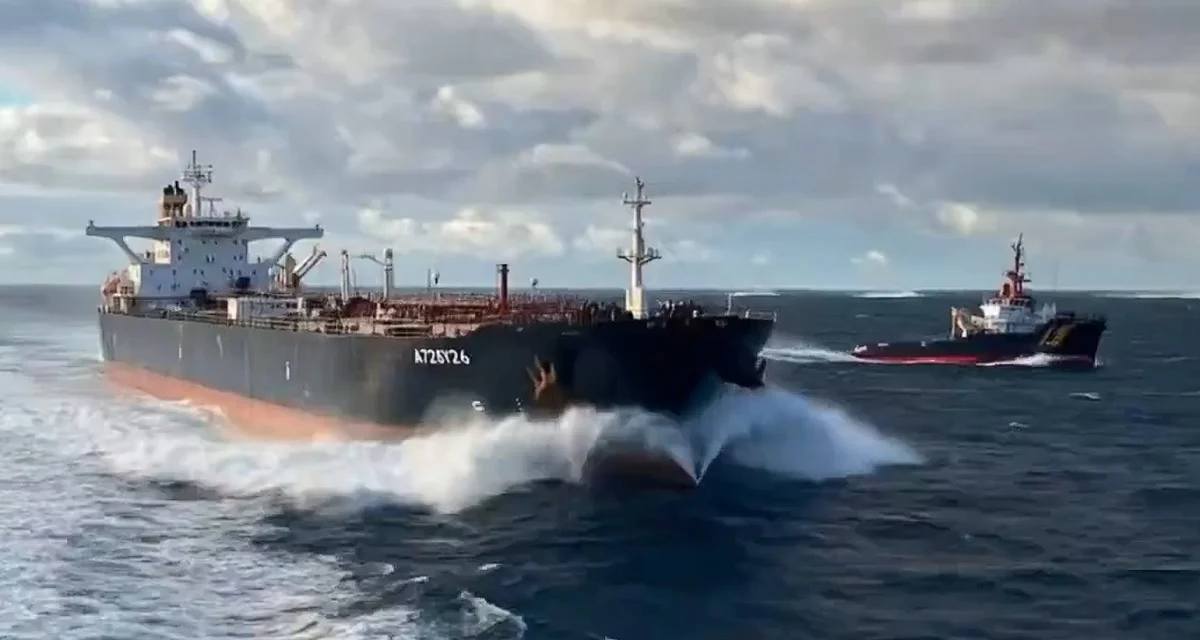
JAKARTA, Indonesia – In a significant challenge to American enforcement of sanctions and maritime control, a Chinese-owned tanker under US sanctions successfully traversed the Strait of Hormuz on Tuesday, April 14, 2026. This incident marks the first confirmed breach of an announced US blockade in the strategically vital waterway, raising immediate questions about the efficacy of Washington’s "maximum pressure" campaign and the delicate balance of power in the volatile Middle East. The vessel, identified as the oil and chemical tanker Rich Starry, owned by Shanghai Xuanrun Shipping – a company explicitly designated on the US sanctions list – completed its passage despite explicit warnings from the US Central Command (CENTCOM) and a stern declaration from US President Donald Trump.
The Rich Starry’s voyage through the narrow strait, which connects the Persian Gulf to the open ocean, commenced after a period of apparent hesitation. MarineTraffic, a global ship-tracking data provider, indicated the tanker had lingered near the chokepoint on Monday night before making its decisive transit early Tuesday morning. Having departed from Sharjah in the United Arab Emirates, the vessel is now reportedly en route to China. This act of defiance comes just days after CENTCOM declared on Sunday, April 12, 2026, that a blockade would be "impartially enforced against vessels of all nations" attempting to enter or exit Iranian ports in the Gulf and Gulf of Oman. Adding to the tension, President Trump issued a stark warning that any Iranian vessel approaching the blockade "will be immediately eliminated," underscoring the high stakes involved.
The Incident Unfolds: A Chinese Tanker’s Defiance
The journey of the Rich Starry has quickly become a focal point of international scrutiny. Owned by Shanghai Xuanrun Shipping, the company was placed on the US Treasury Department’s Specially Designated Nationals (SDN) list for its alleged involvement in facilitating illicit oil trade with Iran, circumventing existing international sanctions. The specific details of these sanctions, imposed in late 2025, cited violations of prohibitions on transactions with the National Iranian Oil Company (NIOC) and other Iranian entities, aiming to choke off Tehran’s revenue streams. Despite these stringent measures, the Rich Starry, a vessel typically engaged in the transport of petroleum products and chemicals, proceeded with its voyage, signaling a clear challenge to US authority in one of the world’s most critical maritime passages.
According to MarineTraffic data, the Rich Starry, a tanker with a deadweight tonnage (DWT) of approximately 50,000, began its transit through the Strait of Hormuz in the pre-dawn hours of Tuesday, April 14. Its trajectory indicated a deliberate passage through the designated shipping lanes, moving from the Gulf of Oman into the Persian Gulf before potentially reversing course to exit. The vessel’s transponder remained active throughout the journey, allowing real-time monitoring of its movements. This transparent yet defiant act stands in stark contrast to previous instances where vessels attempting to evade sanctions might have turned off their Automatic Identification System (AIS) transponders.
The Crucible of Hormuz: A Strategic Chokepoint
The Strait of Hormuz is more than just a waterway; it is a global economic artery and a geopolitical flashpoint. Roughly 21 miles (34 km) wide at its narrowest point, with shipping lanes just two miles (3.2 km) wide in each direction, it serves as the sole maritime passage from the Persian Gulf to the open ocean. An estimated one-fifth of the world’s total petroleum liquids consumption, roughly 21 million barrels per day (bpd) of crude oil and petroleum products, passed through the Strait in 2023, according to the US Energy Information Administration (EIA). This volume includes nearly all oil exports from Saudi Arabia, Iran, the UAE, Kuwait, and Iraq, making it indispensable for global energy security. Any disruption in this chokepoint can send ripple effects across global energy markets, leading to volatile oil price surges and significant economic instability.
Historically, the Strait has been a theater of numerous international incidents and military confrontations. From the "Tanker War" during the Iran-Iraq War in the 1980s, which saw attacks on merchant shipping, to more recent episodes involving Iranian seizures of tankers, alleged attacks on oil infrastructure, and close encounters between US and Iranian naval forces, the region remains perpetually on edge. The US maintains a significant naval presence in the Persian Gulf, primarily through the US Fifth Fleet based in Bahrain, tasked with ensuring freedom of navigation and deterring aggression. However, the presence of these forces has not always prevented incidents, highlighting the complex and often unpredictable dynamics of the region.
US Sanctions and the "Maximum Pressure" Campaign
The backdrop to this latest incident is the long-standing and increasingly aggressive US "maximum pressure" campaign against Iran. Initiated after President Trump’s withdrawal from the Joint Comprehensive Plan of Action (JCPOA), or the Iran nuclear deal, in May 2018, this policy aims to cripple Iran’s economy and force it back to the negotiating table for a more comprehensive agreement addressing its nuclear program, ballistic missile development, and regional proxy activities. The sanctions target Iran’s oil exports, banking sector, shipping industry, and key individuals and entities associated with its Revolutionary Guard Corps (IRGC).
Shanghai Xuanrun Shipping’s inclusion on the US sanctions list in late 2025 was part of a broader effort to tighten the noose around Iran’s ability to export oil. US Treasury Department statements at the time accused the company of operating a network of front companies and vessels to obscure the origin of Iranian crude oil shipments, facilitating their sale to Asian markets, particularly China. These sanctions are designed to isolate Iran financially and economically, limiting its ability to fund its regional ambitions and support its proxies. The defiance shown by the Rich Starry, therefore, directly challenges the effectiveness and deterrent power of this extensive sanctions regime.
Washington’s Stance: Blockade and Warning
The US response to perceived Iranian provocations and the broader goal of enforcing sanctions has manifested in heightened naval presence and explicit warnings. CENTCOM’s announcement on April 12, 2026, regarding an impartial blockade, signaled a significant escalation of US maritime enforcement efforts. While the term "blockade" in international law carries specific connotations related to acts of war, CENTCOM’s statement implied a more robust interdiction strategy aimed at preventing sanctioned vessels from engaging in trade with Iran. This move was framed as a direct response to intelligence indicating continued illicit oil shipments and potential Iranian harassment of commercial shipping in the region.
President Trump’s subsequent declaration that any Iranian vessel approaching the blockade "will be immediately eliminated" amplified the gravity of the situation. This rhetoric, characteristic of his administration’s direct and often confrontational approach, served as a clear warning to Tehran and any entities attempting to circumvent US sanctions. Such statements, while intended to deter, also carry the risk of miscalculation and accidental escalation in an already tense environment. The specific rules of engagement for US naval forces under such a directive would be paramount in preventing an unintended military confrontation.
Contradictory Accounts and Diplomatic Fissures
Adding a layer of complexity to the unfolding narrative, CENTCOM issued a statement on Wednesday, April 15, 2026, that appeared to contradict the MarineTraffic data and initial reports of the Rich Starry’s passage. CENTCOM asserted that "no vessels had successfully breached its blockade during the initial 24 hours of its enforcement." The statement further claimed that US forces had "successfully repelled six merchant vessels attempting to depart one of Iran’s ports in the Gulf of Oman." This discrepancy raises critical questions: Was the Rich Starry’s transit not considered a "breach" by CENTCOM’s definition, perhaps due to its destination or cargo, or was there a delay in CENTCOM’s awareness or reporting? Alternatively, the conflicting accounts could highlight the inherent difficulties in monitoring all maritime traffic in a vast and complex waterway, or they could represent an attempt by CENTCOM to maintain an image of effective enforcement despite isolated incidents.
Such contradictory reporting can sow confusion and potentially undermine the credibility of official statements. From a diplomatic perspective, it provides an opening for other nations, particularly China and Iran, to challenge the US narrative and question the legitimacy or effectiveness of the blockade. For international observers, it underscores the information warfare that often accompanies geopolitical maneuvering, where competing narratives vie for dominance.
China’s Geopolitical Calculus: Energy Needs and Sovereign Assertions
China’s involvement in this incident is deeply rooted in its strategic energy requirements and its broader foreign policy stance. As the world’s largest importer of crude oil, China is heavily reliant on Middle Eastern oil, with a substantial portion transiting through the Strait of Hormuz. Ensuring the unimpeded flow of oil is a paramount national security interest for Beijing. Furthermore, China has consistently opposed unilateral sanctions imposed by individual nations, viewing them as infringations on national sovereignty and international law, particularly when not endorsed by the United Nations Security Council.
For China, supporting a company like Shanghai Xuanrun Shipping, even under US sanctions, could be seen as a dual strategy: securing vital energy supplies and subtly challenging the extraterritorial application of US law. Beijing has often criticized US sanctions as a form of "long-arm jurisdiction" that disrupts global trade and stability. The Rich Starry’s passage, therefore, could be interpreted as a calculated move by China to assert its right to freedom of navigation and to signal its unwillingness to fully comply with US sanctions that it deems illegitimate, especially when they impact its core economic interests. This incident adds another layer of tension to the already strained US-China relationship, particularly concerning trade, technology, and geopolitical influence.
International Law and Freedom of Navigation
The concept of "freedom of navigation" is a cornerstone of international maritime law, enshrined in the United Nations Convention on the Law of the Sea (UNCLOS). It grants all vessels, including military and commercial ships, the right to innocent passage through territorial seas and transit passage through international straits. While UNCLOS allows coastal states to regulate certain activities within their territorial waters, the principle of unimpeded passage through international straits for trade remains sacrosanct for many nations.
A blockade, traditionally defined as an act of war, is governed by specific rules under international law, requiring formal declaration and effective enforcement. The US’s characterization of its actions as an "impartial enforcement" rather than a full-fledged blockade aims to navigate these legal complexities. However, if such enforcement targets specific nations or entities based on unilateral sanctions, it can be viewed by others as a violation of freedom of navigation, potentially setting a dangerous precedent. The Rich Starry’s transit could be cited by China and other nations as evidence that such unilateral blockades are not universally recognized or enforceable, further fueling debates over the interpretation and application of international maritime law in an era of geopolitical competition.
Regional Repercussions and Diplomatic Overtures
The incident in the Strait of Hormuz reverberates across the entire Middle East, a region already grappling with multiple conflicts and proxy wars. Gulf states, heavily reliant on the Strait for their oil exports, watch such developments with apprehension, fearing that an escalation could disrupt their economies and regional stability. Saudi Arabia, the UAE, and other Gulf Cooperation Council (GCC) members, while generally allied with the US against Iran, also prioritize the security of maritime trade. Any direct military confrontation in the Strait would have devastating consequences for their economies and potentially draw them into a broader conflict.
Amidst these rising tensions, diplomatic efforts continue in the background. Pakistan has reportedly intensified its mediation efforts to de-escalate tensions between Iran and the US. Following inconclusive talks in Islamabad over the past weekend, Pakistan is said to be working towards a second phase of negotiations aimed at achieving a "permanent peace" between the two adversaries. Pakistan, having maintained diplomatic ties with both Washington and Tehran, often positions itself as a neutral broker in regional disputes. However, the success of such mediation hinges on the willingness of both sides to compromise, a prospect that appears increasingly dim given the recent developments and the entrenched positions of the US and Iran. The continued existence of a "ceasefire" between Iran and the US, despite the blockade and the tanker incident, suggests a fragile equilibrium that diplomatic channels are striving to maintain.
Economic Fallout and Global Market Sensitivity
The breach of the US blockade by the Rich Starry, irrespective of its immediate military implications, sends a ripple through global financial and energy markets. Oil prices, already sensitive to geopolitical instability, could react sharply to perceived threats to supply chains. Shipping insurance premiums for vessels operating in the Persian Gulf and Strait of Hormuz are likely to rise, increasing the cost of trade for all nations dependent on the waterway. This added cost ultimately translates to higher prices for consumers worldwide.
Moreover, the incident highlights the vulnerability of global trade to geopolitical disputes and the challenges in enforcing unilateral sanctions against determined actors. If more vessels follow the Rich Starry’s example, it could signal a weakening of the US sanctions regime, potentially emboldening other entities to engage in illicit trade with Iran. This would complicate efforts to pressure Tehran and could force the US to consider even more drastic measures, further heightening the risk of conflict.
The Road Ahead: Escalation Risks and Diplomatic Pathways
The Rich Starry’s successful transit through the US-enforced blockade in the Strait of Hormuz represents a critical juncture in the ongoing geopolitical standoff between the US, China, and Iran. It challenges the credibility of US maritime enforcement, underscores China’s resolve to protect its economic interests, and adds another layer of complexity to the volatile dynamics of the Middle East.
The immediate implications include heightened tensions in the Strait, potential for further confrontations between US naval forces and vessels attempting to breach the blockade, and a deepening of the strategic rivalry between Washington and Beijing. The incident also puts renewed pressure on diplomatic channels, such as those being pursued by Pakistan, to find a pathway to de-escalation before the situation spirals into a direct military conflict. The fragile peace in the region now hinges precariously on the interpretation of international law, the enforcement of unilateral sanctions, and the delicate balance of power among global and regional actors. The coming days will reveal whether this act of defiance by a single tanker will remain an isolated incident or become a harbinger of a more confrontational future in the world’s most vital oil chokepoint.