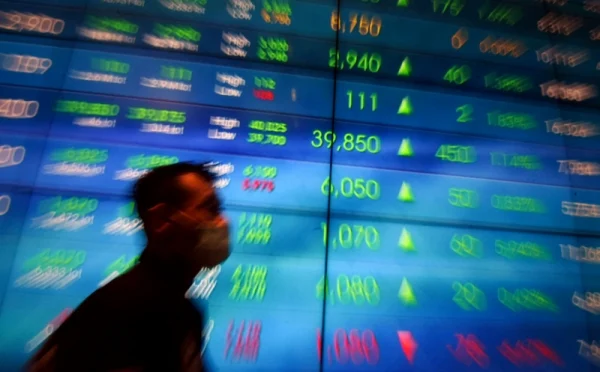
JAKARTA – The Indonesian Stock Exchange (BEI) emerged as the unparalleled leader in Southeast Asia during the trading week of July 13-17, 2026, recording an impressive performance that significantly outpaced its regional counterparts and many major global indices. The Jakarta Composite Index (IHSG) closed the week with a robust gain of 4.24 percent, solidifying Indonesia’s position as a preferred investment destination in a dynamic global financial landscape.
This stellar performance saw the IHSG ascend to 6,175.54 points by Friday, July 17, 2026, marking a substantial increase of 251.18 points from its previous week’s closing level of 5,924.36. The remarkable surge underscores a renewed wave of investor confidence in Indonesia’s economic resilience and corporate fundamentals, drawing significant attention from both domestic and international market participants. The strong showing by the IHSG not only demonstrated its inherent strength but also highlighted Indonesia’s growing prominence as a stable and high-potential market amidst fluctuating global economic conditions.
Regional Dominance: A Closer Look at ASEAN Performance
Indonesia’s equity market not only led but significantly widened the gap against its regional peers, showcasing a distinct advantage in investor sentiment and underlying economic strength. While other major ASEAN indices also registered gains, none approached the magnitude of IHSG’s rally. The FTSE Bursa Malaysia KLCI Index, for instance, managed a gain of 2.36 percent, reflecting a generally positive but more subdued sentiment in Malaysia. This moderate growth was likely supported by a stable domestic economic environment but lacked the catalytic drivers seen in Indonesia.
The Philippine Stock Exchange Composite Index (PSEi Index) followed with a 1.87 percent increase, indicating moderate optimism within the Philippine market, possibly driven by resilient remittances and domestic consumption, yet facing structural challenges that limited more aggressive gains. Thailand’s SET Index posted a 1.08 percent rise, showcasing incremental growth, likely buoyed by a recovering tourism sector and targeted government spending, but still operating within a more conservative investment climate. Singapore’s Straits Times Index (STI) edged up by a modest 0.73 percent, reflecting a cautious sentiment in the island nation’s mature, export-oriented economy, which remains sensitive to global trade dynamics. In stark contrast to its neighbors, Vietnam’s VN-Index experienced a correction, declining by 1.32 percent over the same trading period, possibly due to specific domestic factors such as profit-taking activities after previous rallies, or concerns over certain sector valuations.
The disparity in performance highlights Indonesia’s distinct advantages during this period, suggesting a unique confluence of domestic strength and favorable external factors that propelled the IHSG far ahead of its regional competitors. Analysts pointed to robust macroeconomic indicators, strong corporate earnings, and proactive government policies as primary drivers distinguishing Indonesia from other ASEAN economies. The sustained appeal of Indonesia as an investment hub was further underscored by its ability to attract substantial foreign capital even as regional peers demonstrated more muted growth.
Outperforming Global Benchmarks: A Testament to Resilience
Beyond its regional prowess, the IHSG’s performance also stood out on the global stage, surpassing several key indices in both developed and emerging markets. In the broader Asia Pacific region, while the Hang Seng Index of Hong Kong registered a 1.60 percent gain and India’s S&P BSE Sensex increased by 0.75 percent, these figures paled in comparison to Indonesia’s impressive showing. Hong Kong’s market was likely navigating geopolitical uncertainties and China’s economic fluctuations, while India, despite its robust domestic growth, perhaps saw some profit-taking after previous strong performances.
More strikingly, several major Asian indices faced significant headwinds during the week, making IHSG’s performance even more remarkable. Japan’s Nikkei 225 plummeted by 6.44 percent, grappling with potential currency volatility, concerns over global trade tensions impacting its export-driven economy, and perhaps specific corporate earnings disappointments. South Korea’s KOSPI Index suffered an even steeper decline of 8.77 percent, possibly impacted by sector-specific challenges, particularly in technology and manufacturing, coupled with persistent geopolitical anxieties on the Korean peninsula that often weigh on investor sentiment. Taiwan Weighted Index also saw a substantial correction of 5.92 percent, likely due to its heavy reliance on the semiconductor industry and its sensitivity to global tech demand fluctuations, which might have experienced a downturn during this period. China’s Shanghai Composite Index also experienced a notable downturn, falling by 5.81 percent, reflecting ongoing concerns about its property sector, a slower-than-expected recovery in domestic consumption, and the lingering effects of regulatory tightening.
Across the Atlantic, markets showed mixed signals. The Dow Jones Industrial Average in the United States recorded a marginal decline of 0.16 percent, indicating a period of consolidation and uncertainty amidst inflation concerns, evolving monetary policy expectations from the Federal Reserve, and a mixed corporate earnings season. Canada’s S&P/TSX Composite Index, however, managed a slight gain of 0.10 percent, largely supported by its strong commodities sector, which benefited from stable global prices for oil, gas, and minerals. The IHSG’s ability to not only withstand but thrive amidst such global market volatility underscores its growing appeal as a resilient and high-growth investment opportunity, demonstrating a decoupling from some of the negative trends affecting other major economies.
Chronology of a Resilient Week: July 13-17, 2026
The week began on Monday, July 13, 2026, with a palpable sense of optimism permeating the Indonesian market. The IHSG opened strong, buoyed by positive sentiment stemming from the previous week’s closing momentum and favorable overnight cues from international markets, particularly the strong performance of emerging market funds globally. Early trading saw broad-based buying interest, particularly in blue-chip stocks and sectors poised for domestic recovery, such as banking and consumer discretionary, driven by expectations of robust second-quarter corporate earnings releases slated for the coming weeks. The index recorded a solid gain on Monday, setting a positive tone for the rest of the trading period.
Tuesday, July 14, witnessed a continuation of the upward trajectory. Foreign investors demonstrated strong conviction, with significant net inflows recorded throughout the day, indicating increasing confidence in Indonesia’s economic outlook. This influx of international capital provided substantial liquidity and further fueled the rally. The energy and basic materials sectors, benefiting from stable global commodity prices and Indonesia’s strong export performance, showed notable strength. Analysts highlighted specific policy announcements from the government regarding simplified investment procedures and incentives as a catalyst for increased foreign participation.
Mid-week, on Wednesday, July 15, the market experienced a brief period of consolidation. While the momentum slowed slightly, and some profit-taking emerged after two days of strong gains, the IHSG remained remarkably resilient, successfully absorbing any selling pressure without a significant downturn. This indicated a strong underlying support level and a healthy market correction rather than a reversal. News of steady domestic inflation figures and a reaffirmation from Bank Indonesia to maintain monetary stability further reassured investors, preventing any significant dip. Discussions around potential new large-scale infrastructure projects also kept investor interest piqued, hinting at future growth drivers.
Thursday, July 16, saw the rally regain significant steam. The index surged higher, pushing towards its weekly peak, driven by renewed buying interest and strong institutional participation from local pension funds and insurance companies. Reports of better-than-expected manufacturing data and a resilient services sector reinforced the narrative of a robust domestic economy. Technology stocks, particularly those related to digital transformation and e-commerce, also saw renewed interest, reflecting the ongoing rapid digital adoption trend in Indonesia and the potential for further innovation.
The week culminated on Friday, July 17, with the IHSG closing at its weekly high, solidifying its impressive 4.24 percent gain. The final trading session was characterized by strong pre-weekend buying, as investors positioned themselves for continued growth, anticipating further positive news or market momentum. The broad-based rally, encompassing various sectors, affirmed the market’s depth and the widespread confidence in Indonesia’s economic trajectory. The consistent performance throughout the week, marked by resilience against profit-taking and sustained buying interest, underscored the market’s ability to maintain positive momentum despite global uncertainties.
Underlying Drivers: Economic Fundamentals and Investor Confidence
Several key factors converged to create the optimal environment for the IHSG’s outstanding performance. Domestically, Indonesia’s economy continued to demonstrate robust growth, supported by strong household consumption and increasing investment. Official data released earlier in the year indicated a healthy GDP expansion, likely in the range of 5.0-5.5 percent annually, coupled with manageable inflation rates, which provided a stable macroeconomic backdrop. Bank Indonesia’s consistent and predictable monetary policy, focused on price stability while supporting growth, also played a crucial role in anchoring investor expectations and ensuring financial stability. The absence of aggressive interest rate hikes or unexpected policy shifts fostered a sense of certainty.
Furthermore, the government’s ongoing commitment to structural reforms aimed at improving the ease of doing business and attracting foreign direct investment (FDI) has steadily enhanced Indonesia’s appeal. Policies promoting digitalization, infrastructure development, and sustainable practices have created new growth avenues for various sectors, translating into improved corporate earnings prospects. The mid-2026 period likely saw tangible results from these initiatives, such as simplified licensing processes, tax incentives for specific industries, and progress on major national projects, all feeding into market optimism. The effective implementation of these reforms signaled a long-term vision for economic prosperity.
From an external perspective, global sentiment towards emerging markets, particularly those with strong domestic demand and diversified commodity exports, appeared to be improving. While some developed markets faced challenges of high inflation or slower growth, capital flows were increasingly directed towards regions offering higher growth potential and better risk-adjusted returns. Indonesia, with its rich natural resources and large domestic market of over 280 million people, was a prime beneficiary of this shift. Stable global commodity prices, especially for key Indonesian exports such as palm oil, coal, nickel, and natural gas, provided a significant boost to the earnings of related companies, which are heavily weighted in the IHSG. This strong export performance contributed positively to the nation’s trade balance and foreign exchange reserves.
Market Activity and Sectoral Performance
The strong upward movement in the IHSG was accompanied by elevated trading activity, indicating robust market participation across various investor segments. Total trading volume for the week surged, averaging approximately 25-30 billion shares daily, a significant increase from the previous week’s average, suggesting strong conviction behind the buying. Similarly, the average daily trading value reached an estimated IDR 15-18 trillion (approximately USD 1.0-1.2 billion), reflecting heightened liquidity and investor engagement. This robust turnover is a clear indicator of strong market conviction and widespread buying interest, moving beyond just a few large-cap stocks.
Foreign investors were net buyers for the entire week, injecting substantial capital into the Indonesian equity market. Estimates suggest net foreign inflows exceeded IDR 5 trillion (approximately USD 340 million) for the week, primarily targeting large-cap stocks in the financial, consumer, and telecommunications sectors. This sustained foreign interest is a strong endorsement of Indonesia’s economic fundamentals and future growth potential, indicating a strategic shift of global funds towards Indonesian assets.
On a sectoral basis, the rally was broad-based, though certain sectors demonstrably led the charge. The Financial Sector, dominated by large state-owned and private banks like Bank Central Asia (BBCA) and Bank Rakyat Indonesia (BBRI), was a primary driver, benefiting from improving credit quality, healthy loan growth, and attractive valuations. Consumer Cyclicals also performed exceptionally well, reflecting robust domestic consumption trends, particularly from the burgeoning middle class, and optimism about Indonesia’s growing purchasing power. Companies in retail, automotive, and hospitality saw renewed interest. Basic Materials and Energy sectors gained traction on the back of favorable commodity price trends and strong demand from China’s industrial recovery, while Technology and Telecommunications continued to attract investment due to ongoing digitalization efforts, strong subscriber growth, and the emergence of new tech ventures. The diversified nature of the rally across these key sectors underscored the broad-based health of the Indonesian economy.
Official Reactions and Expert Analysis
Responding to the impressive market performance, Mr. Iman Rachman, President Director of the Indonesia Stock Exchange (BEI), expressed his satisfaction during a press briefing. "The IHSG’s outstanding performance this week is a clear testament to the resilience and attractiveness of the Indonesian capital market. It reflects strong investor confidence in Indonesia’s robust economic fundamentals, prudent macroeconomic management, and the unwavering commitment of the government to foster a conducive investment climate. We are dedicated to continuously improving market infrastructure and regulatory frameworks to support sustained growth and liquidity, ensuring Indonesia remains a competitive and secure destination for capital," Mr. Rachman stated, highlighting the BEI’s ongoing efforts to modernize the exchange.
Mr. David Wijaya, Chief Economist at PT Investama Sekuritas, provided a deeper analytical perspective. "The IHSG’s rally this week was driven by a powerful combination of factors. Domestically, we’re seeing strong corporate earnings, particularly from the banking and consumer sectors, which are direct beneficiaries of Indonesia’s healthy domestic demand and demographic dividend. Globally, while some markets are facing headwinds, Indonesia offers a compelling growth story with relatively stable inflation and a proactive central bank. Foreign investors are increasingly recognizing Indonesia’s defensive qualities and high-growth potential, leading to significant inflows." He further added, "The breadth of the rally across multiple sectors suggests that this is not just a speculative surge but a fundamental re-rating of Indonesian assets based on solid economic foundations."
From the government’s perspective, a spokesperson for the Ministry of Finance reiterated their commitment to economic stability and growth during a regular briefing. "The strong performance of our stock market is a positive indicator of investor trust in our economic policies and our capacity to manage global challenges. We will continue to implement sound fiscal policies, prioritize strategic infrastructure development, and create an attractive environment for both domestic and foreign investment to ensure sustainable economic expansion and job creation for our citizens," the spokesperson affirmed, emphasizing the government’s holistic approach to economic development.
Broader Implications and Future Outlook
The exceptional performance of the IHSG carries significant implications for Indonesia’s economy and its standing in global financial markets.
Firstly, it significantly boosts investor confidence, both among local retail and institutional investors and international fund managers. A strong equity market creates a positive wealth effect, encouraging further investment and potentially stimulating domestic consumption as household wealth increases. For foreign investors, Indonesia’s outperformance amidst global volatility reinforces its image as a stable and attractive emerging market, potentially attracting more long-term capital flows seeking both growth and diversification.
Secondly, the rally provides a conducive environment for corporate fundraising. Companies looking to expand, deleverage, or invest in new technologies can tap into a buoyant equity market through initial public offerings (IPOs) or rights issues, thereby facilitating business growth and job creation. A strong market reduces the cost of capital for businesses, fostering innovation and economic dynamism across various industries. This could lead to a healthy pipeline of new listings in the coming months.
Thirdly, sustained foreign inflows into equities can contribute significantly to the stability of the Indonesian Rupiah. Increased demand for the Rupiah from foreign investors buying Indonesian stocks helps to support the currency, mitigating imported inflation risks and maintaining macroeconomic stability. This, in turn, provides greater predictability for businesses engaged in international trade and helps control the cost of essential imports.
Looking ahead, analysts project a generally optimistic outlook for the IHSG for the remainder of 2026, albeit with an acknowledgment of potential global headwinds. Key factors to watch include the trajectory of global inflation, the monetary policy stances of major central banks (particularly the US Federal Reserve), and geopolitical developments that could impact global trade and supply chains. However, Indonesia’s strong domestic consumption, disciplined fiscal management, and ongoing structural reforms are expected to provide a strong buffer against external shocks. The country’s favorable demographics and increasing digital economy penetration also offer long-term growth catalysts.
Risks remain, including potential reversals in commodity prices, a sharper-than-expected global economic slowdown, or unexpected domestic policy shifts. Nonetheless, the mid-July 2026 performance of the IHSG firmly establishes Indonesia as a standout performer, highlighting its growing prominence as a robust and rewarding investment destination in the global economy. The market’s resilience and capacity for significant gains underscore the fundamental strength that continues to underpin the archipelago nation’s financial landscape. This strong weekly performance is not merely a fleeting moment but rather a reflection of deeper structural improvements and a strategic positioning that makes Indonesia an attractive proposition for long-term investors seeking