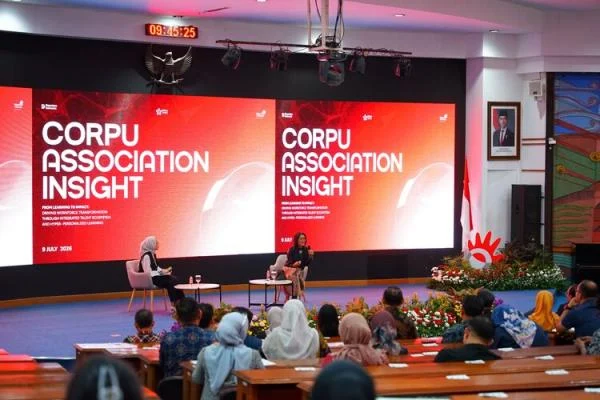
JAKARTA, iNews.id – PT Telkom Indonesia (Persero) Tbk, through its renowned Telkom Corporate University (Telkom CorpU), recently hosted the CorpU Association Insight forum in Bandung, West Java. Held on Thursday, July 9, 2026, at the Telkom Corporate University premises, the significant event brought together leading human capital practitioners under the theme "From Learning to Impact: Driving Workforce Transformation through Integrated Talent Ecosystem and Hyper-Personalized Learning." This pivotal gathering served as a collaborative nexus for HR professionals, Corporate University leaders, and talent development managers from a diverse array of organizations, fostering the exchange of insights, best practices, and innovative strategies for cultivating an integrated talent ecosystem crucial for future-ready workforces.
The Strategic Imperative of Corporate Universities in the Digital Age
The event underscored Telkom CorpU’s commitment to advancing human capital development beyond mere instructional learning, emphasizing the generation of tangible impact on talent capabilities and organizational performance. Corporate Universities, like Telkom CorpU, have evolved significantly from traditional training departments. They now function as strategic business partners, directly aligning learning initiatives with organizational goals and fostering a culture of continuous development. In an era characterized by rapid technological advancements, particularly in artificial intelligence (AI) and digital transformation, the role of such institutions has become more critical than ever. They are tasked with not just imparting skills but also instilling agility, adaptability, and an innovation mindset within the workforce.
The decision to host a forum focused on "Integrated Talent Ecosystem" and "Hyper-Personalized Learning" reflects a growing understanding within leading organizations that a fragmented approach to talent management is no longer sustainable. Instead, there is a pressing need for a holistic framework that connects learning, performance management, career development, and succession planning into a seamless, interconnected system. This integration ensures that talent initiatives are not isolated but rather reinforce each other, creating a stronger, more resilient, and more capable workforce.
Driving Adaptability: Insights from Telkom’s Human Capital Leadership
Willy Saelan, Telkom’s Director of Human Capital Management, provided a keynote address that highlighted the urgency of workforce transformation in the contemporary business landscape. He articulated that business transformation initiatives, especially in sectors as dynamic as telecommunications and digital services, are fundamentally reliant on a talent pool capable of rapidly adapting to technological advancements and evolving competency requirements. "In the era of digital transformation and AI, organizations need agile talent ready to face change," Saelan stated. He emphasized that the traditional siloed approaches to learning, talent, and career development are insufficient to meet the demands of this accelerated pace.
Saelan further elaborated on the necessity for these three pillars—learning, talent, and career development—to be integrated into a single, cohesive ecosystem. This integration, he argued, is vital for accelerating capability development, enhancing talent readiness, and delivering concrete impacts on the achievement of strategic business objectives. His remarks resonated with the core tenets of the forum, underscoring that the future success of enterprises like Telkom hinges on their ability to cultivate a highly adaptive, skilled, and engaged workforce through strategic human capital interventions. The shift from a reactive training model to a proactive, integrated talent ecosystem is not merely an operational adjustment but a strategic imperative for long-term competitiveness.
The Evolution of Telkom Corporate University: A Chronology of Excellence
Telkom CorpU’s journey reflects Telkom Indonesia’s long-standing commitment to human capital development. Established with a vision to be a world-class corporate university, Telkom CorpU has continuously evolved its curriculum and methodologies to stay ahead of industry trends and internal business needs.

- Early 2000s: Telkom began formalizing its internal training functions, recognizing the need for structured learning pathways to support its growth as a leading telecommunications provider. Initial focus was on technical skills, leadership development, and operational excellence.
- Mid-2010s: With the acceleration of digital transformation globally, Telkom CorpU began to strategically pivot. It started integrating digital literacy, data analytics, and agile methodologies into its core offerings. This period saw the strengthening of partnerships with external academic institutions and technology providers to enrich learning content.
- Late 2010s – Early 2020s: The concept of an "integrated talent ecosystem" began to take shape within Telkom. Telkom CorpU expanded its mandate to include not just learning but also talent assessment, career pathing, and leadership succession planning, all aimed at creating a seamless employee journey. The adoption of advanced learning technologies, including e-learning platforms and virtual classrooms, became widespread.
- 2025-2026 (Leading up to the forum): Intense focus on AI integration and hyper-personalization. Telkom CorpU invested in AI-powered learning platforms capable of delivering tailored content based on individual learning styles, career aspirations, and organizational needs. The CorpU Association Insight forum in July 2026 marks a significant milestone, bringing these advanced concepts to the forefront of industry discussion and collaboration. This event is a testament to Telkom CorpU’s leadership in shaping the future of corporate learning in Indonesia and beyond.
Unpacking the "Integrated Talent Ecosystem"
An integrated talent ecosystem represents a paradigm shift from traditional, often fragmented, human resource functions. It envisions a holistic framework where all aspects of an employee’s journey – from recruitment and onboarding to learning, performance management, career progression, and even offboarding – are seamlessly connected and strategically aligned.
Key components of such an ecosystem include:
- Talent Acquisition and Onboarding: Ensuring that new hires are not only skilled but also culturally aligned and immediately integrated into a continuous learning environment.
- Learning and Development (L&D): Moving beyond generic courses to provide targeted, relevant, and continuous learning opportunities that are directly linked to performance goals and career aspirations.
- Performance Management: Shifting from annual reviews to continuous feedback loops and goal alignment, ensuring that learning translates directly into improved performance.
- Career Development and Mobility: Providing clear career paths, opportunities for internal mobility, and mentorship programs that encourage employees to grow within the organization.
- Succession Planning: Proactively identifying and developing future leaders, ensuring a robust pipeline of talent for critical roles.
- Data Analytics and Insights: Leveraging HR data to understand talent trends, predict future needs, and measure the impact of talent initiatives.
For Telkom, integrating these elements means that an employee’s learning journey is not an isolated event but a continuous process informed by their performance data, career aspirations, and the strategic needs of the company. For instance, an employee showing potential in a specific digital domain, identified through performance reviews and skill assessments, could be automatically enrolled in a personalized learning path via Telkom CorpU, leading to opportunities for advancement within a relevant business unit. This creates a virtuous cycle of learning, performance, and growth, significantly enhancing organizational agility and responsiveness.
The Promise of "Hyper-Personalized Learning"
Hyper-personalized learning takes individualized learning to the next level by leveraging advanced technologies, particularly artificial intelligence and machine learning, to deliver highly customized educational experiences. Unlike traditional personalized learning, which might offer a few choices based on broad categories, hyper-personalization creates a unique learning journey for each individual.
This approach involves:
- AI-driven Assessment: Analyzing an individual’s existing skills, knowledge gaps, learning style, and career goals.
- Adaptive Content Delivery: Dynamically adjusting course material, pace, and format based on real-time progress and engagement.
- Curated Learning Paths: Recommending specific modules, resources, mentors, and projects that are most relevant to an individual’s needs and the organization’s strategic objectives.
- Predictive Analytics: Identifying potential skill deficiencies before they become critical and proactively offering solutions.
For Telkom and its diverse workforce, hyper-personalized learning through Telkom CorpU means that a software engineer might receive different AI training modules than a marketing specialist, even if both are learning about AI applications. Furthermore, the system could recommend a specific project or mentor based on the engineer’s prior experience and the marketing specialist’s current project needs, making learning directly applicable and highly engaging. This significantly boosts engagement, retention of knowledge, and the speed at which new skills are acquired and applied, thereby accelerating the entire workforce transformation process.
Supporting Data and the Broader Context of Workforce Transformation
The themes discussed at the CorpU Association Insight forum are not isolated to Telkom but reflect global trends in human capital management.

- Digital Skill Gaps: A recent report by the World Economic Forum (WEF) indicated that by 2027, 44% of workers’ core skills will be disrupted. In Southeast Asia, including Indonesia, studies suggest a significant digital skill gap across various sectors, with estimates indicating that a substantial portion of the workforce requires critical upskilling in areas like AI, data analytics, cloud computing, and cybersecurity. Telkom’s initiative directly addresses this national challenge.
- Investment in Corporate Learning: Global spending on corporate training and development is projected to continue its upward trajectory, with a growing emphasis on digital learning platforms and experiential learning. Organizations recognize that investment in human capital is no longer a cost but a critical investment for future growth and resilience.
- Impact of AI: The rapid advancement of AI is fundamentally reshaping job roles and demanding new competencies. While some tasks may be automated, AI also creates new roles requiring human skills such as critical thinking, creativity, emotional intelligence, and complex problem-solving. An integrated talent ecosystem with hyper-personalized learning is essential for preparing employees for this evolving landscape.
- Employee Retention and Engagement: Research consistently shows that employees are more likely to stay with organizations that invest in their growth and development. Personalized learning experiences enhance engagement, job satisfaction, and ultimately, retention rates, which are crucial for maintaining institutional knowledge and reducing recruitment costs.
Official Responses and Industry Reactions
Beyond Willy Saelan’s insightful comments, the forum provided a platform for other industry leaders to share their perspectives. While specific names were not provided in the original article, the nature of such a forum suggests a rich tapestry of reactions.
A representative from a major Indonesian financial institution, participating in the forum, might have commented, "The insights shared by Telkom CorpU on integrating talent functions are incredibly timely. We, too, are grappling with how to ensure our workforce remains agile amidst regulatory changes and fintech disruption. The concept of hyper-personalized learning, especially, offers a scalable solution for rapidly upskilling our diverse employee base."
Similarly, an HR director from a fast-moving consumer goods (FMCG) company could have added, "This forum has highlighted that talent development is no longer just about ‘checking a box’ for compliance or annual training. It’s about building a continuous learning culture that is deeply embedded in our business strategy. The practical examples of how Telkom is leveraging technology to achieve this are highly valuable."
These inferred reactions underscore the widespread recognition among Indonesian enterprises of the urgent need for strategic, technology-driven talent development, making Telkom CorpU’s initiative a benchmark for others to emulate.
Broader Impact and Implications for Telkom and the National Workforce
The initiatives championed by Telkom CorpU, particularly through forums like the CorpU Association Insight, carry significant implications:
- For Telkom Indonesia: By leading the charge in integrated talent ecosystems and hyper-personalized learning, Telkom reinforces its position not just as a technology leader but also as a human capital innovator. This strategic focus ensures that its vast workforce remains at the forefront of technological change, directly supporting its business transformation goals, enhancing service delivery, and maintaining its competitive edge in the dynamic telecommunications and digital services market. A highly skilled and adaptable workforce is crucial for Telkom’s ambitions to expand its digital services portfolio and capture new market opportunities.
- For the Indonesian Workforce: Telkom’s commitment to advanced talent development serves as a model for other Indonesian companies. As a state-owned enterprise and a market leader, its practices often set industry standards. By demonstrating the effectiveness of integrated and personalized learning, Telkom contributes significantly to raising the overall standard of human capital development across the nation. This, in turn, helps to bridge the national skill gap, prepares the workforce for the demands of Industry 4.0 and 5.0, and enhances Indonesia’s global competitiveness.
- For Corporate Universities and HR Practices: The forum helps to redefine the role of corporate universities, positioning them as strategic drivers of business value rather than mere cost centers. It promotes a shift in HR practices towards a more data-driven, holistic, and employee-centric approach, emphasizing continuous development and strategic alignment.
Conclusion: A Blueprint for Future-Ready Talent
The CorpU Association Insight forum, organized by Telkom CorpU, represents more than just a gathering of HR professionals; it is a critical platform for shaping the future of workforce development in Indonesia. By championing "Integrated Talent Ecosystems" and "Hyper-Personalized Learning," Telkom Indonesia is not only fortifying its own human capital but also providing a blueprint for other organizations seeking to navigate the complexities of digital transformation and the AI era. The focus on translating learning into tangible impact underscores a pragmatic and forward-thinking approach, ensuring that investments in human capital yield measurable returns and contribute directly to organizational resilience and national economic growth. As technology continues to evolve at an unprecedented pace, the ability to continuously adapt, learn, and grow will be the defining characteristic of successful enterprises and thriving economies, making Telkom CorpU’s leadership in this domain exceptionally vital.