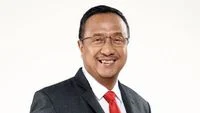
The landscape of Indonesia’s telecommunications sector underwent a significant shift on Wednesday, September 30, 2026, as PT Telkom Indonesia (Persero) Tbk announced a major leadership overhaul. Through an Extraordinary General Meeting of Shareholders (RUPSLB), the state-owned enterprise officially terminated the tenure of Dian Siswarini as President Director. Her departure marks a notably brief stint in one of the most influential corporate roles in the country, lasting only 16 months. In her stead, the shareholders have appointed Nanang Hendarno, an internal veteran with deep technical roots within the company, to lead the telecommunications giant into its next chapter.
The Dynamics of the Leadership Transition
The decision to replace Dian Siswarini came as a surprise to many market analysts, given her relatively short term. Appointed during the Annual General Meeting of Shareholders (RUPST) on May 27, 2025, Siswarini was initially tasked with steering Telkom through a period of intense digital transformation. She had succeeded Ririek Adriansyah, a leader who had commanded the company for six years, providing a sense of stability and strategic continuity that the board evidently feels is now in need of a different approach.
The transition from a six-year leadership cycle under Adriansyah to a 16-month cycle under Siswarini underscores the volatile and highly demanding nature of the telecommunications industry in Indonesia. As the nation pushes toward greater digital inclusion, the expectations placed upon Telkom—as both a commercial entity and a primary agent of national development—have never been higher.
Profile of the New Leadership: Nanang Hendarno
Nanang Hendarno, the newly appointed President Director, is far from a newcomer to the Telkom ecosystem. His elevation from the role of Director of Network to the pinnacle of the company is widely viewed by industry observers as a move to prioritize technical stability and infrastructure-led growth.
Hendarno brings a robust educational background to his new role. He graduated with a degree in Electrical Engineering from the Institut Teknologi Sepuluh Nopember (ITS) in Surabaya in 1991. Demonstrating a long-standing commitment to technical excellence, he later pursued advanced studies at the Delft University of Technology in the Netherlands, where he earned a Master’s degree in Space System Engineering in 1997.
His career within the Telkom Group has been characterized by deep operational experience. Before joining the board of directors, he served as the Executive General Manager (EGM) of the Service Operation Division at Telkom Indonesia from 2015 to 2016. This tenure provided him with a comprehensive understanding of the challenges inherent in managing a massive, nationwide telecommunications infrastructure. His internal ascent is seen as a message to stakeholders that the company intends to double down on network reliability and operational efficiency during his tenure.
A Chronology of Recent Leadership at Telkom
To understand the gravity of this change, one must look at the recent timeline of the company’s executive management:
- May 24, 2019: Ririek Adriansyah is appointed as President Director, initiating a period of relative stability for the company.
- May 27, 2025: After six years at the helm, Ririek Adriansyah steps down, and Dian Siswarini is appointed as his successor during the RUPST.
- September 30, 2026: The RUPSLB takes place, resulting in the dismissal of Dian Siswarini after only 16 months in office. Nanang Hendarno is appointed as the new President Director.
This rapid turnover reflects the shifting priorities of the Indonesian government, which remains the majority shareholder in Telkom. The shift from a CEO with a broader strategic background to one with a deep technical focus (Hendarno) suggests that the government may be pivoting toward prioritizing infrastructure expansion, 5G deployment, and rural connectivity as the primary pillars of the company’s future strategy.
Industry Context and Strategic Implications
The telecommunications sector in Indonesia is currently facing a "perfect storm" of challenges. These include the massive capital expenditure required for 5G rollout, the saturation of the mobile market, and the increasing competition from over-the-top (OTT) service providers.

Under the previous administration, Telkom had been pivoting toward becoming a digital infrastructure provider, moving beyond traditional connectivity to data centers and cloud services. The arrival of Nanang Hendarno is expected to reinforce this direction, albeit with a sharper focus on the underlying network architecture required to support such high-growth sectors.
Market analysts suggest that the brief tenure of Dian Siswarini does not necessarily imply a failure of the previous strategy, but rather a realization by the board that the pace of execution needs to accelerate. In a rapidly evolving digital economy, the ability to integrate sophisticated network capabilities with consumer-facing digital services is the defining challenge for any incumbent telecom provider.
The Role of State-Owned Enterprises (BUMN)
As a BUMN, Telkom’s leadership is subject to the broader economic and political objectives of the Indonesian government. The Ministry of State-Owned Enterprises (Kementerian BUMN) often uses leadership changes to signal shifts in policy or to resolve internal bottlenecks that might hinder national goals.
While the official statements regarding the leadership change emphasize the need for "refreshing the management structure" and "optimizing human capital," the market usually interprets these changes through the lens of performance targets. The incoming administration under Nanang Hendarno will likely face immediate pressure to demonstrate tangible improvements in network quality and to stabilize the company’s market share against aggressive private-sector competitors.
Stakeholder Responses and Market Sentiment
Investor reaction to leadership changes in state-owned enterprises is typically cautious. Telkom is a "blue chip" stock on the Indonesia Stock Exchange (IDX), and institutional investors often look for continuity. By appointing a career "Telkom man" like Hendarno, the board has likely sought to minimize market disruption. By choosing an internal candidate with a deep technical track record, the company signals that it is not looking for a radical departure from its core business, but rather a more effective and efficient execution of its existing mandate.
While there have been no official public statements from the outgoing director, Dian Siswarini, it is expected that the transition will be orderly, given the internal nature of the appointment. The management team at Telkom is structured in a way that allows for a smooth handoff, with the existing directors likely to provide the necessary support to ensure that ongoing projects—such as the expansion of fiber-optic networks and the integration of data center assets—remain on schedule.
Future Outlook: What Lies Ahead for Nanang Hendarno
Nanang Hendarno inherits a company that is fundamentally sound but strategically challenged. His immediate priorities will likely include:
- 5G Deployment Strategy: Balancing the massive cost of 5G infrastructure with the reality of consumer purchasing power in Indonesia.
- Infrastructure Optimization: Leveraging his background as the former Director of Network to streamline operations and reduce operational expenses.
- Digital Ecosystem Integration: Continuing the work initiated by his predecessors in transforming Telkom from a traditional telco into a comprehensive digital service provider.
- Strengthening BUMN Synergy: Coordinating more closely with other state-owned enterprises to provide integrated digital solutions, a key mandate of the Ministry of BUMN.
The appointment of an engineer to the top post is a statement of intent. It suggests that in the coming years, the primary battleground for Telkom will be the strength, speed, and reliability of its network. As Indonesia seeks to position itself as a major digital player in Southeast Asia, the role of Telkom as the primary backbone of the nation’s digital infrastructure remains critical.
Conclusion
The removal of Dian Siswarini and the appointment of Nanang Hendarno marks a pivotal moment for PT Telkom Indonesia. While the short duration of the previous leadership term may raise questions regarding corporate strategy, the selection of an experienced technical leader suggests a long-term focus on infrastructure development and operational precision.
For shareholders, employees, and customers, the change represents a shift back toward the company’s engineering roots. Whether this focus on technical stability will be enough to navigate the complex economic and technological landscape of the coming years remains to be seen. However, one thing is certain: all eyes in the Indonesian tech sector will be on Nanang Hendarno as he takes the reins of one of the nation’s most vital corporate entities. His performance will not only dictate the future of Telkom but will also serve as a barometer for the health and direction of Indonesia’s broader digital economy.