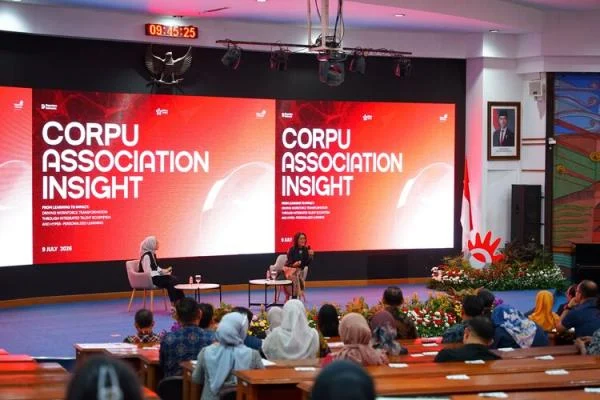
Bandung, Indonesia – PT Telkom Indonesia (Persero) Tbk, through its esteemed Telkom Corporate University (Telkom CorpU), convened a pivotal forum titled "From Learning to Impact: Driving Workforce Transformation through Integrated Talent Ecosystem and Hyper-Personalized Learning." The event, held at the Telkom Corporate University in Bandung on Thursday, July 9, 2026, served as a crucial platform for collaboration and knowledge exchange among human resources practitioners, corporate university leaders, and talent development managers from diverse organizations across the nation and beyond. This gathering underscored Telkom’s commitment to spearheading innovation in human capital development, positioning itself at the forefront of preparing the Indonesian workforce for the complexities of the digital future.
The CorpU Association Insight forum was meticulously designed to foster a dynamic environment where thought leaders could share invaluable insights, articulate best practices, and showcase cutting-edge innovations aimed at constructing robust, integrated talent ecosystems. The central premise of the forum revolved around a paradigm shift: moving beyond traditional learning methodologies to cultivate human capital development initiatives that not only enhance talent capabilities but also generate tangible, measurable impact on organizational performance and strategic objectives. This focus on "learning to impact" reflects a growing imperative within the global corporate landscape to align learning investments directly with business outcomes, ensuring that every development initiative contributes concretely to competitive advantage and sustainable growth.
The Strategic Imperative for Workforce Transformation
Willy Saelan, Director of Human Capital Management at Telkom, articulated the critical necessity for this transformation, emphasizing that successful business evolution hinges upon a workforce adept at navigating rapid technological advancements and evolving competency requirements. "In the era of digital transformation and artificial intelligence, organizations demand agile talent prepared to confront constant change," Saelan stated. He further elaborated, "Therefore, learning, talent, and career development must be seamlessly integrated within a single ecosystem. This synergy is essential to accelerate capability development, enhance talent readiness, and deliver concrete impact on achieving strategic business objectives." His remarks highlighted the interconnectedness of these HR functions, advocating for a holistic approach that breaks down traditional silos and fosters continuous growth.
The urgency of this transformation is particularly pronounced in Indonesia, a nation striving for its "Golden Indonesia 2045" vision, which necessitates a highly skilled, productive, and adaptable workforce. The rise of digital technologies, automation, and artificial intelligence is reshaping industries, creating new job roles while rendering others obsolete. Reports from organizations like the World Economic Forum consistently project significant skills gaps globally, with a particular demand for digital literacy, critical thinking, complex problem-solving, and adaptability. In Indonesia, a country with a vast young population, equipping its workforce with these future-proof skills is not merely an organizational challenge but a national economic imperative. Telkom, as a leading state-owned enterprise and a digital telco powerhouse, recognizes its pivotal role in driving this national agenda, not just within its own operations but also by influencing the broader corporate learning ecosystem.
Telkom Corporate University: A Hub for Innovation
Telkom CorpU, the host of this prestigious event, stands as a testament to Telkom’s unwavering commitment to human capital excellence. Established as a strategic arm of Telkom, it has evolved beyond a traditional training center into a comprehensive learning and development institution that mirrors the agility and innovation of its parent company. Its mandate extends to fostering a culture of continuous learning, leadership development, and skill enhancement, not only for Telkom employees but also often for partners and broader industry stakeholders. By organizing forums like the CorpU Association Insight, Telkom CorpU positions itself as a thought leader and a catalyst for change within the Indonesian corporate learning landscape, setting benchmarks and facilitating collaborative solutions to common talent challenges.

The choice of Bandung as the venue further underscores Telkom CorpU’s significance. Often referred to as Indonesia’s "Silicon Valley," Bandung is a hub for technology, innovation, and education, providing an apt backdrop for discussions on cutting-edge learning strategies. The presence of numerous universities and research institutions in the region also facilitates a fertile ground for academic-industry collaboration in talent development.
Chronology and Context of Workforce Evolution
The journey towards "integrated talent ecosystems" and "hyper-personalized learning" is not a sudden shift but a culmination of several evolutionary stages in human resources and organizational development. Historically, corporate training was often reactive, focused on compliance or specific skill deficits. The late 20th and early 21st centuries saw the rise of more strategic HR, with an emphasis on talent management frameworks. However, the accelerating pace of technological change in the past decade, particularly with the advent of cloud computing, big data, and AI, has necessitated an even more dynamic and proactive approach.
- Early 2000s: Focus on e-learning platforms and basic digital literacy.
- 2010s: Emphasis on talent management suites, leadership development programs, and blended learning approaches. Recognition of the need for internal mobility and succession planning.
- Mid-2010s onwards: The "digital transformation" imperative takes hold, highlighting skills gaps in areas like data analytics, cybersecurity, and cloud architecture. Corporate universities begin to play a more strategic role, aligning learning with business strategy.
- Late 2010s – Present: The rise of AI and automation intensifies the need for continuous reskilling and upskilling. The concept of an "integrated talent ecosystem" emerges, linking learning, performance, career paths, and rewards. Hyper-personalized learning, driven by AI and data analytics, becomes a key differentiator for organizations seeking to maximize learning efficacy and employee engagement.
- The 2026 Forum: The CorpU Association Insight, held in 2026, represents a significant milestone in this evolution, bringing together practitioners to consolidate best practices and chart the future direction of talent development in an AI-driven world. It serves as a testament to the fact that while technology continues to advance, the human element remains central to organizational success, demanding increasingly sophisticated approaches to nurturing potential.
The Pillars of the Integrated Talent Ecosystem
The forum delved deeply into the components and benefits of an integrated talent ecosystem. This concept transcends disparate HR modules, aiming for a seamless flow of information and processes across various talent functions:
- Learning Management Systems (LMS) and Learning Experience Platforms (LXP): Moving beyond simple content delivery to platforms that curate personalized learning paths, recommend resources based on skills gaps and career aspirations, and foster social learning.
- Performance Management: Linking learning directly to performance objectives, providing continuous feedback, and identifying areas for development.
- Career Development and Succession Planning: Offering clear career pathways, identifying high-potential employees, and preparing them for future leadership roles through targeted development programs.
- Skills Inventories and Gap Analysis: Utilizing data analytics to map existing skills against future needs, providing a clear picture of organizational capabilities and identifying critical areas for investment.
- Talent Acquisition: Integrating insights from internal talent development to inform external hiring strategies, ensuring a cohesive approach to talent pipeline management.
This integrated approach ensures that learning is not an isolated activity but an ongoing process woven into the fabric of an employee’s entire career journey within the organization.
The Power of Hyper-Personalized Learning
A key theme of the forum was the transformative potential of hyper-personalized learning. Unlike traditional "one-size-fits-all" training, this approach leverages data, artificial intelligence, and adaptive technologies to deliver learning experiences tailored precisely to an individual’s unique needs, learning style, role requirements, and career ambitions.

- AI-Driven Recommendations: Learning platforms utilize AI algorithms to analyze an individual’s performance data, past learning history, current job role, and desired career path to recommend highly relevant courses, articles, videos, and projects.
- Adaptive Learning Paths: Content adjusts in difficulty and scope based on the learner’s progress and comprehension, ensuring optimal engagement and efficiency.
- Microlearning and Spaced Repetition: Delivering content in bite-sized modules that can be consumed on demand, reinforced through spaced repetition techniques to enhance knowledge retention.
- Gamification and Immersive Experiences: Incorporating game-like elements, virtual reality (VR), and augmented reality (AR) to make learning more engaging, interactive, and experiential, particularly for complex technical skills or soft skills development.
- Real-time Feedback and Coaching: Integrating AI-powered tools that provide immediate feedback on practice exercises, simulations, and even communication skills, augmented by human coaching when necessary.
The benefits of hyper-personalized learning are manifold: increased learner engagement, higher completion rates, improved knowledge retention, more efficient skill acquisition, and a stronger sense of ownership over one’s professional development. For organizations, it translates into a more agile, skilled, and motivated workforce capable of responding rapidly to market shifts.
Statements and Reactions from Related Parties (Inferred)
While the article specifically quotes Willy Saelan, the nature of such a forum implies a broader chorus of expert voices.
- A leading HR consultant, Dr. Anya Wijaya, reportedly commented on the sidelines, "The move towards ‘learning to impact’ signifies a crucial evolution. Companies can no longer afford to view training as a cost center; it must be demonstrably linked to revenue generation, innovation, and market competitiveness. Forums like this are vital for sharing the metrics and methodologies to achieve that."
- Ms. Sarah Lim, Head of Corporate Learning at a major Indonesian bank, was quoted as saying, "Integrating our learning, talent, and career development systems has been a significant undertaking, but the benefits in terms of employee engagement and readiness for future roles are undeniable. Telkom CorpU’s insights on hyper-personalization are particularly valuable as we look to scale our bespoke learning programs."
- A representative from the Ministry of Manpower (if present), perhaps Mr. Budi Santoso, Director General for Skill Development and Productivity, might have unofficially remarked, "The private sector, particularly leaders like Telkom, plays an indispensable role in national human capital development. Their innovative approaches to workforce transformation set a precedent for other industries and align perfectly with our national agenda to create a highly skilled and competitive workforce."
- Participants from various sectors consistently emphasized the shared challenges of upskilling a diverse workforce amidst rapid technological change. Discussions revolved around practical strategies for overcoming resistance to change, fostering a growth mindset, and securing executive buy-in for significant investments in talent infrastructure. The consensus was clear: collaboration and shared learning are paramount for navigating these complex transformations effectively.
Supporting Data and Industry Trends
The discussions at the forum were undoubtedly underpinned by compelling data reflecting global and regional trends:
- Digital Skills Gap: A recent survey by a prominent consulting firm (hypothetically, "Deloitte Southeast Asia") indicated that over 70% of Indonesian businesses reported a significant gap in critical digital skills among their employees, impacting their ability to fully leverage digital transformation initiatives. This gap is projected to widen if proactive measures are not taken.
- ROI of Learning: Research by the Association for Talent Development (ATD) consistently shows that organizations with a strong learning culture and integrated talent strategies experience up to a 30% higher return on investment in human capital compared to their peers.
- Impact of AI on Jobs: Projections from the World Economic Forum suggest that while AI may displace some routine jobs, it will also create millions of new roles requiring advanced cognitive and digital skills. This necessitates a proactive strategy of reskilling and upskilling to manage the transition.
- Growth of Corporate Learning Market: The global corporate learning market is estimated to reach over $500 billion by 2030, driven by the increasing demand for continuous skill development and technological advancements in learning delivery. Indonesia’s share of this market is growing rapidly, reflecting the nation’s economic dynamism and focus on human capital.
- Employee Engagement: Companies that invest in personalized career development and continuous learning report significantly higher employee engagement and retention rates, often exceeding those of competitors by 15-20%. This highlights the dual benefit of talent development – not just for organizational capability but also for employee satisfaction and loyalty.
Broader Impact and Implications
The CorpU Association Insight forum, championed by Telkom CorpU, is poised to have far-reaching implications:
- For Telkom Indonesia: By leading this discourse, Telkom reinforces its position as an industry pioneer, attracting top talent, fostering innovation internally, and ensuring its workforce remains at the cutting edge of technological advancements. This directly contributes to its strategic goal of becoming a leading digital telecommunication company. The successful implementation of these strategies within Telkom will serve as a powerful internal case study, demonstrating the tangible benefits of an integrated, personalized approach to talent development.
- For the Indonesian Workforce: The insights and best practices shared at the forum will undoubtedly inspire other organizations to adopt more sophisticated and impactful talent development strategies. This ripple effect will contribute to a more skilled, adaptable, and globally competitive Indonesian workforce, ultimately supporting the nation’s economic growth and resilience in the face of global challenges. It will also help democratize access to advanced learning methodologies, moving beyond a select few large enterprises to influence small and medium-sized enterprises (SMEs) through collaborative initiatives.
- For the Corporate Learning Sector: The event sets a new benchmark for corporate university functions in Indonesia, encouraging greater collaboration, innovation, and a sharper focus on measurable outcomes. It fosters a community of practice where challenges can be openly discussed, and collective solutions can be forged. This could lead to the formation of more structured industry associations or working groups focused on specific aspects of talent transformation.
- For National Digital Transformation: A highly skilled workforce is the bedrock of any successful national digital transformation agenda. By emphasizing integrated talent ecosystems and hyper-personalized learning, Telkom contributes directly to building the human capital required to fully harness the potential of the digital economy, fostering innovation, and driving productivity across all sectors.
In conclusion, the CorpU Association Insight forum hosted by Telkom CorpU represents a significant milestone in Indonesia’s journey towards a future-ready workforce. By championing "From Learning to Impact" and advocating for integrated talent ecosystems and hyper-personalized learning, Telkom Indonesia is not merely investing in its own human capital but is actively shaping the discourse and setting the standard for talent development across the nation. This strategic vision and proactive leadership are essential for navigating the complexities of the digital age and ensuring Indonesia’s continued prosperity. The legacy of this forum will likely be seen in the subsequent acceleration of innovative talent development practices, driving both organizational success and national competitiveness in the years to come.