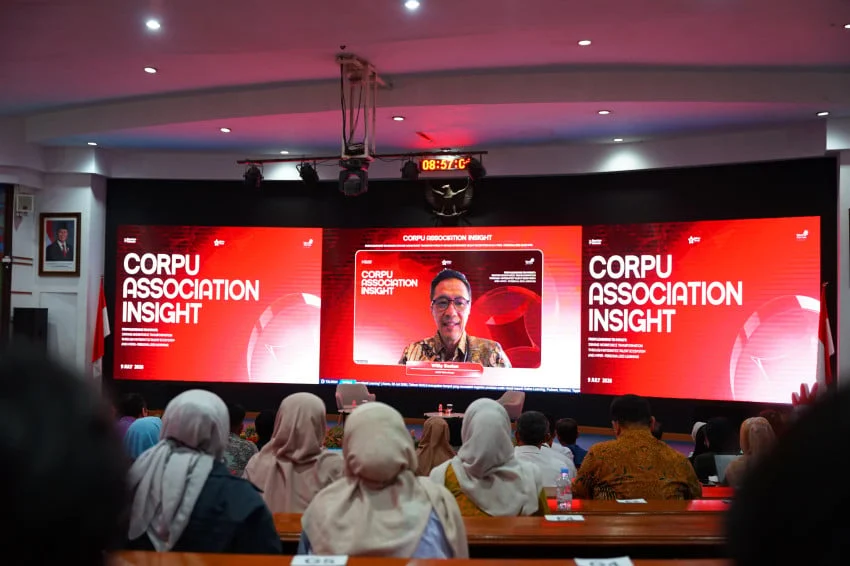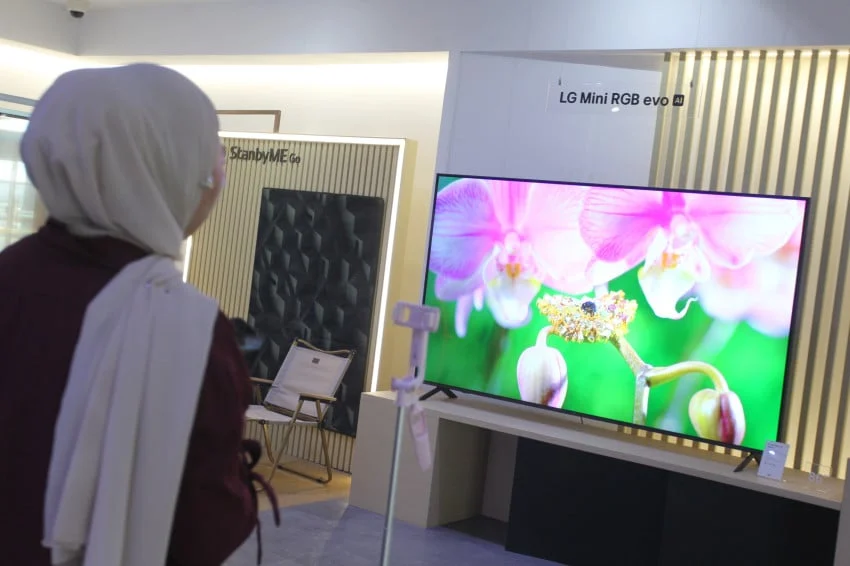
The landscape of Indonesia’s consumer electronics industry underwent a significant transformation this week as PT LG Electronics Indonesia officially unveiled its latest flagship television series, the LG MRGB evo AI. This launch marks a historical milestone not only for the company’s product portfolio but also for the nation’s technological ecosystem. Beyond the high-definition aesthetics and advanced processing capabilities, the MRGB evo AI stands as a testament to the maturation of Indonesia’s research and development sector, signaling a shift from a local assembly hub to a center of global innovation.
A New Chapter for Indonesian Engineering
The introduction of the LG MRGB evo AI is fundamentally different from traditional product launches in the archipelago. For decades, global electronic giants utilized Indonesia primarily as a manufacturing base, focusing on mass production and supply chain logistics. However, the MRGB evo AI represents a strategic pivot. LG Electronics Indonesia has integrated its local R&D subsidiary into the global product development lifecycle, allowing Indonesian engineers to contribute directly to the architectural design and software optimization of a premium-tier product.
President of LG Electronics Indonesia, Ha Sang-chul, emphasized during the unveiling ceremony in Jakarta that this project was a collaborative triumph. "The LG MRGB evo AI is not merely a product designed in South Korea and assembled in Indonesia. It is a synthesis of global standards and local ingenuity. We have reached a point where the expertise of our Indonesian team is not just supportive, but foundational to the creation of world-class technology," Ha stated.
This achievement reflects years of investment in local human capital. By fostering talent in fields such as display engineering, AI integration, and user interface (UI) design, LG has effectively elevated the role of its Indonesian staff within the broader corporate structure of the LG global group.
Decoding the Technology: The MRGB Innovation
The technological core of the new series—the "MRGB" designation—serves as the primary driver for its market competitiveness. Standing for the convergence of Mini RGB and Micro RGB, this technology represents a significant leap forward in liquid crystal display (LCD) performance.

In traditional LED-backlit LCD televisions, light is distributed across the screen using a limited number of larger diodes. While effective, this often leads to issues with light bleeding, inconsistent black levels, and limited contrast ratios. The MRGB technology disrupts this paradigm by utilizing an array of significantly smaller, high-density LEDs. By shrinking the physical size of the light-emitting diodes, LG has managed to increase the density of the backlight array exponentially.
This high-density configuration allows for unprecedented control over localized dimming zones. When combined with the "evo AI" processing unit, the television can perform real-time analysis of the visual content, adjusting the backlight intensity at the pixel level to ensure that blacks are truly deep and highlights are vibrantly bright. The result is a visual experience that approaches the contrast performance of OLED technology while maintaining the brightness benefits associated with high-end LED displays.
The Evolution of R&D in Indonesia
The journey toward this launch began several years ago, as LG Electronics Indonesia moved to expand its R&D footprint. The company recognized that the Indonesian market—one of the largest in Southeast Asia—possessed a unique set of consumer preferences and a growing pool of highly skilled engineering graduates.
Timeline of Key Developments:
- 2020-2021: LG expands its local R&D facility, shifting focus from quality control to collaborative product development.
- 2022: Initial pilot programs are launched to involve local engineers in firmware development for regional TV models.
- 2023: Indonesian teams are integrated into the global software development sprint for the next-generation AI-driven display engines.
- 2024: Prototype testing for the MRGB architecture begins, with local teams taking the lead on thermal management and panel calibration.
- 2026 (Q3): Official commercial launch of the LG MRGB evo AI in the Indonesian market.
This chronology demonstrates a deliberate, multi-year strategy to empower local teams. By involving them in the high-stakes world of premium television design, LG has ensured that the "evo AI" features—which rely heavily on machine learning to upscale low-resolution content—are finely tuned for the diverse media consumption habits of the Indonesian public.
Market Implications and Economic Impact
The launch of the MRGB evo AI arrives at a critical juncture for the premium television market. With consumers increasingly demanding home cinema experiences that rival professional theater setups, the competition between OLED and high-end LED/LCD has intensified.

From a market analysis perspective, the MRGB evo AI occupies a "sweet spot" in the industry. It offers a premium visual experience at a price point that is often more accessible than top-tier OLED panels, yet it outperforms standard 4K LED TVs by a wide margin. For Indonesia, the success of this product carries broader economic implications:
- Skills Upgrading: The involvement of local talent in sophisticated R&D tasks creates a ripple effect, encouraging educational institutions to align their curricula with the needs of the advanced electronics industry.
- Export Potential: As the local subsidiary proves its worth, there is a strong possibility that components and software modules designed in Indonesia will be exported to other LG production centers globally, strengthening Indonesia’s position in the high-tech supply chain.
- Domestic Prestige: The branding of the MRGB evo AI as a product created by local talent serves as a powerful marketing narrative, fostering consumer trust and pride in locally developed technology.
The Role of Artificial Intelligence
The "AI" in MRGB evo AI is not merely a marketing buzzword. It refers to a dedicated neural processing unit (NPU) embedded within the TV’s mainboard. This NPU is responsible for executing advanced algorithms that enhance image quality in real-time.
When a user watches legacy content or low-bitrate streaming media, the AI engine performs "upscaling"—a process that guesses missing pixels based on existing data to sharpen the image. Furthermore, the AI optimizes soundscapes by analyzing the acoustic properties of the room and the type of audio being played (e.g., dialogue-heavy news versus action-packed cinema). The Indonesian R&D team played a pivotal role in training these algorithms to handle the specific visual characteristics often found in regional content, ensuring that local broadcasts look as crisp as global cinematic productions.
Looking Toward the Future
As LG moves forward with the commercial rollout of the MRGB evo AI, the industry will be watching closely to see if this model of localized R&D becomes the blueprint for other multinational electronics companies operating in Indonesia. The shift from "Made in Indonesia" to "Designed in Indonesia" is a profound evolution.
Industry experts suggest that if the MRGB series performs well, LG may look to expand its R&D center in Indonesia to include hardware-software integration for other product lines, such as smart home appliances and air conditioning systems. This would further solidify Indonesia’s role as an essential pillar in the global LG ecosystem.
The LG MRGB evo AI is more than just a television; it is a manifestation of industrial growth and a clear indicator of the capabilities of Indonesian engineers. By bridging the gap between global technological trends and local innovation, LG Electronics Indonesia has set a new standard for the premium electronics sector. As consumers begin to experience the clarity and depth of the MRGB technology, they are witnessing the fruit of a long-term commitment to human resource development—a commitment that promises to reshape the future of the nation’s electronics industry for years to come.