The Ministry of Finance of the Republic of Indonesia has expressed unwavering confidence in the ability of state-owned enterprises (BUMN) to take over and manage the operations of PT Freeport Indonesia (PTFI), as the government continues to navigate the complex landscape of the mandatory divestment process. This stance comes at a pivotal moment in the nation’s mining history, where the push for greater domestic control over strategic natural resources has become a cornerstone of national economic policy. Sonny Loho, the Director General of State Assets at the Ministry of Finance, emphasized that Indonesia’s leading mining firms possess the technical expertise, financial stability, and management experience required to oversee one of the world’s largest and most complex gold and copper mining operations.
Speaking at the Ministry of Finance headquarters in Jakarta on Wednesday, November 11, 2015, Loho addressed growing concerns regarding whether domestic entities could maintain the high production standards and safety protocols established by the American-based Freeport-McMoRan. He identified two primary state-owned candidates for the acquisition of the divested shares: PT Aneka Tambang (Persero) Tbk, commonly known as Antam, and PT Inalum (Persero). According to Loho, the skepticism regarding Indonesian capabilities is largely unfounded, given the track record of these companies in managing large-scale extraction and processing facilities across the archipelago.
The Push for Mineral Sovereignty and the Divestment Mandate
The divestment of PT Freeport Indonesia is not merely a corporate transaction but a fulfillment of regulatory requirements mandated by Indonesian law. Under Government Regulation (PP) No. 77 of 2014, which is an amendment to Law No. 4 of 2009 on Mineral and Coal Mining, foreign mining companies operating in Indonesia are required to gradually divest their shares to Indonesian participants—be it the central government, regional governments, or state-owned and regional-owned enterprises.
As of late 2015, PT Freeport Indonesia was required to offer a 10.64% stake to the Indonesian government as part of a larger scheme to eventually bring Indonesian ownership to at least 51% over the long term. This 10.64% tranche is valued at a significant premium, reflecting the massive reserves held within the Grasberg district in Papua. The government’s strategy involves leveraging BUMNs like Antam and Inalum to ensure that the wealth generated from these resources is reinvested back into the national economy.
Sonny Loho’s remarks serve as a rallying cry for national confidence. "We must be brave; we must be capable," Loho stated, urging stakeholders to move past a "dependency mindset" that assumes only foreign conglomerates can manage tier-one assets. He noted that Indonesian mining engineers and executives have been integral to Freeport’s operations for decades, and transitioning that expertise into a state-led management structure is a logical step in the country’s industrial evolution.
Assessing the Candidates: Antam and Inalum
The two companies positioned to lead this transition, PT Aneka Tambang (Antam) and PT Inalum, represent the pinnacle of Indonesia’s state-owned mining sector. Antam is a diversified mining and metals company with operations spanning nickel, gold, bauxite, and coal. Its experience in precious metals, particularly through its Logam Mulia refinery, provides a strong foundation for managing the gold output from the Grasberg mine.
PT Inalum, which was fully nationalized from Japanese control in late 2013, has quickly become the government’s primary vehicle for mining consolidation. As the only aluminum smelter in Southeast Asia at the time, Inalum’s transition from a processing-focused entity to a holding company for the mining sector was already being envisioned by the Ministry of BUMN. The synergy between Antam’s extraction capabilities and Inalum’s industrial scale creates a formidable partnership that the government believes can match the operational intensity of Freeport-McMoRan.
The Technical Challenge: Managing the Grasberg Complex
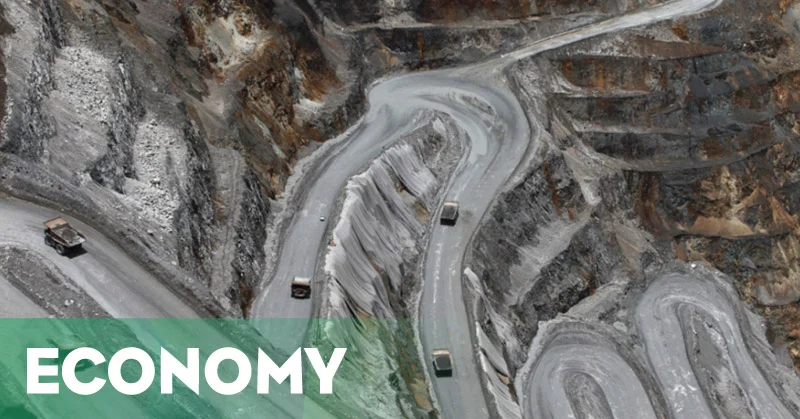
The confidence expressed by the Ministry of Finance is set against the backdrop of immense technical difficulty. The Grasberg mine is located in the remote Sudirman Range in the province of Papua, at an elevation of nearly 4,000 meters. By 2015, the mine was in a critical transition phase, moving from a massive open-pit operation—one of the largest in the world—to high-volume underground block-caving operations.
Managing block caving requires advanced geomechanical engineering and a sophisticated logistics network. Skeptics have often pointed to this transition as a reason why Freeport-McMoRan’s continued leadership is essential. However, the Ministry of Finance argues that the "human capital" currently running these operations is already largely Indonesian. Proponents of the BUMN takeover argue that by retaining the existing workforce and integrating them into a BUMN framework, the technical continuity of the mine would remain uncompromised.
A Chronology of Negotiations and the 2015 Context
The relationship between the Indonesian government and Freeport-McMoRan has been governed by a Contract of Work (CoW) first signed in 1967 under the New Order administration, and later renewed in 1991. The 1991 contract was intended to last for 30 years, with the possibility of two 10-year extensions. However, the passage of the 2009 Mining Law created a conflict, as the new law required all contracts to be converted into Special Mining Business Licenses (IUPK), which carry stricter requirements for divestment, domestic processing (downstreaming), and royalty payments.
In 2014, a Memorandum of Understanding (MoU) was signed to bridge the gap between the CoW and the new legal framework. This MoU included commitments from Freeport to build a domestic copper smelter and to increase its royalty payments from 1.5% to 3.75% for copper and from 1% to 3.75% for gold. The 2015 divestment offer of 10.64% was a direct result of these ongoing negotiations.
Sonny Loho’s intervention in November 2015 was timely, as it coincided with the deadline for the valuation of the shares. The government was under pressure to prove that it had the financial and operational "teeth" to follow through on its demands. By publicly asserting that BUMNs were ready, the Ministry of Finance signaled to Freeport-McMoRan that the government was not bluffing and was prepared for a future where the state played a dominant role in the mine’s management.
Economic Implications and Revenue Projections
The economic stakes of the Freeport divestment are staggering. PT Freeport Indonesia is one of Indonesia’s largest taxpayers. Between 1992 and 2015, the company contributed over $15 billion in taxes, royalties, and dividends to the Indonesian treasury. In 2015 alone, despite fluctuating commodity prices, the mine remained a vital source of foreign exchange reserves.
The Ministry of Finance views the divestment as a way to capture a larger share of the "economic rent" generated by the mine. By owning a larger portion of the shares through BUMNs, the government would not only receive taxes and royalties but also a significant portion of the dividends that previously flowed to Phoenix, Arizona. These funds are earmarked for infrastructure development, particularly in the underdeveloped regions of Papua and Eastern Indonesia.
Furthermore, the government’s insistence on BUMN involvement is tied to the broader "downstreaming" agenda. The 2009 Mining Law prohibits the export of raw ores, requiring minerals to be processed domestically. By having Antam and Inalum involved in Freeport’s ownership, the government can more effectively enforce the construction of smelters, ensuring that Indonesia moves up the value chain from a mere raw material exporter to an industrial producer.
Stakeholder Reactions and Public Sentiment
The reaction to Sonny Loho’s statements has been largely positive within domestic political circles, though met with caution by international investors. Many members of the House of Representatives (DPR) have long called for a "nationalization" of Freeport, and the Ministry of Finance’s confidence in BUMNs aligns with this nationalist sentiment.
However, industry analysts have raised questions about the "opportunity cost" of the acquisition. Buying a 10.64% stake in Freeport requires billions of dollars—capital that BUMNs might otherwise use for exploration in other sectors. There is also the matter of the "Freeport Lawsuit" threat; throughout 2015, there were whispers that the company might take the Indonesian government to international arbitration if the Contract of Work was not honored according to its original 1991 terms.
Despite these risks, the public sentiment in Indonesia has shifted toward a demand for greater "resource nationalism." The Grasberg mine is often viewed as a symbol of the nation’s colonial and post-colonial struggles. Loho’s comment that "Indonesians are too worried" resonated with a public eager to see the country stand on its own feet in the global industrial arena.
The Path Forward: Integration and Global Competitiveness
As the Ministry of Finance and the Ministry of BUMN work to finalize the funding structures for the share purchase, the focus is shifting toward the long-term integration of PTFI into the national mining holding company. The goal is to create a "Global Fortune 500" level mining entity that can compete with giants like Rio Tinto or BHP Billiton.
To achieve this, the government recognizes that while BUMNs are "capable," they must also adopt international best practices in corporate governance and environmental, social, and governance (ESG) standards. The management of the tailings (waste) from the Grasberg mine, which has been a point of environmental contention for decades, will become a direct responsibility of the Indonesian state once BUMNs take a controlling interest.
Sonny Loho’s assurance is the first step in a long-term strategy to prove that Indonesia is no longer just a "land of resources" for others to harvest, but a sophisticated operator capable of managing its own destiny. The coming months and years will test this resolve as the government moves from rhetoric to the reality of managing one of the most high-stakes industrial assets on the planet.
In conclusion, the Ministry of Finance’s firm stance on the capability of Antam and Inalum marks a definitive shift in the Freeport saga. By dismissing fears of technical or managerial inadequacy, the government is setting the stage for a new era of Indonesian mining—one defined by domestic ownership, downstream industrialization, and a bold assertion of national sovereignty over its most precious underground treasures. The transition is complex and fraught with financial and legal hurdles, but the message from Jakarta is clear: the time for doubt is over, and the era of BUMN leadership at Freeport has begun.