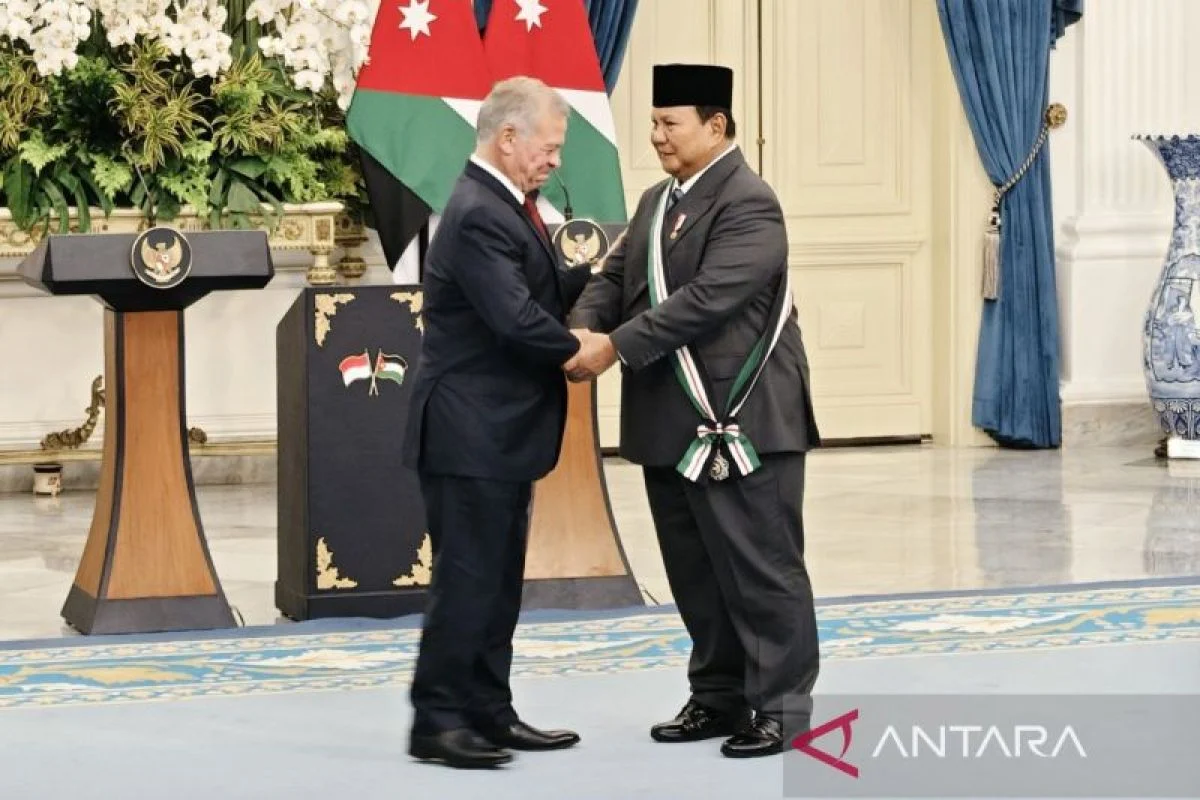
Jakarta, Indonesia – His Majesty King Abdullah II bin Al-Hussein of the Hashemite Kingdom of Jordan embarked on a pivotal state visit to Indonesia this Friday afternoon, marking a significant moment in the deepening diplomatic and personal bonds between the two nations. The monarch’s itinerary includes high-level engagements with Indonesian President Prabowo Subianto and representatives from Danantara Indonesia, culminating in the ceremonial signing of a series of bilateral Memoranda of Understanding (MoUs) aimed at bolstering cooperation across various sectors. This visit is a crucial component of King Abdullah II’s broader diplomatic tour across several key Asian nations, underscoring Jordan’s strategic focus on strengthening its partnerships in the dynamic Indo-Pacific region.
A Strategic Diplomatic Offensive in Asia
King Abdullah II’s current journey is more than a series of isolated bilateral meetings; it is a meticulously orchestrated diplomatic offensive designed to reinforce Jordan’s standing and foster new alliances across Asia. Preceding his arrival in Jakarta, the King engaged with leaders in Japan, Vietnam, Singapore, and Pakistan. Each stop on this extensive tour carries specific geopolitical and economic objectives, ranging from securing investment and trade opportunities to coordinating on regional security challenges and promoting interfaith dialogue. For Jordan, a nation at the crossroads of a volatile Middle East, diversifying its international partnerships and strengthening economic ties with rapidly growing Asian economies is a cornerstone of its foreign policy. The inclusion of Indonesia, the world’s largest Muslim-majority nation and a significant economic power in Southeast Asia, highlights Jakarta’s growing importance on the global stage and its potential as a strategic partner for Amman.
The Official Agenda in Jakarta: Bilateral Cooperation at the Forefront
Upon his arrival, King Abdullah II was accorded a full state welcome, reflecting the significance of the visit. The cornerstone of his Indonesian engagement is the meeting with President Prabowo Subianto. Discussions between the two heads of state are anticipated to cover a wide array of topics, including enhancing bilateral trade and investment, strengthening defense and security cooperation, and coordinating positions on critical regional and international issues such as the Israeli-Palestinian conflict, counter-terrorism efforts, and multilateralism. Both nations share a commitment to promoting peace, stability, and moderate Islam, providing a strong foundation for collaborative diplomatic initiatives.
A particularly anticipated engagement is the meeting with representatives from Danantara Indonesia. While the specific nature of this entity’s involvement was initially broad, earlier reports from the Indonesian Foreign Minister indicated discussions surrounding cooperation in the phosphate sector. Jordan is one of the world’s leading producers of phosphate rock, a vital raw material for agricultural fertilizers. Indonesia, with its vast agricultural sector and large population, has a substantial and growing demand for fertilizers to ensure food security. A robust partnership in this area could offer immense strategic benefits to both countries: Jordan gains a reliable market and potential investment in its mining sector, while Indonesia secures a stable and competitive supply of a critical agricultural input. The MoUs expected to be signed will likely formalize and expand these potential economic partnerships, potentially including joint ventures, technology transfer, and long-term supply agreements. Beyond phosphate, the leaders are expected to explore cooperation in other areas such as tourism, education, and renewable energy, aligning with both countries’ national development agendas.
A Friendship Forged in Fire: The Extraordinary Personal Bond
What distinguishes this state visit from many others is the extraordinary and long-standing personal friendship between King Abdullah II and President Prabowo Subianto. Their bond, spanning decades and overcoming significant personal and political transitions, adds a unique dimension of trust and understanding to the state-to-state relationship. This personal connection is not merely anecdotal; it has demonstrably influenced diplomatic interactions and fostered a climate of mutual respect that underpins the official engagements.
Their shared journey began in the crucible of elite military training. Both leaders are distinguished alumni of the prestigious United States Army Ranger School at Fort Benning, Georgia. This grueling combat leadership course, renowned for its physical and mental demands, instills a common ethos of leadership, resilience, and camaraderie. The shared experience of overcoming such formidable challenges creates an unbreakable bond among its graduates, and it was through this lens that their paths first intersected.
The two men first met formally on December 4, 1995, during the inauguration ceremony of Prabowo Subianto as the Commander General (Danjen) of Kopassus, Indonesia’s elite special forces command. At that time, King Abdullah II, then a Prince, had already established his reputation as a formidable military leader, having commanded the Jordanian Special Forces in 1994. Their parallel careers in leading their respective nations’ most elite military units further cemented their mutual respect and understanding of the unique responsibilities and challenges of special operations command. This shared background in special forces, emphasizing discipline, strategic thinking, and decisive action, continues to inform their leadership styles and approach to statecraft.
The depth of their friendship was profoundly tested and proven during one of the most challenging periods of Prabowo Subianto’s life. In 1998, following significant political upheaval in Indonesia, Prabowo left the country and sought refuge in Jordan. His arrival in the Hashemite Kingdom was not merely tolerated but met with utmost honor and respect, a testament to the personal regard King Abdullah II held for him. During this period, it is widely reported that Prabowo was even offered Jordanian citizenship, a remarkable gesture of solidarity and friendship. While he ultimately chose to retain his Indonesian citizenship, this offer underscored the profound trust and loyalty that existed between the two men. Jordan provided Prabowo with a sanctuary where he could reflect, strategize, and maintain his dignity, away from the political maelstrom of his homeland.
Their paths converged again in 2014 when King Abdullah II made a state visit to Indonesia, a reunion that reaffirmed their enduring bond. Now, a decade later, their friendship has reached an unprecedented apex as both men occupy the highest offices of their respective nations. King Abdullah II ascended to the Jordanian throne in 1999, continuing his family’s long legacy of leadership. Prabowo Subianto, after a storied career and multiple bids for the presidency, was inaugurated as the President of Indonesia on October 20, 2024. The transformation of their relationship from fellow special forces commanders to heads of state is a remarkable narrative of personal resilience and shared destiny.
A recent anecdote from President Prabowo’s visit to Jordan on April 14, 2025, further illustrates the extraordinary nature of their bond. During his official trip, King Abdullah II personally drove President Prabowo in his own car, taking the wheel to transport his friend to his hotel in downtown Amman. This act, highly unconventional for a reigning monarch, speaks volumes about the genuine warmth, informality, and profound personal connection that transcends the formalities of state protocol. It symbolizes a friendship where personal trust and respect are as significant as diplomatic protocol, paving the way for more candid and productive state-to-state interactions.
Historical and Strategic Context of Indonesia-Jordan Relations
Diplomatic relations between Indonesia and Jordan date back to the 1950s, founded on shared Islamic heritage, a commitment to multilateralism, and mutual respect for national sovereignty. Over the decades, cooperation has steadily grown, albeit often below its full potential. Both nations are members of the Organization of Islamic Cooperation (OIC) and the Non-Aligned Movement, platforms where they often find common ground on issues affecting the Muslim world and developing nations.
Economically, bilateral trade has historically been modest but holds significant potential for growth. Jordan’s key exports to Indonesia typically include phosphates, potash, and other mineral products, while Indonesia exports palm oil, textiles, electronics, and agricultural products to Jordan. The current visit aims to significantly boost these trade figures by identifying new avenues for cooperation and removing trade barriers. Investment flows also stand to benefit, with opportunities for Indonesian companies in Jordan’s growing energy and tourism sectors, and for Jordanian entities in Indonesia’s vast manufacturing and infrastructure development landscape.
In terms of defense and security, the shared military background of their leaders naturally opens doors for enhanced cooperation. This could include joint training exercises, intelligence sharing, and collaboration in counter-terrorism strategies, an area where both nations have considerable experience. Jordan, with its strategic location and active role in regional security, offers Indonesia valuable insights into Middle Eastern dynamics, while Indonesia’s experience in maritime security and combating extremism within a diverse archipelago could benefit Jordan.
Geopolitically, both Indonesia and Jordan advocate for a just resolution to the Israeli-Palestinian conflict, a cornerstone of Jordan’s foreign policy and a deeply felt issue in Indonesia. Their leaders’ discussions are expected to reaffirm this shared stance and explore ways to contribute to peace and stability in the Middle East. Indonesia, as a non-permanent member of the UN Security Council (in previous terms) and a vocal proponent of international law, can play a significant diplomatic role, complementing Jordan’s direct engagement as a frontline state.
Implications and Future Outlook
King Abdullah II’s state visit to Indonesia carries profound implications for both nations and the broader regional and international landscape.
Firstly, it significantly strengthens bilateral bonds, elevating the relationship beyond conventional diplomatic exchanges to one underpinned by deep personal trust and shared strategic interests. The signing of the MoUs will likely translate into concrete projects and increased economic activity, benefiting both economies.
Secondly, the visit underscores Jordan’s strategic pivot towards Asia, acknowledging the continent’s growing economic and geopolitical influence. By fostering stronger ties with Indonesia, Jordan diversifies its international partnerships, reducing reliance on traditional Western allies and enhancing its diplomatic maneuverability. For Indonesia, closer ties with Jordan provide a crucial link to the Middle East, a region of immense strategic and economic importance, and reinforce its image as a global player.
Thirdly, the defense and security cooperation, particularly given the leaders’ backgrounds, could lead to more robust collaboration in intelligence sharing, counter-terrorism, and military training. This is particularly relevant in an era of complex global security challenges.
Finally, the symbolic power of the personal friendship between King Abdullah II and President Prabowo cannot be overstated. In an often-transactional world of international relations, such a bond can facilitate smoother negotiations, foster greater mutual understanding, and pave the way for more ambitious joint initiatives. It sends a powerful message of unity and shared purpose, not just between the leaders, but between their respective nations.
As King Abdullah II concludes his successful Asia tour, his visit to Indonesia stands out as a testament to the enduring power of personal diplomacy combined with strategic foresight. It sets the stage for a new chapter in Indonesia-Jordan relations, promising enhanced cooperation, mutual prosperity, and a shared commitment to regional and global peace. The seeds of friendship sown decades ago in military academies have now blossomed into a formidable alliance at the highest echelons of state, poised to yield significant benefits for both the Hashemite Kingdom and the Republic of Indonesia.