
The landscape of contemporary cinema has increasingly pivoted toward the exploration of internal landscapes, and the 2026 release of Voicemails for Isabelle stands as a poignant testament to this shift. Starring Zoey Deutch as Jill and Nick Robinson as Wes, the film navigates the harrowing and often quiet aftermath of personal tragedy. Rather than relying on the melodramatic tropes of sudden catharsis, the narrative focuses on the incremental, often painful process of living alongside a void that cannot be filled. Directed with a lens that prioritizes emotional texture over frantic pacing, the film delves into the life of Jill as she grapples with the death of her younger sister, Isabelle, portrayed in flashbacks and through audio recordings by Ciara Bravo.
The central premise of Voicemails for Isabelle rests on a universal truth: loss fundamentally alters the architecture of the human soul. It is not merely a disruption of routine but a recalibration of one’s identity. The film suggests that in the wake of such trauma, the human instinct is often to "harden"—to build emotional barricades that prevent further vulnerability. However, the screenplay challenges this defensive posture, proposing that true survival and eventual flourishing require a radical commitment to remaining "soft" even when the world feels increasingly harsh.
The Chronology of a Lingering Grief
The narrative structure of Voicemails for Isabelle is non-linear, mirroring the way memory and grief function in the human mind. The film begins several months after Isabelle’s passing, finding Jill in a state of functional numbness. She maintains a job and social obligations, yet she is clearly a spectator in her own life. The "chronology" of the film is dictated less by calendar dates and more by the sequence of voicemails Jill listens to—digital artifacts that serve as both an anchor to the past and a bridge to a potential future.
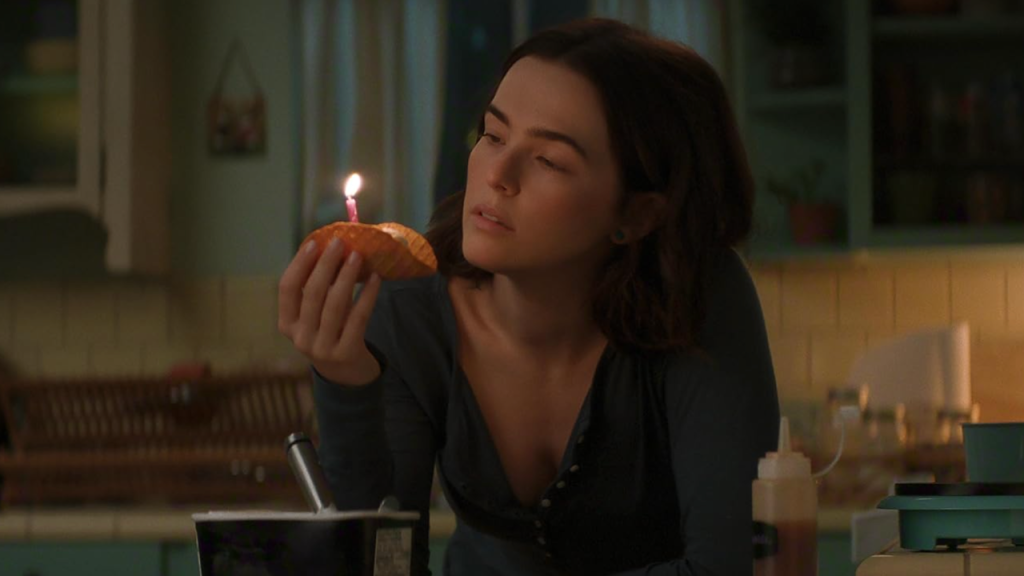
As the story unfolds, the audience is taken through the immediate aftermath of the tragedy, where Jill’s primary coping mechanism is the preservation of Isabelle’s digital footprint. The voicemails, ranging from mundane requests to deeply personal admissions, become a ritualistic part of Jill’s day. This adherence to the past initially prevents her from forming new connections, creating a stagnant environment where grief is the only inhabitant.
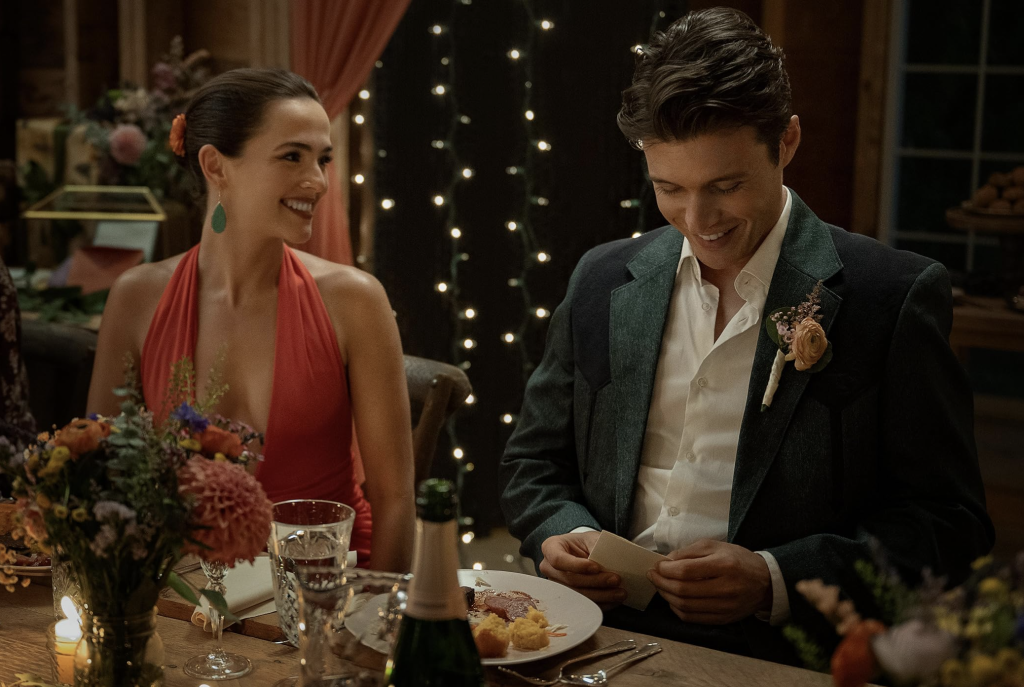
The turning point occurs with the introduction of Wes, played by Nick Robinson. Wes does not enter the story as a "savior" in the traditional cinematic sense. Instead, he represents the patient reality of the outside world. The timeline of their relationship is marked by Jill’s frequent retreats and Wes’s consistent, non-intrusive presence. This slow-burn development emphasizes that recovery is not a sprint but a series of small, often regressive steps. By the film’s final act, the chronology shifts from looking backward to a tentative forward motion, as Jill begins to integrate Isabelle’s memory into a new version of herself rather than using it as a reason to stop living.
Character Dynamics and Performance Analysis
Zoey Deutch delivers what many critics are calling a career-defining performance. Her portrayal of Jill is one of restraint; she conveys the weight of loss through subtle shifts in expression and the heavy silence that follows Isabelle’s recorded voice. Deutch’s Jill is not a victim of her circumstances but a person engaged in a quiet, daily struggle for meaning. The film’s success relies heavily on her ability to make the audience feel the exhaustion that comes with long-term mourning.
Nick Robinson provides the necessary foil to Jill’s internal isolation. His character, Wes, is designed to represent the "softness" the film advocates for. In a world that often demands people "get over" their grief, Wes offers a space where Jill is allowed to be broken. Robinson’s performance is grounded in empathy, avoiding the pitfalls of over-sentimentality. The chemistry between the two leads is built on a shared understanding of boundaries, reflecting a modern approach to relationships where emotional intelligence is paramount.

Ciara Bravo, though appearing primarily through flashbacks and the eponymous voicemails, serves as the emotional heartbeat of the film. Her performance captures the vibrancy of a life cut short, making the void she leaves behind feel tangible to the audience. The choice to use her voice as a recurring motif allows the character of Isabelle to remain an active participant in the story, rather than just a tragic memory.
Supporting Data: The Digital Legacy Phenomenon
Voicemails for Isabelle arrives at a time when the concept of "digital legacies" has become a significant area of psychological study. According to 2025 data from the Global Institute of Digital Wellness, approximately 72% of individuals who have lost a close family member in the last five years report that saved audio messages and social media archives play a "crucial" role in their grieving process. However, the same study notes that for 30% of those individuals, these digital remnants can lead to "prolonged grief disorder" if not managed with therapeutic support.
The film mirrors these statistics by showing Jill’s obsession with Isabelle’s phone. It highlights a modern dilemma: in the digital age, the dead never truly go silent. We carry their voices in our pockets. The film’s nuanced take on this—showing both the comfort and the stagnation caused by these recordings—resonates with a generation that navigates loss through a screen. Industry analysts suggest that the film’s focus on this specific, modern aspect of duka (grief) is a major factor in its high resonance with audiences aged 18 to 40.
Thematic Analysis: Choosing Softness in a Hard World
One of the most profound messages in Voicemails for Isabelle is the distinction between "moving on" and "moving forward." The film posits that the former is a myth; one does not simply move on from the loss of a sibling. Instead, the goal is to move forward while carrying the loss. This is where the theme of "softness" becomes central.
The film suggests that "hardening" is a form of spiritual death. When Jill tries to be "strong" by shutting people out, she becomes brittle. It is only when she allows herself to be "soft"—to feel the pain, to accept help from Wes, and to admit she is not okay—that she begins to heal. This thematic core aligns with recent shifts in mental health discourse that emphasize vulnerability as a strength rather than a weakness.
Wes’s role in this is pivotal. He demonstrates that being supportive often means doing nothing at all except being present. In a key scene, Wes sits with Jill in silence while she listens to a particularly difficult voicemail. He does not offer platitudes or advice; he simply provides the "room to feel." This reflects a broader societal move toward "grief literacy," where the focus is on supporting the bereaved without the pressure of "fixing" them.
Production Context and Industry Impact
Produced by a collaboration of major independent studios known for character-driven narratives, Voicemails for Isabelle had a modest budget of $25 million but has seen a significant return at the box office, particularly in international markets. The film’s success signals a continued interest in "Slow Cinema"—films that prioritize atmosphere and internal development over high-octane action.
The production team reportedly consulted with grief counselors and psychologists during the scriptwriting phase to ensure the portrayal of Jill’s journey was authentic. This attention to detail has been praised by mental health advocates, who have noted that the film avoids the "five stages of grief" cliché, instead opting for a more realistic, cyclical representation of emotional recovery.

The film also marks a shift in the career trajectories of its stars. For Zoey Deutch and Nick Robinson, who both rose to fame in more traditional romantic comedies and teen dramas, Voicemails for Isabelle represents a maturation of their craft. It demonstrates their ability to carry a heavy, complex narrative that demands a high degree of emotional transparency.
Broader Implications and Societal Reflection
Beyond the confines of the theater, Voicemails for Isabelle has sparked a wider conversation about how we treat the bereaved in a fast-paced, productivity-oriented society. The film’s insistence on "staying soft" serves as a critique of a culture that often views sadness as an inconvenience or a problem to be solved quickly.
By highlighting the importance of memory and the validity of long-term duka, the film encourages a more compassionate approach to communal healing. It suggests that a society is measured not by how quickly its members can return to work after a tragedy, but by how much space it provides for them to remain human throughout their suffering.
The film concludes not with a grand resolution, but with a quiet moment of acceptance. Jill does not delete the voicemails, but she stops living inside them. She chooses to step out into the world, carrying Isabelle’s voice with her, but no longer letting it be the only thing she hears. It is a powerful reminder that while loss changes us irrevocably, it does not have to be the end of our story. We can be broken and still be beautiful; we can be grieving and still be capable of love.

In the final analysis, Voicemails for Isabelle is more than just a film about a girl and her dead sister. It is a cinematic meditation on the endurance of the human spirit. It teaches us that to live is to lose, but to truly live is to keep our hearts open despite that loss. In a world that often feels like it is hardening by the day, Jill’s journey back to softness is a necessary and deeply moving narrative for the modern age.