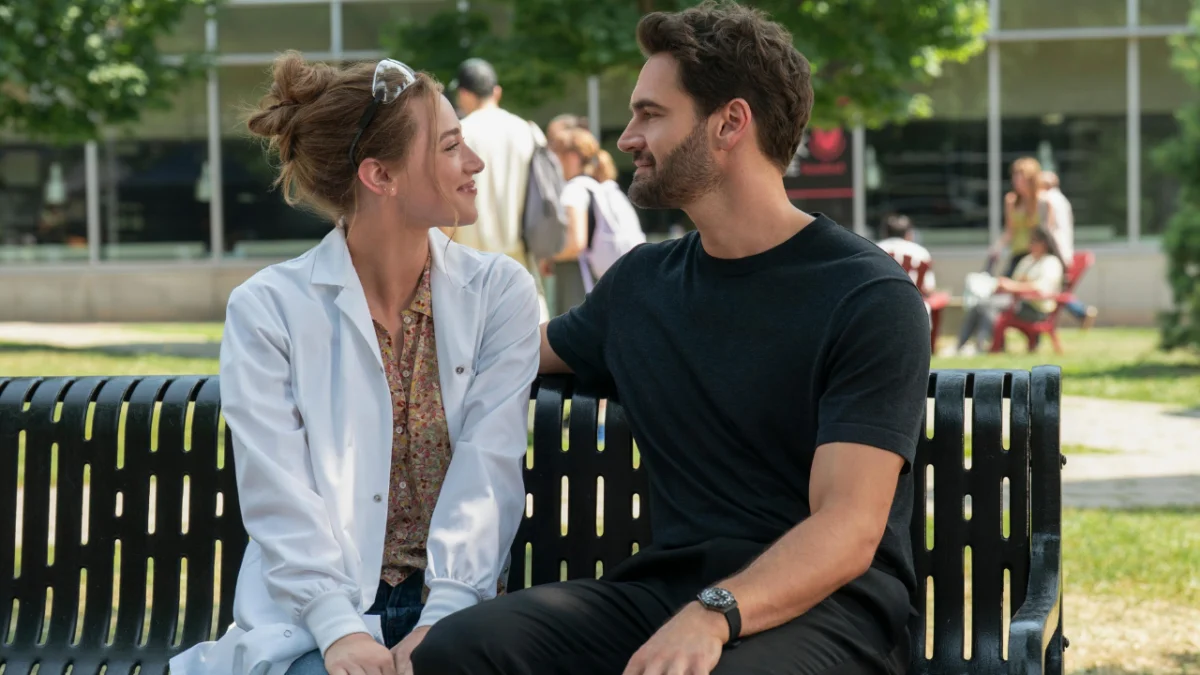
The streaming landscape has long been dominated by high-concept sci-fi thrillers and sprawling fantasy epics, yet the romantic comedy genre remains a reliable anchor for global audiences seeking comfort and familiarity. Prime Video’s latest cinematic adaptation, The Love Hypothesis, officially premiered in September 2026, bringing Ali Hazelwood’s wildly popular 2021 STEM-romance novel to life. Starring Lili Reinhart as doctoral candidate Olive Smith and Tom Bateman as the notoriously intimidating Professor Adam Carlsen, the film offers a textbook masterclass in the "fake dating" trope. While cinephiles and literary critics alike have noted that the plot beats are predictable from the opening scene, the film’s arrival has triggered a broader industry conversation about why audiences continue to crave structured, emotionally transparent storytelling in an era defined by modern relationship ambiguity.
Background Context of the Adaptation and Production
Ali Hazelwood’s original novel, published in the fall of 2021, spent months atop the New York Times bestseller list and became a defining touchstone for "BookTok"—the vibrant, reading-centric community on TikTok that has fundamentally reshaped contemporary publishing and media adaptation rights. The journey from page to screen began shortly after the novel’s publication, when production houses recognized the built-in audience of millions of readers who had already visualized Olive and Adam’s academic romance.
The adaptation process required careful navigation to translate a heavily internal, academic-setting narrative into a cinematic format suited for a major streaming release. Stanford University serves as the backdrop for the narrative engine: Olive Smith, a third-year biology Ph.D. candidate, enters into a contractual fake-dating arrangement with Dr. Adam Carlsen, a brilliant but notoriously acerbic young professor. The charade is initially engineered by Olive to convince her best friend, Anh—played by Rachel Marsh—that Olive has moved on from her romantic prospects and harbors no lingering attachments to shared social circles. However, as campus gossip mills churn and academic conferences demand public appearances, the boundary between performance and genuine affection begins to erode.
Chronology of the Narrative Development

The timeline of The Love Hypothesis follows a well-trodden yet effective three-act structure that anchors the genre’s enduring appeal. Act one establishes the high-stakes academic environment of Stanford’s biology department, introducing Olive’s imposter syndrome, her dedication to pancreatic cancer research, and the accidental collision with Dr. Carlsen that sparks the fake-dating agreement.
Act two accelerates the narrative tension through mandatory public displays of affection, late-night laboratory encounters, and an impromptu out-of-town academic conference where professional proximity forces personal vulnerability. During this phase, the film leans heavily into the contrast between Adam’s public persona—widely dubbed "Doctor Evil" by terrified undergraduates—and his protective, intensely attentive private behavior toward Olive.
The climax arrives in act three with the inevitable revelation of the truth, standard misunderstandings regarding motives, and a brief period of emotional withdrawal. Yet, the resolution arrives swiftly through direct communication rather than prolonged third-act separation, diverging slightly from traditional melodramatic tropes to favor clarity over artificial delay.
Cast Dynamics and Character Analysis
Central to the film’s reception is the on-screen chemistry between Lili Reinhart and Tom Bateman. Reinhart brings a grounded, relatable vulnerability to Olive, capturing the specific brand of exhaustion and determination familiar to graduate students across the globe. Her portrayal avoids turning Olive into a passive romantic object, maintaining the character’s intellectual agency and personal agency throughout the narrative.
Tom Bateman’s portrayal of Dr. Adam Carlsen synthesizes classic romantic archetypes. Physically embodying a hybrid of traditional gothic romance aesthetics and sharp, contemporary academic tailoring, Bateman anchors the character’s brooding exterior with precise micro-expressions that signal his unspoken devotion long before any dialogue confirms it. Industry analysts note that casting choices in contemporary book-to-screen adaptations carry immense weight, as modern audiences hold distinct preconceived notions shaped by years of fan art and community discussions online.

Analysis of Implications and Industry Impact
The release of The Love Hypothesis on Prime Video underscores a broader economic and cultural shift within Hollywood: the direct pipeline from viral literature to streaming content. Rom-coms are increasingly valued not for their narrative subversion, but for their emotional reliability. In an entertainment ecosystem saturated with morally ambiguous antiheroes and unresolved narrative arcs, the traditional romantic comedy offers a controlled psychological environment where emotional conflict is systematically addressed and resolved.
Sociological and media studies frequently analyze the enduring popularity of the genre through the lens of emotional labor and communication styles. Unlike real-world relationships—which are frequently plagued by ghosting, mixed signals, and prolonged ambiguity—the cinematic rom-com operates on a strict moral contract of ultimate clarity. Adam Carlsen’s willingness to explicitly state his feelings, dismantle assumptions, and correct misunderstandings provides a cathartic viewing experience. It presents an idealized standard of emotional transparency that real-world dating rarely guarantees.
Audience Reception and Market Performance
Initial viewership metrics from Prime Video indicate strong retention rates, particularly among demographic groups aged 18 to 34, aligning closely with the primary consumer base of the original novel. Social media sentiment tracking following the premiere revealed overwhelmingly positive engagement regarding the film’s pacing, aesthetic choices, and the specific fidelity to beloved scenes from Hazelwood’s source material.
While critics have pointed out that the film introduces little innovation to the mechanics of the romantic comedy genre, box-office and streaming analytics continually prove that innovation is rarely the primary metric of success for the genre. Instead, the triumph of The Love Hypothesis lies in its execution of established emotional beats, offering audiences a comforting cinematic space defined by clear stakes, undeniable chemistry, and the ultimate satisfaction of emotional resolution. As studios continue to mine the vast libraries of contemporary romance literature, projects like The Love Hypothesis demonstrate that the demand for earnest, predictable, and emotionally gratifying storytelling remains robust and economically viable.