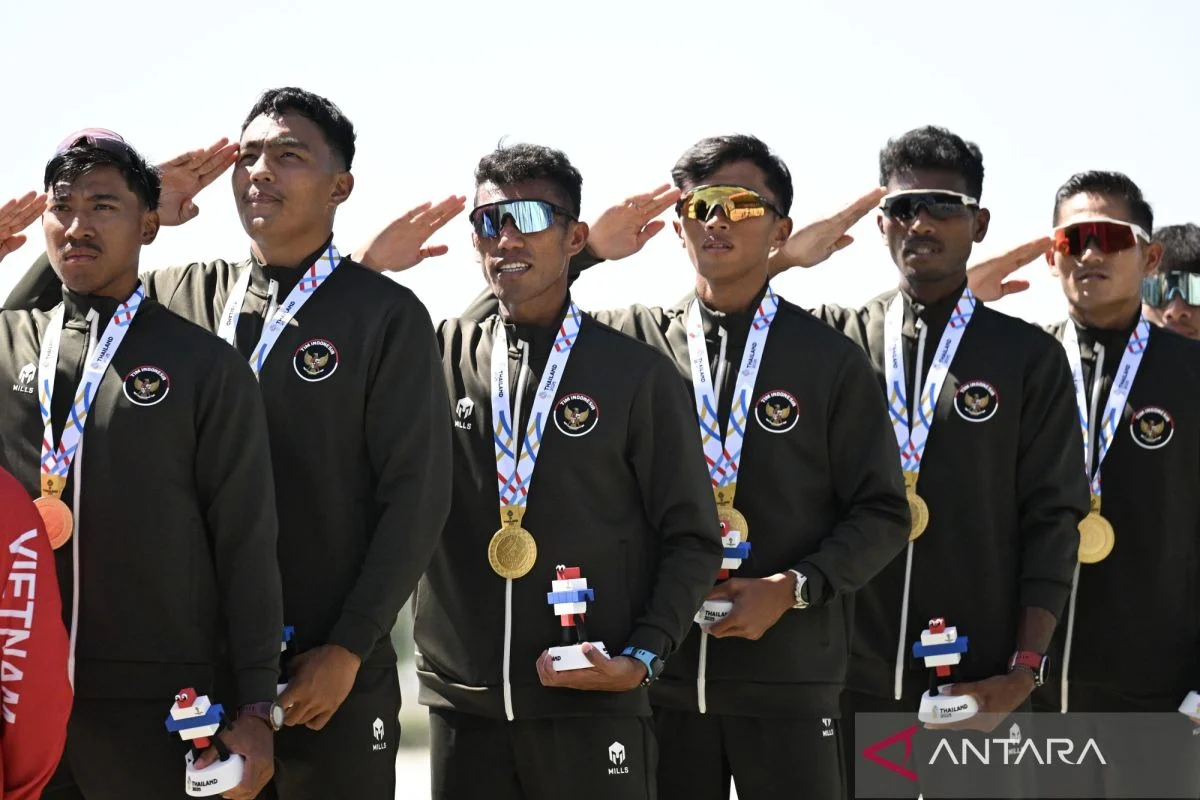
The highly anticipated 33rd Southeast Asian Games (SEA Games) are set to officially commence on December 9th and will run through December 20th, with the vibrant nation of Thailand proudly assuming the role of host. This quadrennial multi-sport event, a cornerstone of regional sporting camaraderie, brings together athletes from across ASEAN nations, fostering a spirit of competition and unity. The SEA Games, held every two years in odd-numbered years, stands as the premier sporting spectacle in Southeast Asia, operating under the auspices of the Southeast Asian Games Federation (SEAGF) and receiving oversight from both the International Olympic Committee (IOC) and the Olympic Council of Asia (OCA).
Genesis of a Regional Sporting Tradition: From SEAP Games to SEA Games
The origins of the SEA Games can be traced back to the vision of a unified sporting future for Southeast Asia. Initially conceived as the Southeast Asian Peninsular Games (SEAP Games), the foundational idea was championed by Laung Sukhumnaipradit, the then-Vice President of the Thailand Olympic Committee. In 1957, Sukhumnaipradit articulated a powerful vision: the establishment of a regional sporting platform to forge stronger bonds of brotherhood among Southeast Asian nations. Beyond fostering goodwill, he also aspired to create an event that mirrored the organizational caliber and competitive standards of the Asian Games and the Olympic Games, thereby elevating the overall development of sports within the ASEAN region.
This forward-thinking proposal was subsequently shared with Dave Kitcher, the esteemed coach of the Thailand Athletics Association at the time. Recognizing the potential of Sukhumnaipradit’s idea, Kitcher took the initiative to further discuss and refine it. Between February 8th and 4th, 1958 (note: the original text has a potential date inversion, this is interpreted as early February 1958), Kitcher engaged in crucial discussions with representatives from Cambodia and Vietnam. Both nations readily embraced the concept, offering their enthusiastic support for the proposed regional games.
The momentum built steadily, culminating in a pivotal meeting of the Thailand Olympic Committee on February 22nd, 1958. This significant gathering was attended by representatives from Thailand, Cambodia, and Vietnam, alongside delegates from Myanmar, Laos, and Malaysia. During this foundational assembly, a unanimous agreement was reached: to officially launch the Southeast Asian Peninsular Games (SEAP Games) in Bangkok, Thailand, in December 1958. Furthermore, the participating nations committed to organizing the event biennially and established the SEAP Games Federation Committee to oversee its governance. This historic meeting cemented Thailand, Vietnam, Malaysia, Cambodia, Myanmar, and Laos as the founding nations of the SEAP Games.
The Inaugural Games and Gradual Expansion
The maiden edition of the SEAP Games took place in Bangkok, Thailand, from December 12th to 17th, 1959. This landmark event marked the beginning of a new era for regional sports. While the initial plan included Cambodia, unforeseen circumstances led to their withdrawal, with Singapore stepping in to fill the void. This participation proved instrumental, as Singapore officially became a member of the SEAP Games organization in the same year.
The evolution of the SEAP Games continued over the following decades. At the 8th edition of the SEAP Games in 1975, a significant decision was made by the Federation Committee to welcome three new member nations: Indonesia, Brunei Darussalam, and the Philippines. These nations officially joined the federation in 1977. Coinciding with this expansion, the organization underwent a crucial rebranding. The SEAP Games Federation officially changed its name to the Southeast Asian Games Federation (SEAGF), and consequently, the event itself was renamed the SEA Games. This rebranding signified a broader regional identity and a more inclusive vision for the competition. The most recent addition to the SEA Games family occurred in 2003 when Timor-Leste became the eleventh nation to join, solidifying the current roster of participating countries.
The Unique Appeal of the SEA Games: Cultural Integration and Sporting Diversity
A distinctive characteristic that sets the SEA Games apart from other major international sporting events, such as the Olympics, is the latitude granted to host nations in selecting their sporting programs. This policy allows host countries to incorporate specific local sports, thereby providing a unique platform to showcase their cultural heritage and national identity to a regional audience. This flexibility has led to the inclusion of a fascinating array of disciplines throughout the Games’ history.
For instance, at the 2003 SEA Games hosted by Vietnam, traditional sports like cyclo racing and pencak silat were featured, offering a glimpse into Vietnamese culture. In 2019, the Philippines introduced obstacle course racing, a dynamic and challenging discipline. More recently, at the 2023 SEA Games, Cambodia proudly presented its indigenous martial art, bokator, to the international stage. These inclusions not only add to the spectacle of the Games but also serve as a vital mechanism for cultural exchange and preservation.
The upcoming 33rd SEA Games in Thailand promises to be no exception in terms of sporting diversity. A comprehensive program featuring 50 different sports will be contested. To manage this extensive schedule and accommodate the various disciplines, Thailand has strategically chosen three distinct host locations: the bustling capital city of Bangkok, the coastal province of Chonburi, and the southern province of Songkhla. This multi-venue approach ensures that the Games can be efficiently organized and accessible across different regions of the host nation.
Economic and Social Ramifications
The SEA Games represent more than just a sporting competition; they serve as a significant catalyst for economic activity and social engagement within the host nation. The influx of athletes, officials, media personnel, and spectators generates substantial revenue through tourism, hospitality, and local commerce. Infrastructure development, often undertaken in preparation for the Games, can leave a lasting positive legacy, enhancing transportation networks, sporting facilities, and urban amenities.
Furthermore, the Games play a crucial role in inspiring a new generation of athletes and promoting healthy lifestyles among the general populace. The visibility of national heroes achieving success on a regional stage can foster a sense of national pride and encourage greater participation in sports at all levels. The increased focus on sports can also lead to enhanced public health outcomes and a more active citizenry.
For Thailand, hosting the SEA Games for the sixth time presents an opportunity to reinforce its position as a key player in regional tourism and sports diplomacy. The event is expected to attract a significant number of international visitors, boosting the country’s economy and showcasing its rich cultural tapestry and hospitality to a global audience. The logistical and organizational challenges of hosting such a large-scale event will undoubtedly test the nation’s capabilities, but the potential rewards, both tangible and intangible, are considerable.
Preparations and Anticipation
As the December 9th opening ceremony draws nearer, the excitement and anticipation across Southeast Asia are palpable. National Olympic committees are finalizing their athlete selections, and training regimens are reaching their peak. The athletes, having dedicated years to honing their skills, are poised to deliver performances that will captivate audiences and etch their names into the annals of regional sporting history.
Discussions surrounding athlete incentives are also a significant aspect of the lead-up to major sporting events. For instance, reports indicate that in previous SEA Games, bonus incentives for gold medalists have served as a potent motivator for Indonesian athletes. Similarly, the calculation and disbursement of bonuses for silver and bronze medalists are crucial components of athlete support systems, ensuring recognition for their efforts and dedication. While specific details for the 33rd SEA Games are subject to the organizing committee’s announcements, the importance of such incentives in driving athletic performance is well-established.
The SEA Games, with its blend of fierce competition, cultural exchange, and regional unity, continues to be a beloved and eagerly awaited event. As Thailand prepares to welcome the athletes of Southeast Asia, the stage is set for another memorable chapter in the enduring legacy of this vital sporting festival. The Games serve as a powerful reminder of the unifying power of sport and the shared aspirations of nations within this dynamic region.