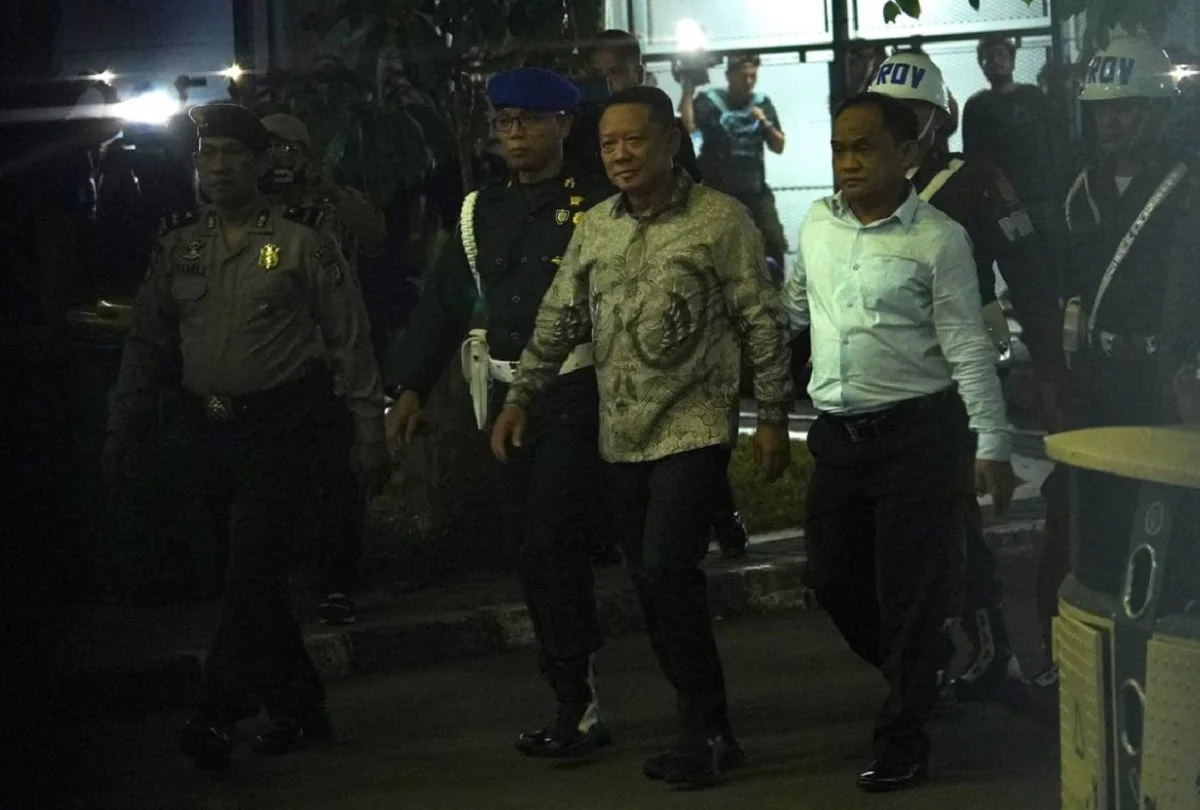
JAKARTA – In a significant development reverberating through Indonesia’s legal and political landscape, the Attorney General’s Office (Kejagung) officially detained former Attorney General for Special Crimes (Jampidsus), Febrie Adriansyah, on Friday, July 24, 2026. Following an intense examination at the Kejagung headquarters, Adriansyah was subsequently transferred to the detention center of the Corruption Eradication Commission (KPK) in Jakarta. This high-profile detention has drawn widespread commendation from various sectors, most notably from former KPK investigator Praswad Nugraha, who lauded the move as a strong signal of Kejagung’s commitment to independent and serious law enforcement.
The detention of a former high-ranking official like Febrie Adriansyah, who once spearheaded the nation’s fight against corruption from within the very institution that now holds him accountable, underscores a pivotal moment in Indonesia’s ongoing battle against graft. Adriansyah’s tenure as Jampidsus saw him oversee numerous sensitive and high-stakes investigations into cases of state financial losses and complex economic crimes. His detention, therefore, sends a powerful message about the principle of equality before the law, irrespective of past position or influence.
Background of the Case and Febrie Adriansyah’s Role
Febrie Adriansyah served as the Attorney General for Special Crimes, a critical position within the Attorney General’s Office responsible for prosecuting complex criminal cases, particularly those involving corruption, state financial losses, and other extraordinary crimes. The Jampidsus office is often at the forefront of major anti-corruption campaigns, investigating and prosecuting cases that frequently involve political figures, state-owned enterprises, and powerful business interests. During his time, Adriansyah was known for handling several prominent cases that captured national attention, often navigating intricate legal and political terrains. His role demanded significant authority and discretion, making his current detention a testament to the evolving dynamics of Indonesia’s anti-corruption efforts.
While the specific charges leading to Adriansyah’s detention were not immediately detailed in public statements, sources close to the investigation suggest it is linked to alleged irregularities and potential abuse of power connected to a large-scale infrastructure project that was under investigation during his leadership. The alleged infractions reportedly involve complex financial transactions and decisions made during critical phases of the project, raising questions about transparency and adherence to procurement regulations. The investigation, which reportedly began several months prior, intensified after new evidence emerged, prompting the Attorney General’s Office to move forward with the detention.
Chronology of Events Leading to Detention
The path to Febrie Adriansyah’s detention on July 24, 2026, was a culmination of a meticulous investigation. The process reportedly commenced with preliminary inquiries several months ago, following anonymous tips and internal audits that flagged potential anomalies in the handling of a multi-billion-dollar national infrastructure project.
- Early 2026: Initial reports and internal investigations within Kejagung began to scrutinize decisions made during the planning and execution phases of a major infrastructure project. Whispers of potential conflicts of interest and procurement irregularities started to surface.
- May 2026: Formal investigative proceedings were initiated by the current Jampidsus team, focusing on specific policies and directives issued during Adriansyah’s tenure. Several former subordinates and private sector individuals involved in the project were reportedly summoned for questioning.
- June 2026: The investigation gained momentum with the discovery of new documentary evidence, including financial records and internal memoranda, which allegedly pointed towards Adriansyah’s direct or indirect involvement in the irregularities.
- July 23, 2026: Febrie Adriansyah received a formal summons from the Attorney General’s Office to appear for questioning as a witness, and subsequently, as a suspect, regarding the ongoing investigation.
- July 24, 2026 (Morning): Adriansyah arrived at the Kejagung headquarters accompanied by his legal counsel, undergoing a lengthy and intensive examination session that lasted for several hours.
- July 24, 2026 (Evening): Following the interrogation, the investigative team, citing concerns about potential flight risk and the possibility of evidence tampering, made the decision to formally detain Febrie Adriansyah.
- July 24, 2026 (Late Evening): Adriansyah was then transferred to the KPK detention center, a move that quickly garnered significant attention and commentary.
- July 25, 2026: News of his detention broke widely, with reactions from legal experts and anti-corruption activists flooding the media.
Expert Reactions and Public Perception
The detention has been widely interpreted as a clear indication of Kejagung’s resolve to uphold the law, even against its own former high-ranking officials. Former KPK investigator Praswad Nugraha was among the first to voice strong support for the action. "This proves that the Attorney General’s Office is demonstrating seriousness to the public, showing that this case is being handled diligently and as independently as possible," Nugraha stated in his commentary on Saturday, July 25, 2026.
Nugraha further emphasized the strategic importance of the detention. "This is an appropriate initial step because Febrie once held a strategic position as the Attorney General for Special Crimes, so without detention, legal certainty would be neglected, and it would potentially provide loopholes for ‘dark room’ efforts to obstruct the investigation," he added. His statement highlights the critical need to prevent any undue influence or interference in the investigative process, a common concern in high-profile cases involving powerful individuals.

The decision to detain Adriansyah at the KPK’s Red and White Branch Detention Center, rather than a facility directly under Kejagung’s purview, has also been hailed as a symbolic gesture of independence. Praswad Nugraha underscored this point, stating, "The KPK detention center is a symbol of a strong fortress of independence because it has a very strict supervision system with a zero-tolerance principle, thus giving no room for special treatment for detainees." This choice aims to reassure the public that Adriansyah will not receive preferential treatment and that the investigative process will remain impartial, free from internal pressures or perceived conflicts of interest. The KPK’s facilities are renowned for their stringent security protocols and transparent monitoring, which are crucial for maintaining public trust in the integrity of the detention process.
Legal scholars and civil society organizations have echoed Nugraha’s sentiments. Dr. Indah Permata, a prominent legal expert specializing in criminal law from the University of Indonesia, noted, "The move by Kejagung demonstrates a growing maturity within our law enforcement institutions. It signals that no one is above the law, and that accountability extends even to those who have previously been entrusted with immense power and responsibility." Anti-corruption watchdog groups, such as Transparency Indonesia, have issued statements urging Kejagung to maintain the momentum and ensure the investigation is thorough, transparent, and leads to a fair trial. They also called for continuous oversight from the public and civil society to prevent any potential setbacks or attempts to undermine the process.
Institutional Integrity and Inter-Agency Dynamics
The detention of Febrie Adriansyah by Kejagung, followed by his transfer to a KPK facility, is a complex interplay of institutional integrity and inter-agency cooperation. Historically, the relationship between Kejagung and KPK has sometimes been characterized by perceived rivalry or competition in the anti-corruption sphere. However, this particular action suggests a potential shift towards greater collaboration and a unified front against corruption, or at least a strategic move to leverage each other’s strengths to bolster public confidence.
For the Attorney General’s Office, initiating and carrying out the detention of a former Jampidsus is an unprecedented move that significantly boosts its credibility. It demonstrates a willingness to self-correct and to pursue justice irrespective of internal hierarchies, reinforcing the institution’s commitment to eradicating corruption from all levels, including its own ranks. This action could serve as a powerful internal deterrent, encouraging greater ethical conduct among current and future officials.
The involvement of the KPK detention center, while technically a matter of logistical arrangement, carries substantial symbolic weight. It aligns with the public perception of the KPK as the vanguard of anti-corruption efforts, often seen as less susceptible to political influence compared to other law enforcement bodies. By utilizing KPK’s facilities, Kejagung effectively borrows from KPK’s reputation for strict adherence to rules and impartiality, thereby enhancing the legitimacy of Adriansyah’s detention in the eyes of the public. This collaborative approach, even if limited to the use of facilities, can foster greater trust in the overall justice system.
Broader Implications for Anti-Corruption Efforts in Indonesia
This high-profile detention carries significant implications for Indonesia’s broader anti-corruption landscape.
- Strengthening Rule of Law: It reinforces the principle that all citizens, regardless of their past or present positions, are subject to the same laws. This is crucial for establishing a robust rule of law and fostering a sense of fairness and justice within society.
- Increased Public Trust: By demonstrating a willingness to hold its own accountable, Kejagung can significantly enhance public trust in law enforcement institutions. This trust is vital for sustained anti-corruption efforts, as it encourages public participation, reporting of crimes, and support for justice initiatives.
- Precedent for High-Ranking Officials: The case sets a powerful precedent, signaling that high-ranking officials are not immune to prosecution. This could have a chilling effect on corrupt practices within government agencies, encouraging greater transparency and accountability.
- Internal Reform and Scrutiny: The incident may prompt deeper internal reforms within Kejagung and other state institutions. It could lead to a review of internal oversight mechanisms, ethical guidelines, and procedures for handling sensitive cases involving influential figures.
- International Perception: Indonesia’s commitment to fighting corruption is closely watched by the international community. Actions like these can positively impact the country’s image on the global stage, potentially attracting foreign investment and strengthening international partnerships based on good governance.
- Challenges Ahead: While the detention is a positive step, the real test will lie in the subsequent investigative process and trial. Ensuring due process, protecting witness integrity, and delivering a verdict based solely on evidence will be crucial to solidify the impact of this initial action. Any perceived irregularities or leniency could undermine the positive momentum generated thus far.
The legal framework governing such detentions in Indonesia is robust. Under Indonesian law, a suspect can be detained for an initial period (typically 20 days, extendable) if there is sufficient preliminary evidence, and if there are grounds to believe they might flee, destroy evidence, or repeat the crime. The transfer to a KPK detention center also adheres to legal provisions that allow for inter-agency cooperation in managing high-profile detainees.
Conclusion
The detention of Febrie Adriansyah marks a watershed moment in Indonesia’s ongoing fight against corruption. It signifies a bold step by the Attorney General’s Office to demonstrate its unwavering commitment to justice and independence. The appreciation from former KPK investigator Praswad Nugraha and the strategic choice of the KPK detention facility underscore the symbolic importance of this action. As the legal proceedings unfold, the nation will be watching closely, hoping that this pivotal move will pave the way for greater accountability, transparency, and ultimately, a stronger, more just Indonesia. The path to a corruption-free nation is long and arduous, but actions like these serve as powerful affirmations of the country’s dedication to that journey.