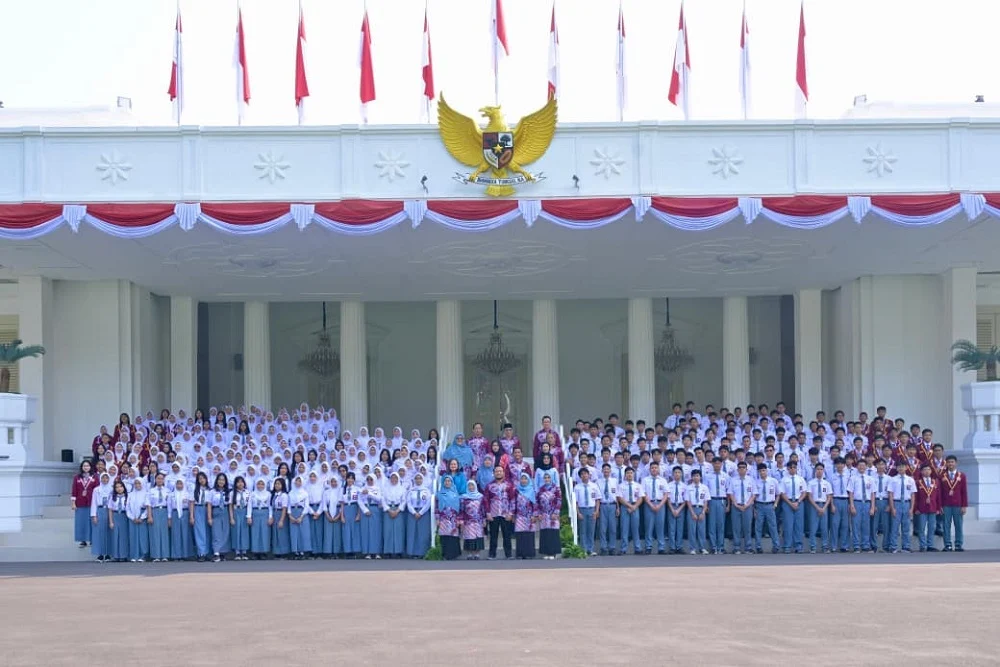
The hallowed grounds of the Presidential Palace in Jakarta buzzed with an extraordinary energy on Thursday, July 23, 2026, as hundreds of enthusiastic students from SMAN 55 Jakarta participated in the "Istana untuk Anak Sekolah" (Palace for School Children) program. Coinciding with the national observance of Hari Anak Nasional (National Children’s Day), this meticulously organized visit offered a rare and invaluable experience, not merely introducing the young minds to the grandeur of state symbols and historical narratives but profoundly igniting a spirit of ambition, civic responsibility, and a fervent desire to contribute meaningfully to the future of Indonesia. The program, a testament to the government’s commitment to youth engagement and civic education, transformed an otherwise distant symbol of power into an accessible classroom, fostering a direct connection between the nation’s future leaders and its highest seat of governance.
A Day of Discovery and Inspiration
For many, the opportunity to step inside the Presidential Palace was a dream previously confined to the realms of imagination, screen images, and textbooks. Zhafirah Zeta, one of the participating students, articulated this sentiment with palpable excitement. "This is an immeasurable moment of joy for me," she exclaimed, her eyes wide with wonder. "It’s my first time experiencing this directly. Usually, I only see the Presidential Palace on television, YouTube, or other screens. To actually set foot in a place I’ve only ever seen from afar is truly unforgettable." Her words echoed the collective awe felt by her peers, underscoring the profound impact of such direct exposure to national heritage and governance. The visit transcended mere sightseeing; it was an immersive lesson in national identity and the mechanics of statecraft.
Septian Ramdhany shared a similar sense of elation, his admiration for the majestic complex of the Palace transforming into a powerful personal drive. "I am incredibly happy, especially seeing so many beautiful rooms here," he stated, a newfound determination evident in his voice. "It truly fuels my spirit and makes me want to enter this Palace someday with a rank equivalent to the officials who work here." This aspirational shift, from passive observer to active participant in the nation’s future, is precisely one of the core objectives of the "Istana untuk Anak Sekolah" initiative. It aims to demystify the institutions of government, making them relatable and inspiring, rather than remote and intimidating.
Throughout their extensive tour, the students traversed various iconic sections of the Palace complex, each stop a chapter in Indonesia’s rich history. They visited the distinguished Aula Hoegeng, a hall named after one of Indonesia’s most respected police chiefs, known for his integrity. They also had the unique opportunity to glimpse the President’s working quarters, offering a rare insight into the daily operational heart of the nation. The tour also included viewing impressive collections of national art and historical artifacts, including significant statues and intricate crystal chandeliers, some with histories spanning centuries. These elements served not just as aesthetic embellishments but as tangible links to the past, reminding the students of the continuous flow of leadership and the enduring spirit of the nation.
For Arneo Rajasa and Shaniza Rashadya, the visit provided an unprecedented expansion of their understanding of governmental functions. "I believe this is my first experience visiting the Presidential Palace, and it has given me new insights," Shaniza commented, reflecting on the educational value of the tour. "We also got a sense of what it might feel like to be a minister and to participate in important meetings." This experiential learning component is crucial, offering a perspective that no textbook or lecture could fully replicate. It transforms abstract concepts of governance into concrete, observable realities, making the machinery of state more comprehensible and inspiring.
Hari Anak Nasional: A Context for Engagement
The choice of July 23rd for this significant event was far from coincidental. Hari Anak Nasional, or National Children’s Day, is a pivotal annual observance in Indonesia, dedicated to celebrating the nation’s children and reaffirming the collective commitment to their rights, well-being, and development. Established by Presidential Decree No. 44 of 1984, the day emphasizes the importance of protecting children, providing them with opportunities for growth, and listening to their voices. Each year, various activities are organized nationwide, ranging from educational workshops and cultural performances to health initiatives and advocacy campaigns, all aimed at fostering a supportive environment for children.
The "Istana untuk Anak Sekolah" program, by inviting students to the very heart of national power on this special day, profoundly underscored the message that children are not just the future but active stakeholders in the present. It conveyed a powerful symbolic message: the nation’s leadership values its youth and believes in their potential to shape the country’s destiny. This particular observance of Hari Anak Nasional was thus elevated from a mere commemorative event to an active demonstration of national investment in its younger generation.
The "Istana untuk Anak Sekolah" Program: Objectives and Execution
The "Istana untuk Anak Sekolah" program is part of a broader government initiative to enhance civic education and foster a sense of national pride among Indonesian youth. While the exact inception date might vary for similar programs, the underlying philosophy is consistent: to bridge the gap between abstract concepts of government and the tangible reality of national institutions. The program typically targets high school students, aiming to provide them with firsthand exposure to the Presidential Palace, its history, its functions, and the values it represents.
The selection process for participating schools and students is often rigorous, ensuring that a diverse group of young individuals from various backgrounds has the opportunity to partake. Schools might be chosen based on academic performance, active participation in civic programs, or through a lottery system to ensure equitable access. For SMAN 55 Jakarta, the opportunity represented both an honor and a significant educational milestone. The program’s itinerary is carefully curated to balance educational content with inspiring experiences. Trained guides, often from the Presidential Secretariat, accompany the students, providing historical context, explaining the significance of various rooms and artifacts, and answering questions about the role of the presidency and the government.
Security protocols, as expected for a visit to such a high-profile location, are meticulously managed, ensuring the safety and smooth flow of the hundreds of students. Yet, these measures are implemented in a way that does not detract from the welcoming and educational atmosphere. The focus remains on providing an enriching and memorable experience that leaves a lasting impression on the young visitors.
Voices from the Institutions
While specific quotes from officials were not provided in the original snippet, it is logical to infer the sentiments and objectives behind such a significant program. A spokesperson from the Presidential Secretariat would likely emphasize the program’s role in fostering national unity and civic responsibility. "The ‘Istana untuk Anak Sekolah’ program is a vital component of our ongoing efforts to engage the youth directly with the symbols and functions of our nation," a hypothetical official might state. "By opening the doors of the Presidential Palace, especially on Hari Anak Nasional, we aim to instill a deeper understanding of our shared history, democratic values, and the importance of active citizenship. We believe that seeing where national decisions are made will inspire these young minds to become responsible and visionary leaders themselves."
Similarly, an official from the Ministry of Education and Culture would undoubtedly highlight the program’s pedagogical value. "Experiential learning is paramount in modern education," a representative could explain. "This visit to the Presidential Palace provides an unparalleled opportunity for students to connect classroom lessons on civics, history, and government with real-world institutions. It reinforces their understanding of democracy, the rule of law, and the responsibilities that come with nation-building. We commend the Presidential Secretariat for this invaluable initiative that complements our curriculum and ignites a passion for public service."
The principal of SMAN 55 Jakarta would likely express profound gratitude and pride. "We are immensely honored and grateful for our students to have been selected for this extraordinary program," the principal might say. "This experience extends beyond academic learning; it is about character building, fostering patriotism, and inspiring our students to dream big for their country. The enthusiasm and inspiration witnessed today are testaments to the program’s success, and we anticipate these students will return to their communities as more engaged and informed citizens."
Historical Context and Symbolism of the Presidential Palace
The Presidential Palace complex in Jakarta is more than just a cluster of administrative buildings; it is a profound symbol of Indonesian sovereignty, history, and national aspiration. Comprising several key palaces—the Merdeka Palace, the State Palace (Istana Negara), and the Bina Graha building, among others—it has served as the official residence and workplace for successive Indonesian presidents since the nation’s independence. Each building within the complex carries its own historical weight, having witnessed pivotal moments in the country’s journey, from colonial rule to the declaration of independence and the shaping of a modern nation.
The Merdeka Palace, for instance, holds immense historical significance as the site where the Dutch East Indies government officially transferred sovereignty to the Republic of Indonesia in December 1949. Its very name, "Merdeka" (Freedom), encapsulates the nation’s struggle and triumph. The State Palace, originally built in the 18th century, predates Indonesia’s independence and has served various colonial and governmental functions before becoming a part of the presidential complex. These structures, with their colonial architecture juxtaposed against the backdrop of an independent nation, offer a tangible link to Indonesia’s complex past and its determined path towards self-determination and progress.
For the students, encountering these historical spaces firsthand breathes life into their history lessons. The grandeur of the architecture, the solemnity of the state rooms, and the stories behind the artifacts help them grasp the weight of history and the responsibilities of leadership. It reinforces the understanding that the institutions they are learning about are not abstract concepts but living entities with a rich past and a vital role in the nation’s future.
Broader Implications and Future Impact
The "Istana untuk Anak Sekolah" program, and similar initiatives, carry significant long-term implications for Indonesia’s civic landscape and youth development. By exposing students to the highest echelons of government, the program aims to:
- Foster Civic Engagement: Direct interaction with national institutions can demystify governance, making it more accessible and understandable. This can lead to increased interest in political processes, public policy, and active participation in community and national affairs.
- Cultivate National Identity and Patriotism: Experiencing the symbols of state firsthand strengthens a sense of belonging and pride in one’s nation. It helps young people understand the values, history, and aspirations that bind Indonesians together.
- Inspire Future Leaders: The personal accounts from students like Septian Ramdhany clearly illustrate the program’s power to ignite ambition. By presenting pathways to public service and leadership, it encourages young people to consider careers that contribute to national development.
- Enhance Educational Outcomes: Such experiential learning complements traditional classroom instruction, making abstract concepts of government and history more concrete and engaging. It provides a unique educational resource that enriches the curriculum.
- Promote Transparency and Accountability: By opening the doors of the Palace, even symbolically, the government demonstrates a commitment to transparency and a willingness to engage with its youngest citizens. This can build trust and confidence in public institutions.
- Develop Critical Thinking: Engaging with the complexities of national governance encourages students to think critically about societal issues, public policy, and the role of leadership in addressing national challenges.
The long-term impact of such programs extends beyond the individual students. These young individuals, armed with newfound knowledge and inspiration, return to their schools and communities as ambassadors of civic awareness. They can share their experiences, encourage their peers, and potentially initiate local projects that reflect their deepened understanding of national responsibility. In a rapidly evolving global landscape, nurturing a generation of informed, engaged, and patriotic citizens is paramount for any nation’s sustained progress and stability. The "Istana untuk Anak Sekolah" program, observed on Hari Anak Nasional, stands as a beacon of this vital national investment, sowing the seeds of leadership and national commitment in the hearts of Indonesia’s youth. The echoes of their enthusiasm within the venerable walls of the Presidential Palace are a promising sound for the future of the archipelago nation.