South Korea has solidified its position as a premier global travel destination, witnessing a substantial influx of international tourists, particularly from Southeast Asian nations such as Indonesia. This surge is largely attributed to the pervasive influence of the "Hallyu" or Korean Wave, where the global popularity of South Korean television dramas and music has transformed ordinary urban locations into iconic landmarks. Beyond the traditional historical sites of the Joseon Dynasty, modern travelers are increasingly seeking immersive experiences that mirror the aesthetics of their favorite on-screen narratives. This shift in traveler behavior has highlighted specific districts—ranging from the neon-lit nightlife of Seoul’s university quarters to the sophisticated architectural marvels of Gangnam—as essential stops on the contemporary South Korean itinerary.
The Evolution of the Hallyu Phenomenon and Its Impact on Tourism
The trajectory of South Korean tourism has been inextricably linked to the export of its cultural products. Beginning in the late 1990s and accelerating through the 2010s, the South Korean government recognized the potential of "soft power" as a driver for economic growth. According to data from the Korea Tourism Organization (KTO), the number of international visitors grew from approximately 5 million in 2000 to a record high of 17.5 million in 2019. Following the global hiatus caused by the COVID-19 pandemic, the industry is seeing a robust recovery, with 2023 and 2024 designated as "Visit Korea Years" to incentivize a return to pre-pandemic figures.
For many visitors, the motivation for travel is "set-jetting"—the practice of visiting locations where movies or television shows were filmed. This trend has moved beyond the traditional palaces of Gyeongbokgung and has begun to encompass the daily life and modern infrastructure of Seoul. Travelers are no longer just looking for history; they are looking for the "vibe" of contemporary Korean life, characterized by a blend of high-tech convenience and deeply rooted social traditions.
The Vibrancy of Youth Culture: Exploring the Nightlife Districts
One of the most sought-after experiences for international tourists is the immersion into South Korea’s metropolitan nightlife, often centered around university districts. Areas such as the neighborhood surrounding Konkuk University (often referred to as Kondae) and the broader Gwangjin-gu area offer a sensory-rich environment that embodies the "Geonbae" (cheers) culture frequently depicted in K-Dramas. These districts are defined by high-density corridors lined with diverse bars, "pojangmacha" (street stalls), and multi-story gastropubs.
The appeal of these areas lies in their authenticity. Unlike strictly commercial tourist zones, these neighborhoods are the actual social hubs for local students and young professionals. The visual landscape is characterized by vibrant LED signage and a bustling atmosphere that remains active well into the early morning hours. For a tourist, visiting these areas provides a sense of participation in the local rhythm of life. Analysts suggest that the popularity of these nightlife zones reflects a broader global interest in South Korea’s "work hard, play hard" social fabric. From a safety perspective, South Korea’s reputation as one of the safest countries in the world for nighttime exploration further bolsters the appeal of these districts to foreign solo travelers and groups alike.
Daehakro: The Broadway of the East
While the nightlife offers a glimpse into modern social habits, Daehakro serves as the cultural and artistic soul of Seoul. Stretching approximately 1.6 kilometers through the Jongno-gu district, Daehakro—which literally translates to "University Street"—is the epicenter of South Korea’s performing arts scene. Historically the site of Seoul National University before its relocation, the area has retained its academic and intellectual atmosphere, evolving into a district that houses over 150 small and medium-sized theaters.

The significance of Daehakro in the context of South Korean tourism cannot be overstated. It is often compared to New York’s Broadway or London’s West End, but with a uniquely Korean emphasis on experimental and "indie" productions. For the international traveler, Daehakro offers a diverse range of cultural experiences, from traditional Korean musical theater to modern avant-garde plays. The architecture of the area is also a draw; many buildings maintain a mid-century modern aesthetic that contrasts sharply with the glass skyscrapers of the nearby financial districts.
The South Korean Ministry of Culture, Sports, and Tourism has actively promoted Daehakro through initiatives like the "Welcome Daehakro" festival, which provides non-Korean speakers with subtitles or synopses for performances. This institutional support highlights the government’s strategy of diversifying the tourist experience beyond mere sightseeing, encouraging deeper engagement with the nation’s living arts.
Starfield Library: A Modern Architectural Icon
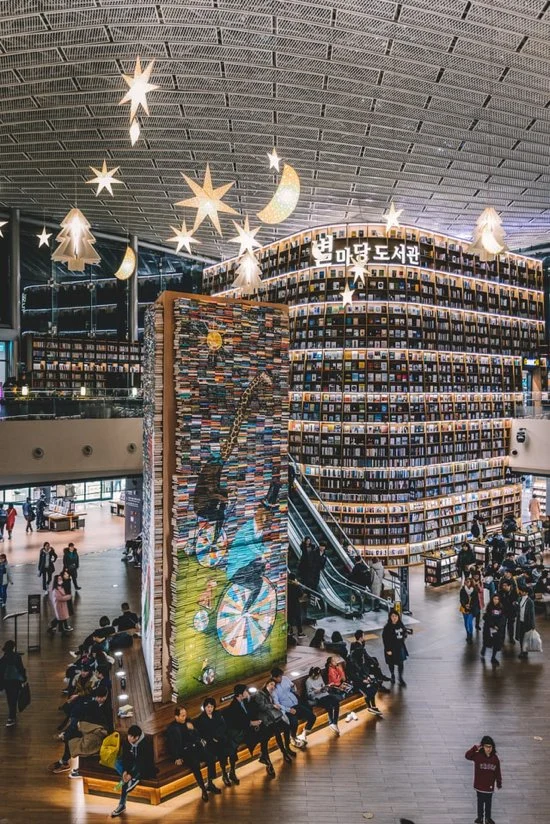
In the heart of the Gangnam district, located within the expansive COEX Mall, lies the Starfield Library. Since its opening in 2017, this public space has become one of the most photographed locations in Asia. It represents a paradigm shift in how public spaces are utilized within commercial environments. The library is not merely a repository for books but a massive, open-concept "cultural playground" designed to offer a moment of tranquility amidst the fast-paced nature of the city’s largest underground shopping center.
The library’s most striking feature is its three 13-meter-tall bookshelves, which house over 50,000 volumes and a vast collection of international magazines. The architectural design utilizes natural light through a glass ceiling, creating a cathedral-like atmosphere that emphasizes the importance of knowledge and community. For tourists, the Starfield Library is a prime example of the "Instagrammable" tourism trend. Its soaring shelves and symmetrical design provide a backdrop that is both intellectually stimulating and visually stunning.
Beyond its aesthetic appeal, the library serves as a venue for lectures, book signings, and musical performances, making it a functional community hub. The integration of such a massive non-commercial space within a high-traffic mall is a testament to South Korea’s sophisticated urban planning, which prioritizes "lifestyle" amenities to attract both domestic shoppers and international visitors.
Supporting Data: The Economic Contribution of Tourism
The economic implications of these tourism trends are significant. In 2023, the South Korean government set a target to attract 20 million foreign tourists by 2024, with an estimated revenue goal of $24.5 billion. To achieve this, the government has implemented several policy changes, including the temporary waiver of the K-ETA (Electronic Travel Authorization) for 22 countries and the expansion of transit visa-free programs.
Data from the Bank of Korea indicates that the tourism sector is a vital component of the service economy. The "Hallyu effect" is estimated to contribute billions to the GDP, as tourists who visit for cultural reasons are also likely to spend significantly on cosmetics (K-Beauty), fashion, and electronics. The synergy between cultural exports and tourism creates a self-sustaining cycle: as more people consume Korean media abroad, the desire to visit the physical locations of those stories increases, which in turn fuels the local economy and funds further cultural production.

Official Responses and Future Outlook
The South Korean government, through various agencies, has expressed a commitment to enhancing the tourist experience. Officials from the Ministry of Culture, Sports, and Tourism have noted that the current strategy involves moving beyond Seoul to promote regional tourism, though the capital remains the primary entry point and main attraction. There is a concerted effort to improve "smart tourism" infrastructure, including AI-driven translation services and integrated transport apps, to make the country more accessible to non-Korean speakers.
Industry experts analyze that the future of South Korean tourism lies in "niche" experiences. This includes culinary tourism, where visitors take cooking classes to learn how to make authentic Kimchi or Bibimbap, and wellness tourism, focusing on traditional Korean medicine and spas. The focus is shifting from passive observation to active participation.
Broader Implications and Global Soft Power
The transformation of South Korea into a global tourism powerhouse is a case study in effective nation-branding. By leveraging its cultural assets, the country has managed to create a brand that is synonymous with innovation, style, and tradition. The locations mentioned—the lively streets of the university districts, the historic theaters of Daehakro, and the futuristic Starfield Library—are more than just points on a map; they are symbols of a nation that has successfully transitioned from a post-war economy to a global cultural leader.
For the international traveler, particularly those from the ASEAN region, South Korea offers a vision of modernity that feels attainable and aspirational. The continued investment in tourism infrastructure and the relentless output of high-quality cultural content ensure that South Korea will remain at the top of travel bucket lists for years to come. As the country navigates the post-pandemic era, the focus remains on providing a safe, technologically advanced, and culturally rich environment that lives up to the high expectations set by the silver screen.
In conclusion, the allure of South Korea as a travel destination is multifaceted. It is driven by a unique combination of media influence, strategic government planning, and a genuine wealth of cultural and architectural landmarks. Whether one is seeking the energetic pulse of a midnight "Geonbae," the intellectual stimulation of a Daehakro play, or the quiet awe of the Starfield Library, South Korea provides an experience that is both deeply local and universally appealing. As the global travel industry continues to evolve, South Korea stands as a testament to the power of culture in shaping the movements and desires of the modern world.