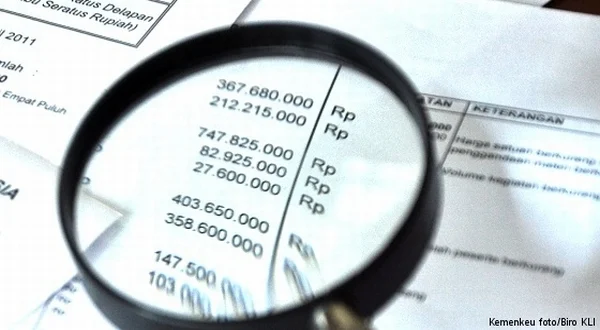
The Indonesian government formally presented the Draft Law on the Accountability for the Execution of the 2013 State Budget (RUU APBN) during a plenary session at the House of Representatives (DPR RI) in Jakarta. The presentation, delivered by then-Minister of Finance Muhammad Chatib Basri, marked a critical constitutional step in fiscal transparency and legislative oversight. It shed light on the intricate challenges faced by Southeast Asia’s largest economy during a turbulent financial year characterized by domestic structural adjustments and formidable external macroeconomic headwinds.
The parliamentary session served as a platform for the executive branch to account for the utilization of public funds throughout fiscal year 2013. However, the discourse was fundamentally shaped by the audit opinion rendered by the Supreme Audit Agency (BPK). The BPK bestowed a Qualified Opinion—locally known as Wajar Dengan Pengecualian (WDP)—upon the 2013 Central Government Financial Report (LKPP). This status indicated that while the financial statements were presented fairly in all material respects, certain accounting treatments and historical asset valuations warranted specific caveats from the state auditor.
Core Factors Behind the Qualified Audit Opinion
Addressing the plenary assembly at the Nusantara II Building in the Senayan parliamentary complex, Minister Chatib Basri elaborated on the specific accounting elements that prevented the government from securing an unqualified or Wajar Tanpa Pengecualian (WTP) opinion. According to the Ministry of Finance, the exceptions cited by the BPK were deeply rooted in long-standing administrative complexities rather than current fiscal mismanagement.
The primary drivers of the WDP status included outstanding receivables related to oil and gas over-lifting, unresolved oil and gas sales receivables, legacy credit assets originating from the Indonesian Bank Restructuring Agency (IBRA/BPPN) era, and liabilities associated with pension fund expenditures. These categories have historically presented formidable asset-valuation and verification challenges for successive administrations.
The over-lifting of oil and gas occurs when a contractor extracts a volume exceeding their allocated entitlement within a specific period, creating a complex financial obligation that must be reconciled between the state and the operating companies. Similarly, managing legacy credit assets from the BPPN—an agency established in the wake of the 1997-1998 Asian financial crisis to restructure distressed banking assets—involves navigating decades-old legal documentation, protracted asset recovery efforts, and complex write-off procedures. Furthermore, actuarial valuations and fund management mechanics regarding pension expenditures for civil servants continue to demand rigorous harmonization to meet contemporary public accounting standards.
Despite these accounting caveats, the submission of the accountability bill represented a mandatory statutory compliance exercise under Indonesian law. It required the executive branch to lay bare its revenue collection, expenditure execution, and financing activities for formal legislative scrutiny, debate, and eventual statutory approval.
Macroeconomic Pressures and External Volatility in 2013
The execution of the 2013 State Budget did not occur in a vacuum; rather, it unfolded against the backdrop of a transitioning global economy and domestic financial tightening. During his address, Minister Chatib underscored how external shocks profoundly influenced the government’s fiscal maneuvering and overall economic performance.
On the international front, the year 2013 was defined by a broader slowdown in global economic growth, a contraction in international commodity prices, and heightened volatility across global financial markets. The primary catalyst for market turbulence was the "tapering off" announcement by the United States Federal Reserve. The mere prospect of the U.S. central bank scaling back its quantitative easing program triggered massive capital outflows from emerging market economies, including Indonesia, as global investors sought safety in U.S. dollar-denominated assets.
Domestically, these external pressures translated into severe domestic imbalances. Indonesia’s current account deficit widened significantly, placing immense downward pressure on the foreign exchange reserves and the valuation of the Indonesian Rupiah. As capital fled domestic bond and equity markets, the national currency experienced sharp depreciation against the U.S. dollar, driving up the costs of imported goods, foreign debt servicing, and energy subsidies.
"The dynamics, both internal and external, undoubtedly exerted an impact on the shifts in our macroeconomic baseline assumptions, which ultimately influenced the execution and the achievement of the 2013 state budget targets," Chatib explained to the legislators.
Policy Responses and Fiscal Adjustments
Faced with mounting macroeconomic vulnerabilities, the Indonesian government deployed a series of stabilization measures designed to restore investor confidence, defend the local currency, and curb the expanding current account deficit.
Among the primary policy interventions was the implementation of a comprehensive stabilization package aimed at strengthening the current account. This included measures to moderate domestic demand, encourage export-oriented manufacturing, and streamline regulatory frameworks to attract foreign direct investment. Concurrently, Bank Indonesia, working in tandem with the fiscal authority, instituted aggressive monetary tightening cycles—raising benchmark interest rates to anchor inflation expectations and stabilize the volatile Rupiah.
Perhaps the most politically sensitive and economically consequential fiscal adjustment executed during this period was the adjustment of subsidized fuel prices. In June 2013, the government raised the prices of subsidized gasoline and diesel. This decision was designed to alleviate the crushing burden of energy subsidies on the state budget, which had ballooned due to rising international oil prices compounded by the depreciated Rupiah.
While the fuel price hike sparked nationwide protests and temporarily elevated domestic inflation, economic analysts widely acknowledged it as a necessary, albeit painful, structural reform. By reducing the fiscal space consumed by energy subsidies, the government preserved vital allocations for infrastructure development and targeted social protection programs aimed at shielding low-income households from the immediate shocks of inflation.
Implications and the Broader Context of State Financial Accountability
The presentation of the 2013 APBN Accountability Bill offered crucial insights into the maturity of Indonesia’s fiscal governance framework. The persistence of a Qualified Opinion (WDP) by the BPK highlighted the ongoing structural difficulties in managing legacy assets from past economic crises and standardizing complex extractive industry accounting practices.
For financial analysts and policymakers, the audit findings underscored the necessity of continuous bureaucratic reform within state institutions. Resolving long-standing issues concerning BPPN asset portfolios and state receivables requires coordinated inter-agency action involving the Ministry of Finance, the Attorney General’s Office, and state-owned enterprises. Achieving an unqualified audit opinion across all ministries and agencies remains a paramount long-term objective for the Indonesian government, serving as a vital signal of institutional integrity to international credit rating agencies and foreign investors.
Furthermore, the 2013 fiscal year served as an enduring case study in macroeconomic resilience. It demonstrated the limits of fiscal policy when confronted with exogenous global shocks and structural domestic vulnerabilities. The episode reinforced the importance of maintaining fiscal buffers, enhancing exchange rate flexibility, and undertaking preemptive structural reforms—such as rationalizing energy subsidies—before external crises manifest into domestic economic instability.
As the debate over the RUU APBN 2013 proceeded within the chambers of the DPR, it established a foundation for subsequent fiscal planning. Lawmakers utilized the accountability session not only to question the executive branch on budget deviations and audit exceptions but also to formulate forward-looking recommendations for subsequent fiscal years. The rigorous legislative examination ensured that transparency and accountability remained central tenets of Indonesia’s democratic governance and public finance management.