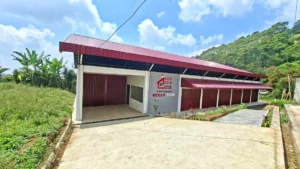
PT Hutama Karya (Persero), one of Indonesia’s leading state-owned infrastructure enterprises, has officially moved to streamline its corporate structure by initiating the merger of two of its key subsidiaries: PT Hakaaston (HKA) and PT Terbanggi Besar Kayu Agung Toll (TBKA). The formalization of this integration process was marked by the signing of a Conditional Merger Agreement (CMA), a pivotal step in the broader mandate to optimize the organizational efficiency of state-owned enterprises (SOEs) as outlined in government directives.
Under the terms of the agreement, PT Hakaaston (HKA) will serve as the surviving entity. This strategic move is designed to consolidate operational capabilities under a singular management umbrella, ensuring that the maintenance and management of critical infrastructure assets remain seamless, robust, and aligned with long-term national development goals.
Strategic Context and Regulatory Alignment
The consolidation is not an isolated event but rather a component of a systematic portfolio restructuring program currently being executed by the Hutama Karya Group. The initiative is in direct compliance with the Indonesian government’s broader policy of rationalizing the state-owned sector, specifically referencing the mandate set forth in Presidential Instruction No. 7 of 2026. This policy aims to reduce the complexity of SOE subsidiaries, eliminate overlapping business functions, and enhance the overall agility of state-led infrastructure projects.
By simplifying the corporate architecture, Hutama Karya seeks to ensure that each subsidiary possesses a distinct, value-added role. The merger serves as a benchmark for the group’s commitment to fiscal discipline and operational excellence. For years, the Indonesian government has emphasized the necessity of transforming SOEs from fragmented entities into lean, high-performing organizations capable of navigating a competitive global infrastructure market.
The Role of Hakaaston as the Surviving Entity
PT Hakaaston, as the surviving entity, will continue its trajectory as a specialized infrastructure asset management company. Its business model focuses on the entire lifecycle of transportation infrastructure—ranging from the operation and maintenance of toll roads to the preservation of national road networks and associated facilities.
Koentjoro, the President Director of PT Hutama Karya (Persero), emphasized that the integration would not disrupt ongoing operations. "The corporate action is part of the portfolio management agenda being carried out by the Hutama Karya Group in stages, in line with the direction of the SOE restructuring policy," Koentjoro stated. He reaffirmed that all operational activities would continue as normal during and after the transition, ensuring that service levels for toll road users and stakeholders remain unaffected.
The vision for HKA is clear: to evolve into "Indonesia’s Most Valuable Infrastructure Asset Management Company" (IM-V-IAM). By absorbing the operations of TBKA, HKA is expected to achieve greater economies of scale, allowing for more efficient deployment of technology and human capital across the vast network of toll roads currently managed by the parent company.
Operational Continuity and Stakeholder Reassurance
One of the primary concerns during any corporate merger is the potential for service degradation or administrative friction. Addressing these concerns, M. Rozi Rinjayadi, President Director of HKA, highlighted the stability of the transition. "This merger is intended to simplify the structure, not to alter our strategic direction," Rozi stated. "Our focus remains consistent: the management of infrastructure assets to ensure they provide optimal value throughout their service life."
For the end-users—commuters and logistics companies relying on the toll road network—the message from management is one of continuity. There will be no changes to toll tariffs, operational hours, or service standards as a direct result of this merger. The transition is strictly a back-end corporate reorganization designed to optimize resource allocation and financial reporting within the Hutama Karya group.
Legal and Procedural Roadmap
The transition is governed by strict regulatory frameworks. As a "Conditional Merger Agreement," the process is contingent upon the fulfillment of several precedent conditions. The execution will follow the strictures of Law No. 40 of 2007 concerning Limited Liability Companies and Government Regulation No. 27 of 1998 regarding the merger, consolidation, and acquisition of companies.
The roadmap for completion involves the following phases:
- Satisfying Precedent Conditions: Ensuring all contractual and regulatory obligations are met as outlined in the CMA.
- Corporate Approvals: Holding an Extraordinary General Meeting of Shareholders (EGMS) for both HKA and TBKA to secure formal backing for the merger.
- Regulatory Filings: Submitting all necessary documentation to the Ministry of State-Owned Enterprises (BUMN) and the Ministry of Law and Human Rights.
- Final Integration: Legally registering HKA as the surviving entity and formally dissolving TBKA as a separate legal entity.
Financial and Operational Implications
From an analytical perspective, the merger of HKA and TBKA is a logical response to the challenges of managing Indonesia’s rapidly expanding toll road network. The "Trans-Sumatra Toll Road" project, which remains a flagship endeavor for Hutama Karya, requires high levels of precision in maintenance and asset longevity.
By integrating the management of TBKA—which operates a specific segment of the network—into HKA, Hutama Karya can centralize its maintenance procurement, standardize its road safety protocols, and leverage a unified data management system for asset health monitoring. This reduction in "corporate bloat" allows the parent company to reduce administrative costs associated with maintaining multiple board structures and redundant back-office functions.
Furthermore, this move serves to improve the credit profile of the Hutama Karya group. By concentrating assets and streamlining liabilities, the group becomes a more attractive entity for potential project financing, bond issuance, and public-private partnerships (PPPs).
Broader Impact on the Indonesian Infrastructure Sector
The infrastructure sector in Indonesia is currently in a state of transition, shifting from an era of aggressive construction (the "build phase") to an era of high-quality maintenance and long-term asset optimization (the "operate and maintain phase"). This merger reflects that shift.
The Indonesian government, through its SOE ministry, has been vocal about the need for "streamlining." This is not merely about cost-cutting; it is about creating sustainable business models. For Hutama Karya, the merger is a defensive and offensive maneuver—defensive in that it reduces unnecessary overhead, and offensive in that it positions HKA to potentially manage assets beyond the current Hutama Karya portfolio in the future.
Industry observers note that this type of consolidation is likely to continue across other SOEs. As the infrastructure landscape matures, the focus will increasingly move toward efficiency and profitability rather than simply adding kilometers to the national road network. The merger of Hakaaston and TBKA serves as a case study for how state-owned firms can reorganize internally to meet the dual requirements of public service and corporate profitability.
Conclusion
The merger between PT Hakaaston and PT Terbanggi Besar Kayu Agung Toll marks a significant milestone in the organizational evolution of PT Hutama Karya (Persero). By prioritizing operational simplicity and long-term asset management, the group is aligning itself with the national mandate for efficient and high-performing state-owned enterprises.
As the legal and administrative processes move forward, the focus of both companies remains on maintaining the integrity and safety of the infrastructure they serve. The success of this integration will be measured not only by the reduction in structural complexity but by the continued reliability of Indonesia’s vital toll road assets. With the support of the Ministry of SOEs and a clear strategic vision, Hutama Karya is reinforcing its position as a pillar of Indonesian development, ensuring that the country’s infrastructure is managed with the precision and professionalism required in a modern economy.
The path ahead involves rigorous adherence to the regulatory timeline, ensuring that all shareholders and stakeholders are kept in alignment. As the integration reaches its final stages, the resulting entity, HKA, will be better equipped to meet the challenges of a growing nation, cementing its role as a key player in the management of Indonesia’s physical future.