The landscape of consumer electronics is currently undergoing a radical transformation as the rigid, monolithic television screens that have dominated living rooms for decades begin to give way to flexible, rollable display technology. This paradigm shift, driven by advancements in organic polymer substrates and light-emitting diode architectures, is effectively decoupling high-definition entertainment from the constraints of permanent, static installations. As these displays evolve into thin, sheet-like materials that can be retracted into compact housing units, they are fundamentally altering the intersection of interior design, architectural integration, and home cinema utility.
The Technological Foundation: From Glass to Polymer
The transition from traditional Liquid Crystal Displays (LCD) and standard light-emitting diodes to Organic Light-Emitting Diode (OLED) technology has been the primary catalyst for this innovation. Unlike LCD panels, which require a bulky backlight assembly to illuminate pixels, OLEDs are self-emissive. Each pixel acts as its own light source, eliminating the need for rigid backlighting components.
However, the leap to "rollable" functionality required a more profound engineering breakthrough: the replacement of traditional glass substrates with flexible polymer substrates, such as polyimide. These high-performance plastics offer the heat resistance and mechanical durability necessary to withstand the manufacturing process while remaining thin and pliable enough to be rolled onto a motorized spindle. This material science achievement allows the television to retain its visual fidelity—maintaining deep contrast ratios, color accuracy, and high refresh rates—even while being coiled into a diameter of only a few centimeters.
A Chronology of Flexible Display Development
The journey toward rollable televisions did not occur overnight; it is the culmination of over a decade of research and development in display engineering.
- 2011–2014: The Conceptual Phase: Major display manufacturers began showcasing prototypes of flexible OLED panels at international trade shows like CES (Consumer Electronics Show). At this stage, the panels were primarily experimental, demonstrating the ability to bend without fracturing.
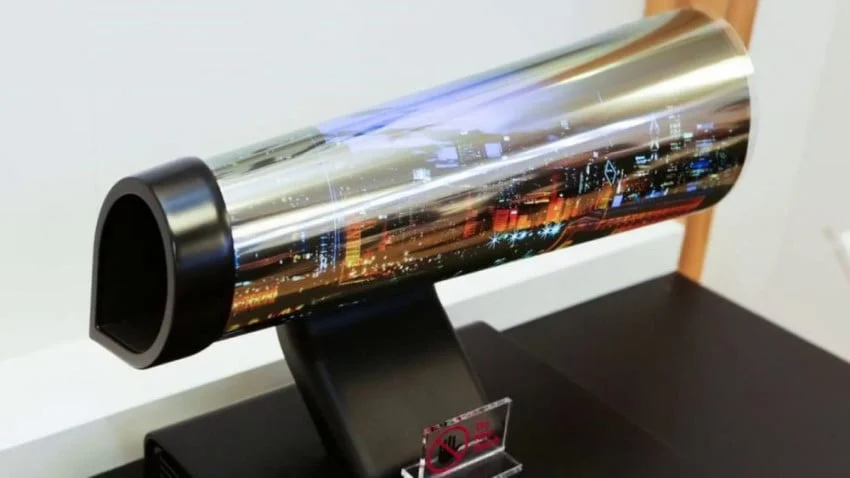
- 2016: The Rollable Prototype: A pivotal moment occurred when industry giants unveiled a 18-inch rollable display that could be coiled like a scroll. This proved that the electrical pathways could survive repeated mechanical stress.
- 2018–2019: The Transition to Commercialization: Manufacturers shifted focus from "flexible" (which could be folded once) to "rollable" (which could be retracted completely). Prototypes grew in size to 65 inches, signaling that the technology was ready for the high-end residential market.
- 2020–2021: Market Entry: The first luxury rollable televisions officially entered the retail market. These units were positioned as flagship products, representing the pinnacle of engineering for early adopters and interior design enthusiasts.
- 2023–2024: Refinement and Ecosystem Integration: The focus has moved toward miniaturizing the base station, improving the motor mechanisms, and integrating the device into smart home ecosystems where the television responds to voice commands or ambient light sensors to retract or extend.
Architectural Implications: The End of the "Black Hole"
For interior designers and architects, the presence of a large, black, rectangular screen has long been viewed as an aesthetic burden. Mike Holland, Head of Industrial Design at the renowned firm Foster + Partners, notes that the modern television has historically acted as a visual "black hole" in a room. When not in use, a 75-inch screen dominates the focal point of a living space, often clashing with carefully curated architectural themes or minimal design palettes.
"Televisi modern kini dapat ditemukan di hampir setiap ruang keluarga, dan layarnya yang kian membesar sering kali mendominasi ruangan bahkan saat tidak sedang digunakan," Holland remarked, emphasizing that static screens force designers to build rooms around a device rather than around the inhabitants.
By enabling the screen to vanish into a cabinet, credenza, or ceiling mount, rollable technology grants architects unprecedented freedom. The television ceases to be a permanent fixture and becomes an on-demand utility. This aligns with the broader "minimalist" movement in contemporary residential design, where the goal is to maximize usable space and reduce visual clutter without sacrificing access to cutting-edge technology.
Economic and Market Analysis
The market for rollable displays is currently classified within the ultra-premium segment. Given the complexities of the manufacturing process—specifically the vacuum deposition of organic materials onto flexible polymers and the precision engineering required for the internal motorized housing—the cost of entry remains high.
Market data suggests that while rollable televisions currently account for a small fraction of the total television market by volume, they serve as a critical "halo product." They define the brand image of manufacturers, signaling technical leadership and the ability to innovate. As yields in the manufacturing of flexible OLED panels improve, analysts expect a slow but steady decline in production costs, potentially making the technology more accessible to the mid-range market over the next five to seven years.
Challenges and Engineering Hurdles
Despite the promise, the technology faces significant hurdles before widespread adoption can occur. The primary challenge remains the mechanical integrity of the rollable mechanism. Any motorized system introduces a point of failure; the internal ribbon cables that transmit signals to the screen must withstand thousands of extension and retraction cycles without developing fatigue.
Furthermore, the structural support of the screen when fully extended is a feat of engineering. The screen must remain perfectly flat to prevent image distortion, yet be soft enough to roll. This is typically achieved through a "scissor-arm" support structure behind the panel that unfolds as the screen rises, providing a rigid, temporary backing that disappears when the television is stored.
Environmental and Sustanability Considerations
As the electronics industry faces increased scrutiny regarding sustainability, the rollable television presents a complex profile. On one hand, the use of organic polymers can reduce the reliance on certain heavy-metal components found in traditional glass-based panels. On the other hand, the complexity of the internal motorized components, specialized housing, and advanced materials makes recycling more difficult than a standard, static television.
Industry leaders are currently exploring "cradle-to-cradle" manufacturing processes to ensure that these sophisticated units can be disassembled and their components reclaimed, a necessary step as these devices become more common in high-end homes.
The Future of Ambient Computing
Beyond the aesthetic benefits, the rollable display is being positioned as a key component in the future of "ambient computing." This concept suggests that technology should be available when needed but invisible when it is not. A rollable TV can exist in a "partial mode," extending only a few inches to display stock tickers, weather updates, or digital art, without fully expanding into a full-screen display.
This functionality transforms the television from a passive receiver into a dynamic home management interface that adapts to the specific needs of the user at a given time. By blurring the line between furniture and digital interface, the rollable TV represents a shift away from the "box" era of electronics and toward a future where technology is woven into the very fabric of our living spaces.
Conclusion
The arrival of rollable television technology marks a significant milestone in the history of consumer electronics. It represents the successful convergence of advanced material science, precision mechanical engineering, and human-centric design. While the technology is currently in its nascent stage, restricted to the luxury tier by its high manufacturing costs and technical complexity, the implications are clear: the era of the fixed, bulky screen is drawing to a close. As the technology matures, it will undoubtedly redefine the relationship between humans and their entertainment devices, proving that the most advanced technology is often the one that can disappear when its work is done.