JAKARTA — The search and rescue operation for five journalists and three vessel crew members who went missing while covering the volcanic eruption of Mount Anak Krakatau in the Sunda Strait experienced a brief tactical adjustment on its sixth day, Sunday, September 13, 2026. Two prominent Indonesian Navy (TNI AL) assets, KRI Leuser and KAL Pohawang, were temporarily withdrawn from active surface searching to conduct essential logistical replenishment, including refueling and provisioning, at a nearby naval facility.
The temporary suspension of active grid patrols by these specific vessels sparked initial concerns among families and observers regarding the continuity of the search efforts. However, military authorities quickly clarified that the move was a routine logistical necessity rather than a reduction in operational scope. Both vessels are scheduled to redeploy to the search zone by Monday morning, September 14, 2026, to resume their designated sectors in the ongoing multi-agency search operation.
Operational Adjustment on Day Six
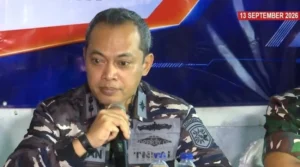
Addressing the press at the Carita Search and Rescue (SAR) Command Post on Sunday, the Commander of the Banten Naval Base (Danlanal), Lieutenant Colonel (Navy) Wawan Subagyo Mardani, provided a detailed explanation regarding the deployment status of the naval assets. He emphasized that KRI Leuser and KAL Pohawang remain fully committed to the ongoing SAR mission, despite their brief absence from the operational waters of the Sunda Strait.
"Just like any ongoing maritime operation, our assets require periodic maintenance, refueling, and logistical restocking to maintain operational readiness," Lieutenant Colonel Wawan stated during the press conference. "Today, KRI Leuser and KAL Pohawang are executing refueling procedures and replenishing their food supplies and logistical needs. They are currently anchored for these essential tasks and will rejoin the active search grid at first light tomorrow morning."
The clarification aims to maintain transparency with the families of the missing journalists and crew members, as well as the broader public, who have closely monitored the daily developments of the emergency response. The operational pause highlights the logistical challenges inherent in extended maritime SAR missions, where support vessels must routinely cycle back to supply ports to sustain prolonged deployments in rough sea conditions.
Background and Context of the Incident
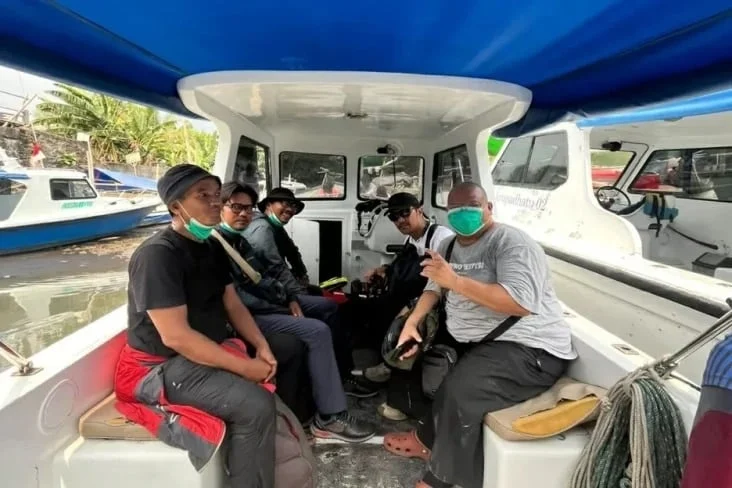
The missing persons incident stems from a high-stakes journalistic assignment that turned into a maritime emergency. The five journalists, representing various media outlets, alongside three ship crew members, went missing while navigating the volatile waters surrounding Mount Anak Krakatau in the Sunda Strait, located off the coast of Pandeglang Regency, Banten Province.
Mount Anak Krakatau, infamous for its catastrophic historical eruptions and continuous seismic activity, has remained a focal point for both vulcanologists and media organizations seeking to document its geological transformations. In mid-September 2026, the volcano exhibited heightened eruptive phases, casting massive columns of ash, incandescent material, and volcanic debris into the atmosphere. The group had deployed via vessel to capture the unfolding natural phenomenon up close, operating within a maritime zone already flagged for elevated hazards due to potential sudden pyroclastic flows, localized tsunamis triggered by underwater landslides, and extreme weather patterns characteristic of the Sunda Strait.
As communications with the vessel abruptly ceased, local authorities were alerted, triggering an immediate emergency response. The waters between the western coast of Java and the southern tip of Sumatra present complex navigational challenges, including strong undercurrents, unpredictable wind patterns, and deep trenches, which significantly complicate search and rescue operations.
Chronology of the Search and Rescue Operation
Since the initial distress signal and subsequent classification of the vessel as missing, a coordinated SAR operation has been underway, mobilizing assets from the National Search and Rescue Agency (Basarnas), the Indonesian Navy, the Indonesian National Police (Polri), regional disaster management agencies (BPBD), and volunteer maritime communities.
- Day 1 (September 8, 2026): Initial reports emerged regarding the failure of the vessel carrying the five journalists and three crew members to return from the Mount Anak Krakatau monitoring zone. Basarnas established the initial emergency response center in Carita, Banten.
- Day 2-3 (September 9–10, 2026): Full-scale mobilization of surface assets and aerial reconnaissance teams. KRI Leuser and KAL Pohawang, alongside coastal patrol boats, were deployed to comb the predicted drift trajectories based on oceanographic models of the Sunda Strait currents.
- Day 4-5 (September 11–12, 2026): Search grids were expanded further outward into the open waters of the strait. Divers were deployed in select shallow zones near the volcanic cone, though volcanic tremors and poor underwater visibility hampered deep-sea exploration.
- Day 6 (September 13, 2026): Tactical adjustment implemented as KRI Leuser and KAL Pohawang returned to port for mandatory refueling and logistical replenishment, while other maritime assets continued localized sector sweeps.
- Day 7 and Beyond (Scheduled for September 14, 2026, onward): Anticipated full fleet reintegration, with intensified aerial sweeps and expanded surface vessel formations coordinated by the unified command post.
Official Support and Psychological Assistance for Families
Recognizing the immense emotional toll that the prolonged uncertainty places on the families of the missing individuals, the Regional Government of Banten Province has stepped up to provide comprehensive support services. Recognizing that waiting for news during a disaster response requires specialized care, the provincial administration has deployed a dedicated team of medical personnel, professional counselors, and trauma psychologists.
The psychosocial support units are stationed near the Carita SAR Post to assist family members who have gathered to await updates from the search teams. This initiative ensures that loved ones receive immediate medical evaluations for stress-related conditions alongside psychological first aid to help them cope with the psychological strain of the ongoing ordeal. Local authorities have pledged to maintain these support services for the duration of the search operation.
Fact-Based Analysis of Implications
The incident involving the missing journalists near Mount Anak Krakatau underscores broader implications regarding safety protocols for media personnel covering high-risk natural disasters.
- Journalistic Safety and Risk Mitigation: The event has reignited discussions across Indonesian media associations regarding mandatory safety briefings, standardized communication protocols, and adherence to exclusion zones established by the Center for Volcanology and Geological Hazard Mitigation (PVMBG). Covering active volcanic eruptions from the sea involves exposure to secondary hazards, including ballistic projectiles, toxic gas plumes, and sudden wave surges.
- Logistical Demands on Maritime SAR: The temporary withdrawal of KRI Leuser and KAL Pohawang illustrates the logistical friction points in extended maritime operations. Effective coordination requires a rotating deployment schedule to ensure continuous coverage without exhausting naval assets or compromising vessel safety due to deferred maintenance.
- Inter-Agency Coordination: The disaster response highlights the efficacy of Indonesia’s unified incident command system, which brings together military, civilian, and regional agencies. Despite inherent natural obstacles such as adverse weather and volcanic activity, the joint task force continues to systematically narrow search sectors based on scientific drift modeling.
As the operation enters its seventh day with the anticipated return of the naval logistical vessels to the search grid, rescue coordinators remain focused on maximizing all available technological and human resources to locate the missing journalists and crew members.