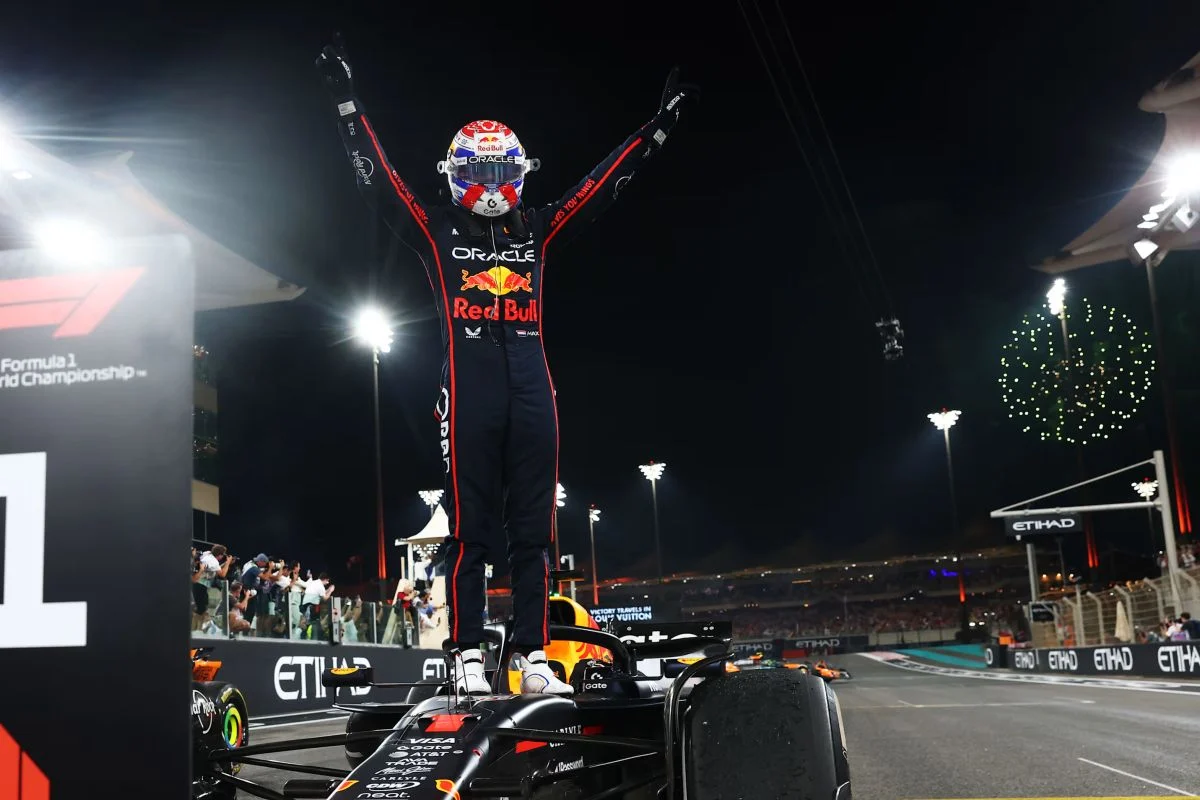
The pinnacle of motorsport has once again written a historic chapter as the 2025 Formula 1 World Championship drew to a thrilling close at the Abu Dhabi Grand Prix. Since its inception, the FIA Formula One World Championship has served as the ultimate proving ground for the world’s most elite drivers, showcasing generations of legendary dominance, fierce rivalries, and technological evolution. The 2025 season will forever be remembered as the year British driver Lando Norris etched his name among the immortals of the sport, securing his maiden drivers’ world championship after a grueling, high-stakes campaign that went down to the final race of the calendar.
Driving for the McLaren Formula 1 Team, Norris delivered a masterclass in consistency and resilience. Entering the season-ending race at the Yas Marina Circuit on Sunday, December 7, 2025, the pressure reached a fever pitch. Needing only a calculated finish to secure the crown, Norris drove a mature and composed race, crossing the checkered flag in third place. This crucial podium finish brought his final season points tally to 423, edging out his fierce rival, Red Bull Racing’s Max Verstappen, by a razor-thin margin of just two points. Verstappen, who fought tenaciously until the very end, finished second in the overall standings, followed closely by Norris’s teammate, Oscar Piastri, cementing a remarkable competitive era for the sport.
The Road to Glory: Overcoming Adversity in 2025
Lando Norris’s journey to the 2025 world title was far from a straightforward procession. Throughout the season, the McLaren charger had to navigate intense pressure, strategic battles, and moments of profound sporting difficulty. Speaking to the media after clinching the title, Norris candidly admitted that the path to the championship was paved with grueling moments that tested his mental fortitude and racing craft.
From early-season developments that required rapid adaptation to fierce wheel-to-wheel combat against multi-time world champions like Verstappen, Norris displayed the hallmark traits of a true champion. His victory in the Brazil Grand Prix earlier in the season—including a pivotal sprint race triumph—proved to be the bedrock of his championship charge, allowing him to build and maintain the momentum needed to fend off late-season charges from his rivals.
For Max Verstappen, missing out on the 2025 title by a mere two points marked the end of a dominant multi-year streak, yet the Dutch driver expressed immense pride in his team’s efforts. Verstappen acknowledged the sheer competitiveness of the 2025 grid, noting that finishing as runner-up after such a fiercely contested season reflected the relentless dedication of the Red Bull Racing organization.
The Evolution of F1: A Historical Legacy
The addition of Lando Norris to the pantheon of Formula 1 champions highlights a rich heritage that spans three quarters of a century. Since Giuseppe Farina claimed the inaugural title in 1950, the championship has transformed from a romantic era of daring pioneers in front-engined machines into a technologically advanced, data-driven global phenomenon.
To fully understand the magnitude of Norris’s achievement, it is essential to look back at the distinguished lineage of drivers who have conquered the Formula 1 World Championship over the decades.
Complete Chronological List of Formula 1 World Champions (1950–2025)
The historical record of Formula 1 features drivers from across the globe, representing pioneering eras, golden ages of engineering, and modern dynasties:
1950: Giuseppe Farina (Alfa Romeo, Italy)
1951: Juan Manuel Fangio (Alfa Romeo, Argentina)
1952: Alberto Ascari (Ferrari, Italy)
1953: Alberto Ascari (Ferrari, Italy)
1954: Juan Manuel Fangio (Maserati/Mercedes-Benz, Argentina)
1955: Juan Manuel Fangio (Mercedes-Benz, Argentina)
1956: Juan Manuel Fangio (Ferrari, Argentina)
1957: Juan Manuel Fangio (Maserati, Argentina)
1958: Mike Hawthorn (Ferrari, United Kingdom)
1959: Jack Brabham (Cooper Climax, Australia)
1960: Jack Brabham (Cooper Climax, Australia)
1961: Phil Hill (Ferrari, United States)
1962: Graham Hill (BRM, United Kingdom)
1963: Jim Clark (Lotus Climax, United Kingdom)
1964: John Surtees (Ferrari, United Kingdom)
1965: Jim Clark (Lotus Climax, United Kingdom)
1966: Jack Brabham (Brabham Repco, Australia)
1967: Denny Hulme (Brabham Repco, New Zealand)
1968: Graham Hill (Lotus Ford, United Kingdom)
1969: Jackie Stewart (Matra Ford, United Kingdom)
1970: Jochen Rindt (Lotus Ford, Austria)
1971: Jackie Stewart (Tyrrell Ford, United Kingdom)
1972: Emerson Fittipaldi (Lotus Ford, Brazil)
1973: Jackie Stewart (Tyrrell Ford, United Kingdom)
1974: Emerson Fittipaldi (McLaren Ford, Brazil)
1975: Niki Lauda (Ferrari, Austria)
1976: James Hunt (McLaren Ford, United Kingdom)
1977: Niki Lauda (Ferrari, Austria)
1978: Mario Andretti (Lotus Ford, United States)
1979: Jody Scheckter (Ferrari, South Africa)
1980: Alan Jones (Williams Ford, Australia)
1981: Nelson Piquet (Brabham Ford, Brazil)
1982: Keke Rosberg (Williams Ford, Finland)
1983: Nelson Piquet (Brabham BMW, Brazil)
1984: Niki Lauda (McLaren TAG, Austria)
1985: Alain Prost (McLaren TAG, France)
1986: Alain Prost (McLaren TAG, France)
1987: Nelson Piquet (Williams Honda, Brazil)
1988: Ayrton Senna (McLaren Honda, Brazil)
1989: Alain Prost (McLaren Honda, France)
1990: Ayrton Senna (McLaren Honda, Brazil)
1991: Ayrton Senna (McLaren Honda, Brazil)
1992: Nigel Mansell (Williams Renault, United Kingdom)
1993: Alain Prost (Williams Renault, France)
1994: Michael Schumacher (Benetton Ford, Germany)
1995: Michael Schumacher (Benetton Renault, Germany)
1996: Damon Hill (Williams Renault, United Kingdom)
1997: Jacques Villeneuve (Williams Renault, Canada)
1998: Mika Häkkinen (McLaren Mercedes, Finland)
1999: Mika Häkkinen (McLaren Mercedes, Finland)
2000: Michael Schumacher (Ferrari, Germany)
2001: Michael Schumacher (Ferrari, Germany)
2002: Michael Schumacher (Ferrari, Germany)
2003: Michael Schumacher (Ferrari, Germany)
2004: Michael Schumacher (Ferrari, Germany)
2005: Fernando Alonso (Renault, Spain)
2006: Fernando Alonso (Renault, Spain)
2007: Kimi Räikkönen (Ferrari, Finland)
2008: Lewis Hamilton (McLaren Mercedes, United Kingdom)
2009: Jenson Button (Brawn Mercedes, United Kingdom)
2010: Sebastian Vettel (Red Bull Renault, Germany)
2011: Sebastian Vettel (Red Bull Renault, Germany)
2012: Sebastian Vettel (Red Bull Renault, Germany)
2013: Sebastian Vettel (Red Bull Renault, Germany)
2014: Lewis Hamilton (Mercedes, United Kingdom)
2015: Lewis Hamilton (Mercedes, United Kingdom)
2016: Nico Rosberg (Mercedes, Germany)
2017: Lewis Hamilton (Mercedes, United Kingdom)
2018: Lewis Hamilton (Mercedes, United Kingdom)
2019: Lewis Hamilton (Mercedes, United Kingdom)
2020: Lewis Hamilton (Mercedes, United Kingdom)
2021: Max Verstappen (Red Bull Honda, Netherlands)
2022: Max Verstappen (Red Bull RBPT, Netherlands)
2023: Max Verstappen (Red Bull Honda RBPT, Netherlands)
2024: Max Verstappen (Red Bull Honda RBPT, Netherlands)
2025: Lando Norris (McLaren Mercedes, United Kingdom)
Broader Impact and Implications of the 2025 Season
Lando Norris’s championship victory is a watershed moment not just for the driver himself, but also for the McLaren team, which has steadily rebuilt its competitive edge over several seasons to return to the summit of Formula 1. The 2025 season demonstrated a shifting paradigm in the sport’s competitive landscape, proving that multi-team battles and razor-thin performance margins are defining the modern grid.
As Formula 1 looks forward to future regulatory changes and an expanding global calendar, the psychological and competitive boost of Norris’s title will undoubtedly reverberate through the paddock. With young talents like Norris, Verstappen, and Piastri locking horns at the highest level, the sport enters its next chapter with unprecedented depth of talent, ensuring that the legacy of the Formula 1 World Championship will continue to captivate millions of fans worldwide.