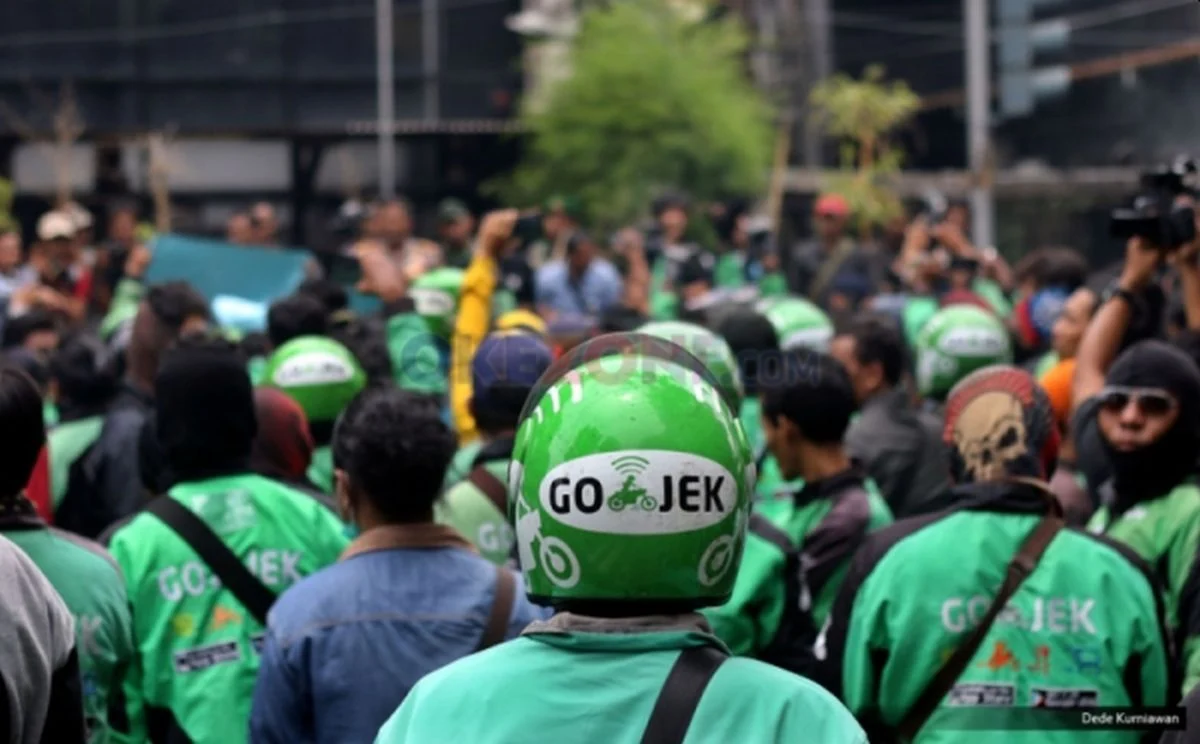
The ongoing debate surrounding the legal classification of ride-hailing drivers, commonly referred to as ojek online (ojol) in Indonesia, has reached a critical juncture. As the digital economy continues to reshape the labor landscape, the fundamental question of whether these drivers should be classified as independent contractors or formal employees remains unresolved. This legal ambiguity has created a fractured discourse among driver communities, with diverse groups advocating for diametrically opposed working models. Recent developments, including vocal assertions from the Konfederasi Serikat Ojol Sulawesi Selatan (KSOS), have underscored the complexity of the issue, prompting calls for the government to exercise caution and inclusivity in its regulatory efforts.
The Divergence of Opinions Within the Ojol Community
The debate is far from monolithic. While some factions within the driver community seek the protections afforded to formal employees—such as a guaranteed minimum wage, health insurance, and retirement benefits—others fiercely guard the independence inherent in the current partnership model.
The Konfederasi Serikat Ojol Sulawesi Selatan (KSOS) recently solidified its stance by publicly advocating for the recognition of ojol drivers as independent workers. This position is rooted in the desire to maintain the flexibility of their working hours and the freedom to manage their own operational activities. For these drivers, the "partnership" status is not merely a legal technicality; it is a preferred way of life that allows them to bypass the rigid structures of a traditional nine-to-five corporate job.
However, this view is contested by other labor unions and advocacy groups who argue that the reality of the gig economy has evolved into a form of disguised employment. They point to the high level of algorithmic control exercised by digital platforms—such as performance monitoring, unilateral tariff changes, and suspension protocols—as evidence that drivers function essentially as employees, albeit without the corresponding social safety nets.
Academic Perspective: Navigating the Policy Minefield
Rizal Pauzi, an academic from Hasanuddin University, emphasizes that the government must move beyond simplistic categorizations when drafting new legislation. He cautions that treating the entire ojol workforce as a homogenous block would be a strategic error.
"This situation highlights that ojol drivers do not share a uniform view regarding their legal status," Pauzi noted during a discussion on Tuesday, September 15, 2026. "The government cannot assume that one particular aspiration automatically represents the consensus of all drivers. A top-down approach that favors one model over another risks disenfranchising a significant portion of the workforce who may prefer the current, albeit imperfect, flexibility."
According to Pauzi, the resolution of this debate requires a nuanced examination of three core pillars: the extent of platform control over driver activities, the degree of autonomy regarding working hours, and the structure of compensation and incentives. By analyzing these factors, policymakers could potentially develop a "third way"—a hybrid regulatory framework that offers protection without stripping away the flexibility that defines the gig economy.
Chronology of the Legal Status Struggle
The tension regarding the legal status of gig workers in Indonesia is not a recent phenomenon. It has been a simmering issue since the rapid proliferation of ride-hailing applications in the mid-2010s.

- 2015–2017: The initial expansion of platforms like Gojek and Grab led to widespread protests, primarily focused on tariffs and market competition rather than employment status.
- 2018–2019: The government issued several ministerial regulations (such as Ministry of Transportation Regulation No. 12 of 2019) aimed at safety and tariff standards, but these largely sidestepped the core issue of labor classification.
- 2020–2022: The COVID-19 pandemic highlighted the vulnerability of gig workers, who faced income instability without traditional social security support. This period saw an uptick in discussions regarding the "worker" vs. "partner" status in the context of state-funded social assistance.
- 2023–2025: Regulatory discourse began to shift toward the "Job Creation Law" framework, which attempted to integrate digital labor into the broader legal landscape. However, implementation has been inconsistent, leading to regional variations in how drivers are treated under local labor laws.
- September 2026: The current debate, spurred by regional organizations like KSOS, has forced the central government to reconsider the necessity of a national-level policy that definitively categorizes gig workers.
Economic Implications and Supporting Data
The urgency of this debate is underscored by the sheer scale of the industry. According to data from the Ministry of Communication and Informatics, the number of active ride-hailing drivers in Indonesia is estimated to exceed 4 million individuals. This demographic represents a significant portion of the country’s informal labor force.
Economic analyses suggest that a mandatory transition to "employee" status could increase operational costs for digital platforms by an estimated 20% to 30%, which would likely be passed on to consumers in the form of higher fares. Conversely, maintaining the "independent contractor" status leaves millions of workers without access to the Manpower Social Security Agency (BPJS Ketenagakerjaan) benefits, such as work-related accident insurance or old-age savings, unless they opt for voluntary, self-funded enrollment.
A 2025 survey conducted by the Institute for Economic and Social Research indicated that approximately 55% of drivers prioritize "earning flexibility" over "formal employment benefits," while 45% prioritize "social protection and job security." These figures validate the observations made by Rizal Pauzi: the community is effectively split down the middle.
The Role of Digital Platforms
Platform companies have consistently argued that they act as intermediaries—connecting service providers with consumers—rather than as traditional employers. They maintain that their algorithms serve as an efficiency tool rather than a management hierarchy.
However, labor rights advocates argue that this "technological shield" is being used to avoid the obligations of labor laws, such as overtime pay, paid leave, and severance packages. The debate has drawn international attention, with many countries, including those in the European Union and the United States, grappling with similar "gig-economy" legal frameworks. The Indonesian government is now looking at global best practices, though it must adapt them to the unique socio-economic realities of the Indonesian market.
Challenges for Future Policy Formulation
The challenge for the government lies in drafting a regulation that is both rigid enough to protect workers from exploitation and flexible enough to support the digital economy’s growth.
- Algorithmic Transparency: Policymakers are considering mandates that would require platforms to disclose how they determine driver rankings, deactivation, and fare calculations. This would reduce the "black box" nature of platform management.
- Portable Benefits: One proposed solution is the implementation of "portable benefits," where platforms contribute to a pro-rated social security fund for every ride or delivery completed, regardless of the driver’s formal status.
- Local-Level Engagement: Given the varied conditions across Indonesia—where the needs of a driver in Jakarta may differ significantly from those in Makassar or Medan—regional dialogues, such as those initiated by KSOS, are essential.
Conclusion: A Call for Balanced Regulation
As the government continues to deliberate, the primary objective must remain the welfare of the millions of individuals who rely on ride-hailing for their livelihoods. The ongoing debate is a necessary exercise in democracy and labor rights, reflecting the complexities of a 21st-century economy that defies 20th-century definitions of labor.
Whether through a new category of "gig worker" status or a reformed partnership model, the policy must ensure that the dignity of the driver is upheld. The diverse voices within the ojol community—from those demanding full employment rights to those protecting their independent status—all deserve a seat at the table. Moving forward, the success of any legislation will be measured not by how quickly it is passed, but by how effectively it addresses the nuanced reality of the digital workforce while fostering a sustainable and equitable economic future for all stakeholders involved. The government’s role, as emphasized by experts, is to act as a bridge between the digital-era business model and the timeless necessity of labor protection.