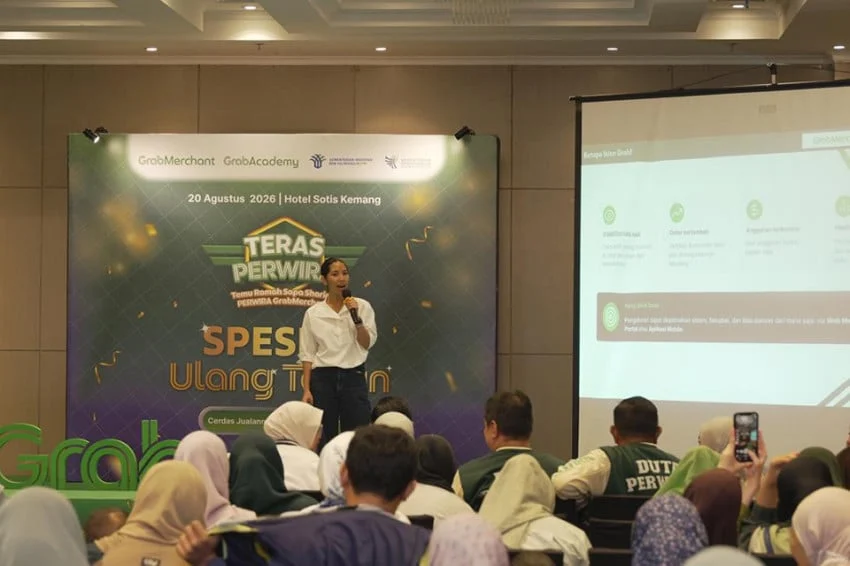
Grab and OVO Finansial have officially concluded their flagship capacity-building initiative, Teras Perwira (Temu Ramah Sapa dan Sharing Perkumpulan Wirausaha), marking the program’s fifth consecutive year of supporting the Indonesian micro, small, and medium enterprise (MSME) sector. The 2026 edition, designated as the "Special Anniversary" series, spanned 10 major Indonesian cities, providing comprehensive digital and financial literacy training to 1,400 selected Mitra GrabMerchant. The initiative, which ran from August 19 to September 7, 2026, aligned with the dual momentum of National MSME Day on August 12 and the Financial Literacy Month promoted by the Financial Services Authority (OJK).
The program covered a broad geographic footprint, engaging entrepreneurs in Medan, Bandung, Palembang, Semarang, Yogyakarta, Surabaya, Denpasar, Makassar, Balikpapan, and Jakarta. By addressing the critical intersection of digital marketing, financial management, and operational efficiency, Grab and OVO Finansial aim to fortify the resilience of local businesses amidst an increasingly digitized and competitive economic landscape.
A Strategic Response to Economic Shifts
The theme for this year’s Teras Perwira, "Cerdas Jualannya, Tangguh Usahanya" (Smart Selling, Resilient Business), reflects a strategic shift in how digital platforms are supporting merchant partners. In an era defined by rapid changes in consumer behavior—specifically the preference for on-demand services and digital payments—the ability of a merchant to adapt is no longer an advantage but a necessity for survival.
The selection process for the 1,400 participants was rigorous. Rather than an open-enrollment model, organizers employed a curation system that prioritized merchants demonstrating a high aptitude for growth, a willingness to share knowledge with peers, and a commitment to integrating technology into their daily operations. This approach ensured that the workshop sessions were populated by "agent-of-change" entrepreneurs capable of cascading the information back to their respective business communities.
Chronology and Geographical Reach
The 2026 tour commenced in Makassar on August 19, serving as a symbolic kickoff for the nationwide effort. Over the subsequent three weeks, the training teams traversed the archipelago, conducting intensive workshops in major urban hubs. The logistics of the tour were meticulously planned to ensure that local market nuances were addressed in each city.
- August 19: Opening ceremony in Makassar.
- Late August: Regional sessions in Medan, Surabaya, and Denpasar, focusing on tourism-linked hospitality and culinary businesses.
- Early September: Operations moved to Central and West Java (Semarang, Yogyakarta, Bandung) and Kalimantan (Balikpapan).
- September 7: The series concluded simultaneously in Palembang and Semarang, marking the official end of the anniversary tour.
Core Curricula: Beyond Basic Digitization
The curriculum for Teras Perwira 2026 was designed based on feedback from the previous four years of the program. It specifically addressed three pain points identified by the merchant ecosystem: low product visibility, inaccurate pricing structures, and stagnant market penetration.
Mastering Digital Visibility with GrabAds
A primary focus of the sessions was the effective utilization of GrabAds. Many MSME owners understand the importance of being on a platform, but few grasp the intricacies of paid promotion and algorithmic targeting. The workshop provided practical, hands-on guidance on how to set budget caps, choose target demographics, and design promotional assets that convert impressions into orders.
Financial Precision: The Role of BisaMatika
Financial leakage remains a significant issue for small businesses, often stemming from an inability to accurately calculate the Cost of Goods Sold (HPP). The introduction of "BisaMatika"—a specialized tool for calculating HPP—allowed merchants to input their raw material costs, service fees, and platform commissions. By providing a clear view of their margins, the tool helps merchants set competitive yet sustainable prices, a critical factor in maintaining profitability in the online food delivery sector.
Artificial Intelligence as a Business Consultant
Perhaps the most forward-looking aspect of the training was the integration of the GrabMerchant AI Assistant. This tool acts as a virtual business consultant, capable of analyzing store performance data to provide actionable insights. Merchants were trained to use the AI to generate menu inspirations, identify peak demand hours, and craft promotional campaigns based on historical data. This effectively democratizes access to data science, a resource usually reserved for large-scale corporations.
Financial Inclusion and Capital Access
Coinciding with the OJK’s Financial Literacy Month, the program placed significant emphasis on responsible borrowing and financial health. Grab and OVO Finansial showcased the "GrabModal Mantul" facility, which provides access to capital with streamlined processing and flexible installment plans.
The inclusion of the "Jeda Bayar" (Payment Pause) feature was particularly well-received by participants. This feature provides a safety net for merchants during periods of personal hardship, such as medical emergencies or family bereavement, allowing for a temporary suspension of debt obligations. By humanizing the credit-lending process, the program aims to build long-term trust between the platform and its merchant partners, reducing the risks associated with predatory informal lending.
Implications for the Indonesian MSME Sector
The scale of this initiative—1,400 businesses across 10 cities—represents a significant contribution to the digital transformation of the Indonesian economy. MSMEs account for over 60% of Indonesia’s GDP and provide the vast majority of national employment. Therefore, the ripple effect of this training is substantial.
Analysts observe that programs like Teras Perwira are essential for bridging the "digital divide." While smartphone penetration in Indonesia is high, the "digital capability" divide—the ability to leverage tools for business growth—remains a barrier. By providing structured training, Grab and OVO are effectively reducing the cost of acquisition for these small businesses to enter the formal economy.
Furthermore, the focus on financial literacy is a direct response to the broader national effort to curb the prevalence of illegal online lending (pinjol ilegal). By providing regulated, transparent, and accessible financial tools, these platforms are steering MSMEs toward institutional finance, which is safer and more conducive to long-term growth.
Official Perspective and Future Outlook
While specific quotes were not provided in the announcement, the scale and structure of the 2026 program underscore a commitment from both Grab and OVO to move beyond a transactional relationship with their partners. The emphasis on "community" is a strategic choice; by fostering a network of successful, educated merchants, the platform ensures a healthier ecosystem of partners, which in turn improves service quality for end-consumers.
The success of the 2026 anniversary series suggests that future iterations will likely expand in both scope and depth. As Artificial Intelligence and advanced data analytics continue to evolve, the challenge for the next iteration of Teras Perwira will be to maintain simplicity while introducing more sophisticated operational tools.
In conclusion, the Teras Perwira 2026 program serves as a model for how major tech conglomerates can actively participate in the national development agenda. By combining high-level technological infrastructure with localized, human-centric training, the program provides a blueprint for sustainable growth in the MSME sector, ensuring that as the Indonesian economy digitizes, its smallest participants are not left behind. The program’s completion marks a milestone in the digital journey of 1,400 businesses, each of which now possesses a more robust toolkit to navigate the complexities of the modern marketplace.